Abstract
This article provides a comprehensive procurement guide for bulk carbonised wool supply targeting the spinning and weaving industries. It covers technical specifications, quality standards, sourcing strategies, and commercial considerations to help B2B buyers make informed decisions when selecting wholesale carbonised wool suppliers for industrial-scale textile production. As global textile manufacturers face increasing pressure to optimize raw material quality while controlling costs, understanding the nuances of carbonised wool procurement becomes essential. This guide addresses fiber purity requirements, supplier evaluation protocols, application-specific performance criteria, and logistics considerations that directly impact production efficiency and finished fabric quality. Whether sourcing for worsted spinning systems or high-end woven textiles, procurement managers will find actionable insights for establishing reliable supply chains that meet both technical specifications and commercial objectives.
What is Carbonised Wool and Why It Matters for Industrial Textile Production
Technical Definition and Carbonisation Process
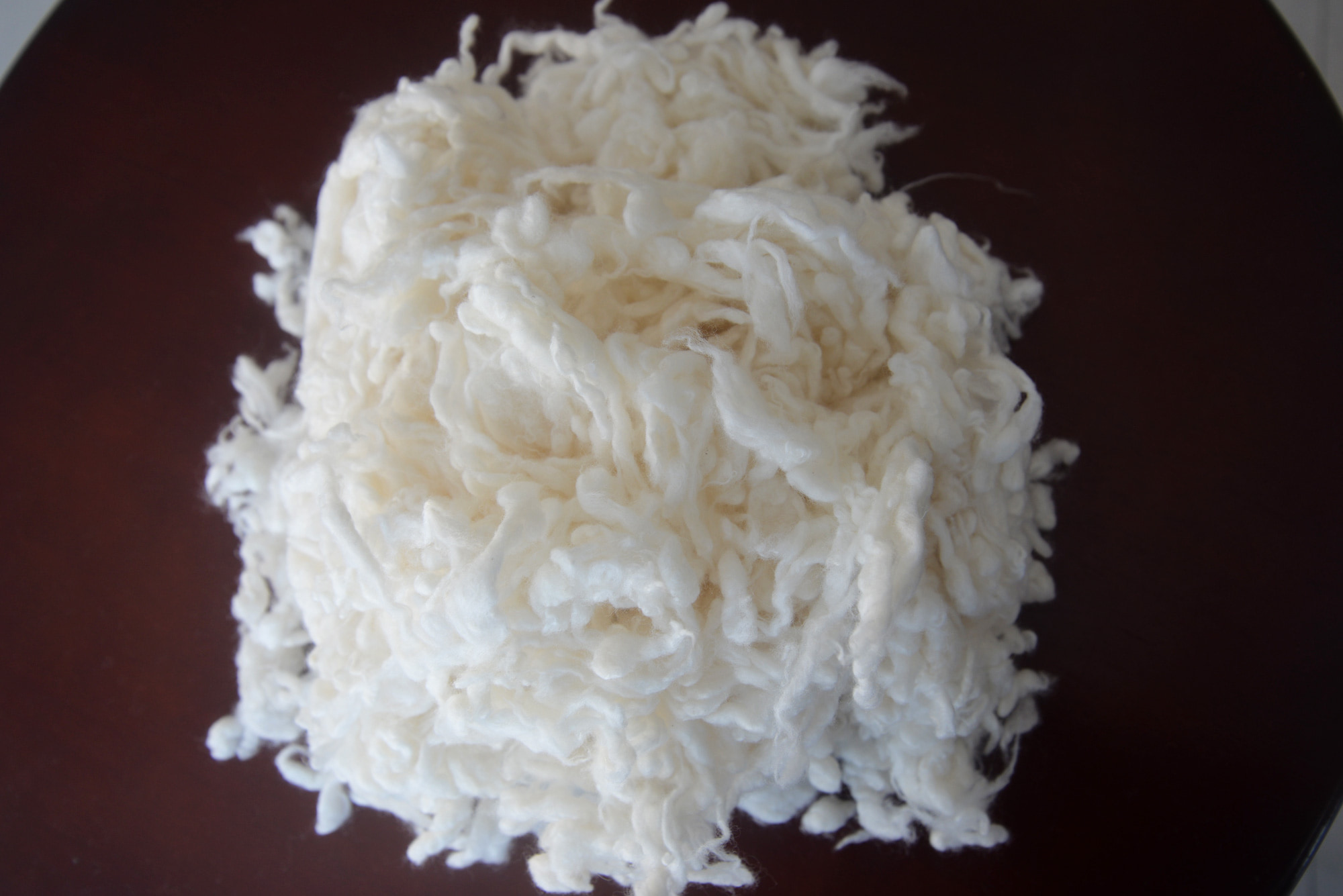
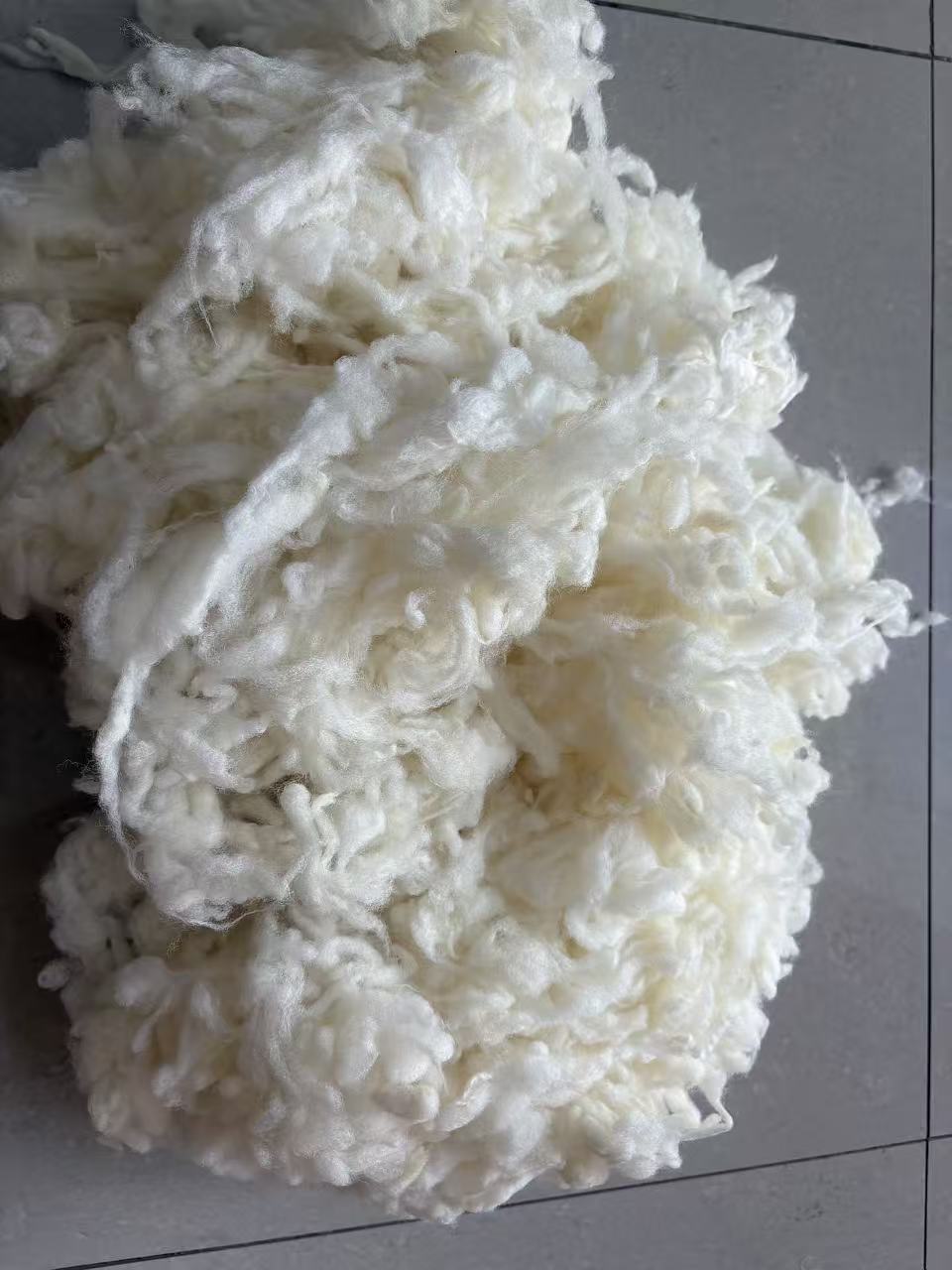
Carbonised wool represents wool fiber that has undergone controlled chemical treatment to remove vegetable matter (VM) contamination inherent in raw fleece. The carbonisation process employs diluted sulfuric acid (typically 4-7% concentration) applied to wool at elevated temperatures between 95-110°C. This treatment selectively degrades cellulose-based plant materials—burrs, seeds, straw fragments—into brittle carbon residues that mechanical crushing and dusting equipment easily removes.
The chemical mechanism relies on acid hydrolysis of cellulose polymers, while keratin protein structures in wool fibers remain largely intact due to their different chemical composition. Critical process parameters include acid concentration, immersion duration (15-30 minutes), temperature control, and subsequent neutralization steps using sodium carbonate or bicarbonate solutions to restore pH balance. Modern carbonisation facilities employ continuous processing systems where wool passes through acid application, drying chambers, baking ovens, and crushing rollers in sequential stages.
Quality differentiation from raw wool becomes immediately apparent through vegetable matter reduction from 8-12% in greasy wool to below 0.5% in properly carbonised material. This purification step proves essential for premium textile applications where fiber cleanliness directly affects dyeing uniformity, fabric appearance, and processing efficiency in downstream manufacturing operations.
Key Performance Advantages for Spinning and Weaving Applications
Enhanced fiber purity delivers measurable advantages across multiple production stages. Spinning mills experience reduced equipment downtime and maintenance costs since vegetable matter fragments no longer clog carding cylinders, drafting rollers, or spindle mechanisms. Yarn breakage rates decrease by 15-25% when using carbonised versus raw wool, translating to higher throughput and lower labor costs for splice repairs.
Improved dyeing uniformity represents another critical benefit. Vegetable matter residues absorb dyes differently than wool fibers, creating undesirable specks and shade variations in finished fabrics. Carbonised wool achieves color consistency within ±0.5 ΔE units compared to ±2.0 units for inadequately cleaned material. This precision becomes non-negotiable for fashion textiles, automotive upholstery, and contract furnishing applications where batch-to-batch color matching determines product acceptance.
Mechanical processing efficiency gains extend throughout weaving operations. Warp yarns made from carbonised wool exhibit 18-22% higher tensile strength due to reduced fiber damage during preparation stages. Sized warps run cleaner on looms with fewer warp breaks, enabling higher loom speeds (12-15% faster) and improved fabric quality. The absence of vegetable matter also eliminates the risk of fabric defects appearing post-finishing when alkaline treatments or heat setting cause residual plant fragments to discolor or create surface irregularities.
Critical Specifications for Bulk Carbonised Wool Procurement
Industry-Standard Quality Parameters
Fiber length distribution forms the foundation of carbonised wool specifications. Micron count (average fiber diameter) typically ranges from 18.5 to 24.5 microns for apparel-grade material, with finer counts commanding premium pricing. Staple length measurements determine suitability for specific spinning systems: worsted processing requires a minimum of 75mm staples with low short fiber content (<15%), while woolen systems accommodate 50-70mm lengths with higher short fiber percentages (20-30%). The coefficient of variation (CV) for fiber diameter should remain below 22% to ensure consistent yarn properties.
Vegetable matter content limits represent the primary quality differentiator for carbonised wool. Industry specifications typically mandate VM% below 0.5% for premium grades, 0.5-1.0% for standard commercial grades, and 1.0-2.0% for economy grades suitable for coarse industrial textiles. Testing protocols follow IWTO-19 standards using microscopic examination or automated optical scanning systems that count and measure contaminating particles per gram of fiber.
Residual acid levels and pH neutrality requirements protect downstream processing equipment and ensure fabric performance. Properly neutralized carbonised wool should exhibit pH values between 5.5 and 7.0 when tested according to AATCC Test Method 81. Residual sulfur content must remain below 0.8% to prevent yellowing during storage and subsequent processing. Free acid content exceeding 0.05% indicates incomplete neutralization and risks fiber degradation during storage or accelerated equipment corrosion in humid processing environments.
Compliance and Certification Requirements
International wool testing standards provide the framework for quality verification. IWTO (International Wool Textile Organisation) test methods cover fiber diameter analysis (IWTO-12), vegetable matter content (IWTO-19), and yield determination (IWTO-19). ASTM International standards D1294 and D1575 offer equivalent protocols widely recognized in North American markets. Procurement contracts should specify which testing authority’s methods apply and establish acceptable tolerance ranges for each parameter.
Environmental regulations for carbonisation processes increasingly influence supplier selection. EU REACH compliance ensures chemical management meets safety standards, while ISO 14001 certification demonstrates environmental management system implementation. Buyers sourcing eco-conscious brands should verify suppliers’ wastewater treatment capabilities, acid recovery systems, and energy efficiency metrics. Some markets now require disclosure of carbon footprint data per kilogram of processed wool.
Traceability documentation for supply chain transparency has become mandatory for many premium textile applications. The Responsible Wool Standard (RWS) and ZQ Merino certification programs provide farm-to-processor verification of animal welfare practices and land management. Blockchain-enabled tracking systems now allow buyers to verify wool origin, processing history, and chemical treatment records through digital platforms, addressing consumer demand for ethical sourcing transparency.
Table: Carbonised Wool Grade Comparison
| Grade | Fiber Diameter (microns) | VM Content (%) | Yield Rate (%) | Typical Applications | Price Tier |
|---|---|---|---|---|---|
| Premium | 18.5-20.5 | <0.3 | 88-92 | Luxury apparel, fine suiting | $$$ |
| Standard | 20.5-22.5 | 0.3-0.8 | 84-88 | Business apparel, upholstery | $$ |
| Commercial | 22.5-24.5 | 0.8-1.5 | 80-84 | Blankets, industrial textiles | $ |
| Economy | 24.5-28.0 | 1.5-2.5 | 75-80 | Carpets, felting, insulation | $ |
Wholesale Sourcing Strategies and Supplier Evaluation
Supplier Selection Criteria
Production capacity and minimum order quantities directly impact procurement feasibility. Established carbonising plants typically process 500-2000 tonnes annually, with MOQs ranging from 5-20 tonnes per order depending on fiber specifications. Smaller specialty processors may accept 1-3 tonne orders but charge premium pricing. Buyers should verify that suppliers maintain adequate inventory buffers (minimum 30-day stock) to accommodate production scheduling flexibility and emergency requirements.
Geographic sourcing advantages reflect both wool quality and cost structures. Australian carbonised wool dominates global markets with 35% market share, offering consistent quality from merino genetics and advanced processing infrastructure. New Zealand suppliers provide 20% of traded volumes, specializing in fine-count crossbred wools (25-32 microns) suitable for interior textiles. South African processors supply 15% of markets with competitive pricing on medium-count wools, though quality variation between suppliers requires careful vetting. Emerging suppliers in Uruguay, Argentina, and China offer cost advantages but may require more intensive quality control protocols.
Quality, consistency, and batch-to-batch variation control separate reliable suppliers from problematic ones. Request certification of variation (CV) data across recent production runs—premium suppliers maintain fiber diameter CV below ±1.5 microns and VM content variation under ±0.2% between batches. Implement incoming inspection protocols, testing a minimum of 3 samples per shipment against agreed specifications. Establish clear rejection criteria and corrective action procedures in supply agreements, including provisions for third-party testing arbitration when disputes arise.
Commercial Terms and Logistics Considerations
Pricing structures for bulk carbonised wool reflect multiple variables beyond base fiber cost. Per-kilogram pricing typically ranges from $8-$15 USD for commercial grades to $18-$28 for premium fine-count material (FOB origin). Containerload discounts of 8-15% apply for full 18-22 tonne shipments versus partial loads. Volume commitment contracts spanning 6-12 months often secure 5-10% price reductions but require accurate demand forecasting and inventory carrying costs. Currency fluctuation hedging becomes essential for international procurement given wool’s commodity price volatility.
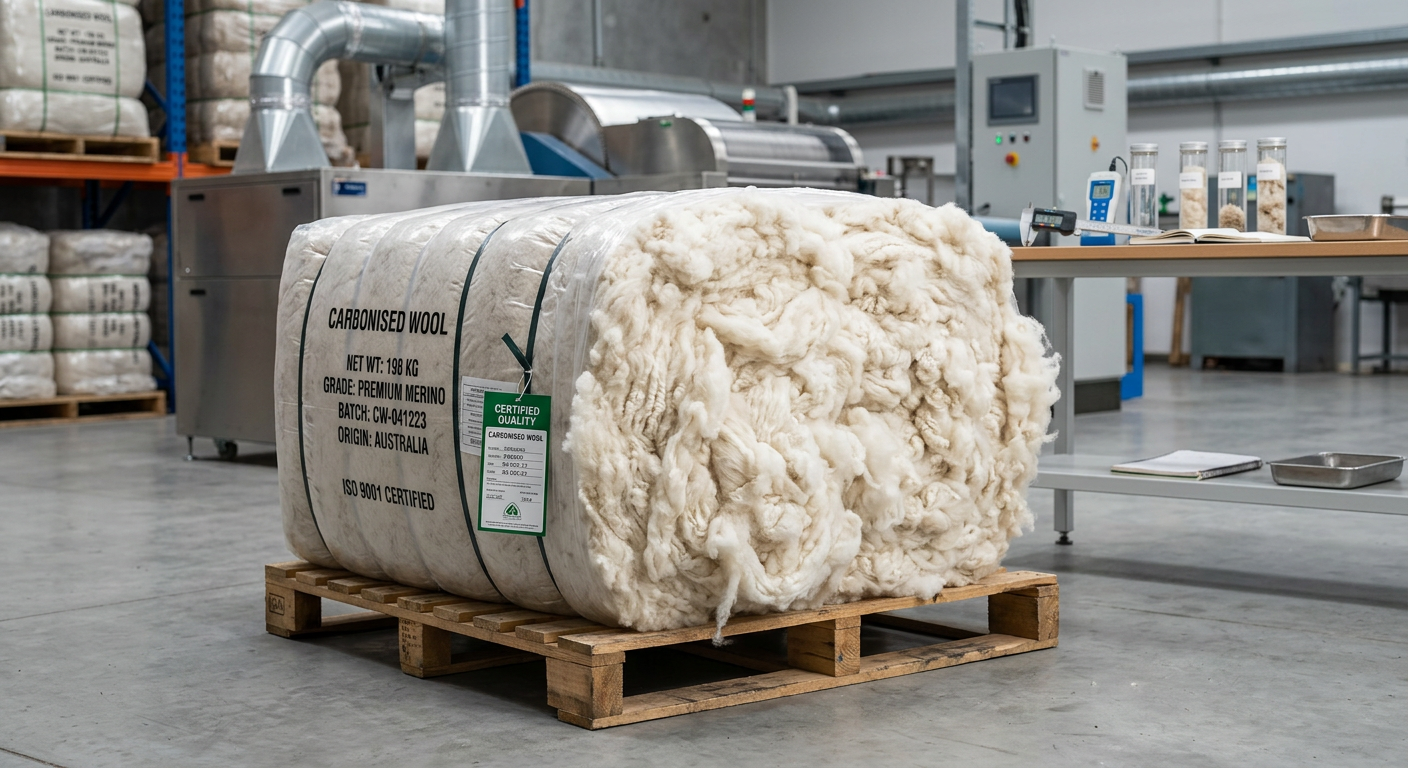
Packaging standards for bulk shipments balance fiber protection with logistics efficiency. Standard bale weights range from 180-220kg with compression ratios of 1:4 to minimize shipping volumes. High-density bales (250-280kg) reduce freight costs but may cause fiber damage if compression exceeds optimal levels. Bales require moisture-resistant wrapping (polyethylene or polypropylene) with desiccant packets for ocean freight, particularly for tropical route shipments. Pallet configuration should optimize 40-foot container utilization (typically 20-22 tonnes per container) while maintaining safe stacking heights.
Lead times and inventory management strategies must account for production cycles and shipping durations. Domestic suppliers (same continent) typically deliver within 2-4 weeks from order confirmation. Intercontinental shipments require 6-10 weeks, including production scheduling, ocean transit, and customs clearance. Implement just-in-time inventory systems only with proven suppliers and backup source arrangements. Most spinning and weaving operations maintain 45-60 days of raw material inventory to buffer against supply disruptions while minimizing working capital requirements and storage costs.
Application-Specific Requirements for Spinning vs. Weaving Industries
Carbonised Wool for Spinning Mills
Fiber preparation needs differ fundamentally between worsted and woolen spinning systems. Worsted processing demands carbonised wool with staple lengths exceeding 75mm, low VM content (<0.5%), and minimal short fiber content to produce smooth, lustrous yarns for fine suiting and dress fabrics. The combing process removes remaining short fibers, so initial fiber length distribution critically affects yield rates—premium worsted-grade carbonised wool achieves 65-72% top yields compared to 55-62% for marginal material.
Woolen spinning systems accommodate shorter staples (50-70mm) and higher short fiber percentages, making them suitable for utilizing economy-grade carbonised wool. The carding process for woolen yarns creates a more random fiber arrangement, producing softer, bulkier yarns ideal for knitwear, blankets, and tweeds. Vegetable matter tolerances can extend to 1.0-1.5% since the woolen process more effectively masks minor contamination through fiber entanglement and finishing treatments.
Blending ratios with synthetic fibers increasingly define modern spinning operations. Wool-polyester blends (typically 55/45 to 70/30 wool/synthetic) require carbonised wool with specific characteristics: higher tensile strength to match synthetic fiber performance, consistent crimp frequency for uniform blend distribution, and excellent dye affinity to ensure color matching across fiber types. Wool-nylon blends for sock manufacturing demand fine-count carbonised wool (19.5-21.5 microns) with high elasticity recovery rates. Procurement specifications should explicitly state intended blend ratios so suppliers can recommend optimal fiber grades.
Carbonised Wool for Weaving Operations
Warp strength requirements and sizing compatibility present unique challenges for weaving applications. Warp yarns endure significant mechanical stress during weaving—abrasion from heddles and reed, tension variations, and repeated flexing cycles. Carbonised wool for warp applications should exhibit a minimum single fiber tenacity of 12-14 cN/tex and elongation at break exceeding 35%. Sizing agents (typically starch-based or synthetic polymers) must bond effectively to carbonised wool’s surface chemistry, which can be affected by residual acid neutralization treatments.
Fabric hand-feel and drape characteristics ultimately determine carbonised wool suitability for specific woven products. Suiting fabrics require fine-count wool (18.5-21.5 microns) with high fiber crimp frequency (8-12 crimps per inch), producing fabrics with excellent recovery from wrinkling and natural stretch. Upholstery textiles utilize coarser counts (23-26 microns) with lower crimp and higher fiber stiffness for dimensional stability and abrasion resistance. Interior furnishing applications value carbonised wool’s natural flame retardancy, moisture management, and acoustic dampening properties—specifications should verify these performance attributes through standardized testing (e.g., NFPA 260 for upholstery flammability).
FAQ
Q1: What is the typical minimum order quantity for wholesale carbonised wool supply?
Minimum order quantities vary by supplier scale and fiber grade. Large commercial processors typically require 5-10 tonne MOQs for standard grades, while premium fine-count wools may have 3-5 tonne minimums due to specialized processing requirements. Smaller specialty suppliers sometimes accept 1-2 tonne orders but at 15-25% price premiums. For initial supplier qualification, request sample quantities of 50-100kg to conduct production trials before committing to full container loads. Establishing long-term supply relationships often enables MOQ flexibility as trust and volume history develop.
Q2: How does carbonised wool pricing compare to raw wool on a per-kilogram basis?
Carbonised wool commands 40-65% price premiums over equivalent raw wool due to processing costs, yield losses, and quality improvements. For example, 21-micron raw merino fleece priced at $10-12/kg becomes $16-19/kg after carbonisation. The price differential reflects acid treatment costs ($1.50-2.00/kg), energy consumption, labor, yield reduction from VM removal (typically 8-12% weight loss), and neutralization chemical costs. However, downstream savings from reduced processing waste, lower equipment maintenance, and improved fabric quality often justify the premium. Total cost of ownership calculations should factor in these operational benefits rather than focusing solely on raw material price comparisons.
Q3: What quality testing should buyers conduct upon delivery of bulk carbonised wool shipments?
Implement a three-tier inspection protocol: (1) Visual assessment examining 10% of bales for packaging integrity, moisture damage, and obvious contamination; (2) Laboratory testing of representative samples (minimum 200g per 5 tonnes) for fiber diameter distribution (IWTO-12), VM content (IWTO-19), and pH levels (AATCC-81); (3) Processing trials using 50-100kg to verify spinning or weaving performance under actual production conditions. Document all findings with photographic evidence and retain samples for 12 months. Establish clear acceptance criteria in purchase agreements—typical rejection thresholds include VM content exceeding specification by >0.3%, pH outside 5.5-7.0 range, or fiber diameter CV exceeding ±2.0 microns from contracted specification.
Conclusion
Securing a reliable bulk carbonised wool supply requires balancing technical specifications, supplier capabilities, and commercial terms. By prioritizing fiber quality parameters—particularly VM content, fiber diameter consistency, and residual acid neutralization—spinning and weaving industries can optimize their raw material procurement for consistent production output and competitive finished textile quality. Supplier evaluation should extend beyond pricing to encompass production capacity verification, quality control systems, compliance certifications, and logistics reliability. Application-specific requirements differ significantly between worsted spinning, woolen processing, and weaving operations, necessitating tailored procurement specifications that align with end-product performance targets. Establishing long-term partnerships with transparent suppliers who provide comprehensive testing documentation, maintain adequate inventory buffers, and demonstrate commitment to continuous quality improvement delivers the greatest value. As global textile supply chains face increasing scrutiny regarding sustainability and traceability, buyers who invest in verified, certified carbonised wool sources position themselves for competitive advantage in quality-conscious markets while managing regulatory compliance risks effectively.