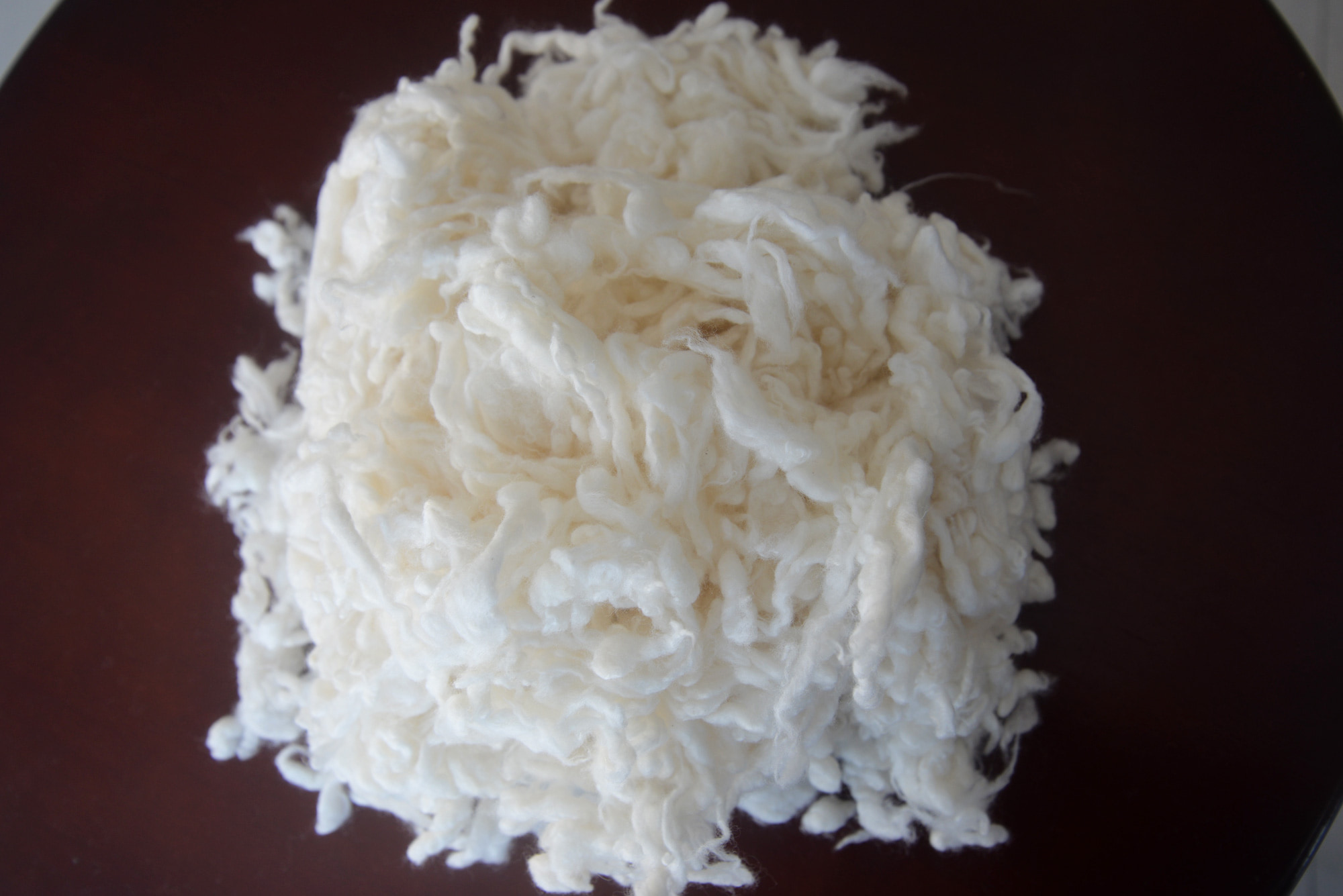
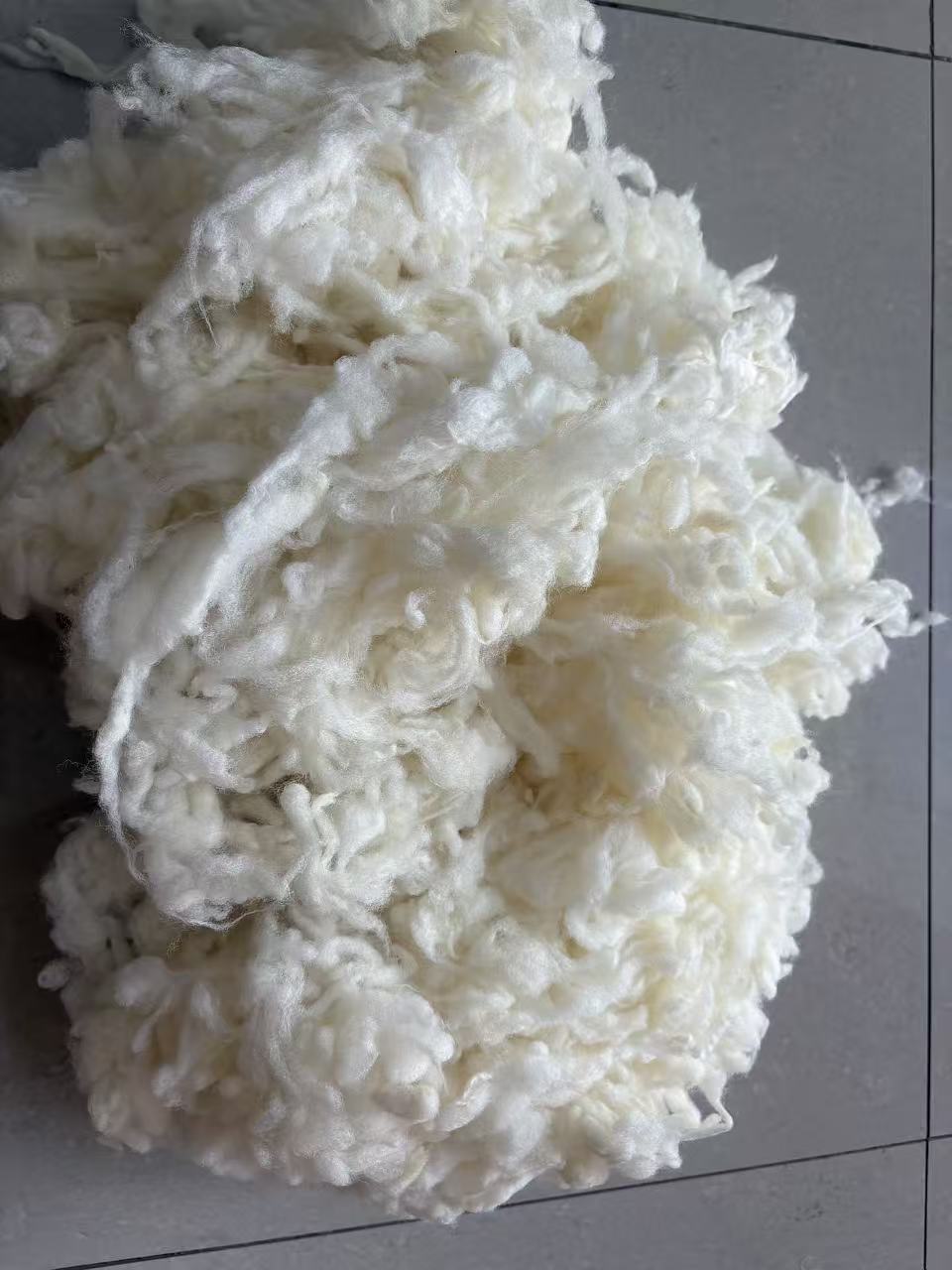
For textile manufacturers producing premium fabrics, the choice between carbonised wool and scoured wool often comes down to fiber purity, dye performance, and processing consistency. While scoured wool effectively removes grease and dirt, it may still contain vegetable matter that can affect yarn quality, dye uniformity, and finished fabric appearance. Carbonised wool undergoes an additional purification process to significantly reduce these impurities, providing a cleaner and more consistent fiber solution for luxury apparel, high-end knitwear, and other premium textile applications.
What Is Scoured Wool and Where Does It Fall Short?
Scouring is the first cleaning process that raw wool undergoes after shearing. Its main purpose is to remove wool grease (lanolin), dirt, suint (dried sweat), and other surface contaminants from the fleece. The result is scoured wool, which is cleaner than raw wool but still may contain certain natural impurities.
However, scouring does not remove all foreign materials from wool fibers. During outdoor grazing, sheep fleece can collect vegetable matter (VM), including burrs, seeds, grass, straw, and other plant fragments. These impurities can remain trapped between fibers and create challenges during later processing stages.
For textile manufacturers, remaining vegetable matter can affect production efficiency and finished fabric quality. During carding and spinning, plant fragments may contribute to neps, uneven yarn structure, or weak points. They can also influence dye absorption, resulting in inconsistent colors, visible specks, or an uneven fabric appearance.
While scoured wool is suitable for many standard applications, manufacturers producing premium wool fabrics, luxury apparel, and high-end knitwear often require a cleaner fiber with better consistency and processing performance.
What Is Carbonised Wool and How Is It Made?
Carbonised wool is scoured wool that undergoes an additional purification process to reduce vegetable matter that remains after standard washing. This extra treatment improves fiber cleanliness and makes the material more suitable for premium textile production.
The process typically begins with scouring to remove grease and dirt, followed by controlled acid treatment and heat processing. During carbonisation, vegetable matter such as burrs, seeds, and grass is converted into a brittle form that can be mechanically removed. The wool is then rinsed, neutralized, and further processed to achieve the required fiber quality.
The result is a cleaner and more uniform wool fiber with significantly reduced vegetable matter content. Compared with conventional scoured wool, carbonised wool provides improved consistency for spinning, dyeing, and manufacturing high-quality textile products.
How Is Carbonised Wool Tested for Textile Applications?
For textile manufacturers, the quality of carbonised wool is not determined only by vegetable matter removal. Consistent fiber performance also depends on quality inspection throughout processing, from raw material preparation to the final wool fiber stage.
Common evaluation factors include vegetable matter content, fiber appearance, cleanliness, and processing performance. A reliable carbonised wool supplier should ensure that the material meets the requirements for spinning, dyeing, and premium textile manufacturing.
Fiber consistency is especially important for applications such as luxury apparel, fine suiting, and high-end knitwear. Manufacturers typically assess whether the wool provides stable performance during carding, spinning, and dyeing processes to reduce production variation and maintain fabric quality.
For buyers sourcing carbonised wool in bulk, supplier experience, quality control procedures, and batch-to-batch consistency are key considerations. Properly tested carbonised wool provides manufacturers with a more reliable foundation for producing high-quality wool fabrics.
Why Choose Carbonised Wool Instead of Standard Wool Processing?
For textile manufacturers, selecting the right wool preparation method directly affects yarn quality, production stability, and final fabric performance. While standard scoured wool is suitable for many general textile applications, premium fabric production often requires a higher level of fiber cleanliness and consistency.
Carbonised wool provides an additional purification step that helps remove vegetable matter remaining after scouring. This makes the fiber more suitable for processes where appearance, dye uniformity, and yarn quality are critical, such as luxury apparel, fine suiting, and high-end knitwear.
For manufacturers working with demanding customers or premium textile brands, using carbonised wool can help reduce production risks caused by fiber impurities and improve consistency between different production batches. As a result, it has become an important material choice for suppliers seeking reliable performance in high-quality wool textile manufacturing.
Carbonised Wool vs. Scoured Wool: A Direct Comparison
| Feature | Carbonised Wool | Scoured Wool |
|---|---|---|
| Grease and Dirt Removal | Yes—complete | Yes—complete |
| Vegetable Matter Removal | Yes—near-complete elimination | No—burrs, seeds, and grass remain |
| Fiber Purity | Exceptionally high | Moderate—impurities persist |
| Dye Uniformity | Excellent—dyes absorb readily and evenly | Variable—impurities cause uneven dye uptake |
| Yarn Quality | Cleaner spinning, fewer neps and weak spots | Risk of breakage from vegetable matter |
| Finished Fabric Appearance | Consistent, refined, premium | Potential specks and irregularities |
| Tensile Strength Retention | 92–96% of original strength | 100% of original (no acid treatment) |
| Production Cost | Higher—additional processing steps | Lower—single wash process |
| Best Application | Premium apparel, luxury suiting, high-end knitwear | Standard wool products, industrial textiles |
The table tells a clear story: carbonised wool is the premium choice. It costs more to produce because the carbonisation process adds labor, chemicals, and energy. But for manufacturers who value quality over cost, the investment pays dividends in finished fabric performance, customer satisfaction, and brand reputation.
The Dye Advantage: Why Carbonised Wool Takes Color Better
A major advantage of carbonised wool is its improved dyeing consistency during textile production. The additional purification process changes the fiber structure and helps manufacturers achieve more uniform color results compared with conventional scoured wool.
During carbonisation, controlled acid treatment improves fiber cleanliness and allows dyes to penetrate more evenly. The result is a deeper and more consistent color appearance, which is especially valuable for premium wool fabrics, luxury suiting, and high-end knitwear.
By comparison, scoured wool may still contain small amounts of vegetable matter that affect dye absorption. Burrs, seeds, and other plant fragments can create visible specks or uneven coloration after dyeing, potentially affecting the appearance of finished garments.
For textile manufacturers producing high-quality wool products, consistent dye performance helps reduce fabric defects, improve production efficiency, and maintain a reliable final product appearance. Carbonised wool provides a cleaner fiber foundation for achieving these results.
Strength and Durability: Does Acid Damage the Fiber?
A common concern when selecting carbonised wool is whether the carbonisation process affects fiber strength. The actual impact depends on process control, including acid treatment, temperature management, and neutralization procedures.
When properly processed, carbonised wool can retain most of its original tensile strength while gaining the benefits of improved fiber purity and reduced vegetable matter content. This balance allows the material to remain suitable for applications ranging from worsted suiting fabrics to premium knitwear.
After controlled washing and neutralization, residual chemicals are removed, allowing the finished wool fiber to meet textile production requirements. In practical applications, carbonised wool maintains good wear resistance and durability while providing advantages in cleanliness and processing consistency.
For manufacturers targeting premium textiles, the small trade-off in processing cost is often justified by improved dye uniformity, smoother production, and higher finished fabric quality.
What Should Textile Manufacturers Consider When Buying Carbonised Wool?
Choosing a reliable carbonised wool supplier requires more than evaluating fiber cleanliness. Textile manufacturers should also consider processing consistency, quality control, and suitability for their specific applications.
Fiber Quality and Purity
A stable carbonisation process is essential for achieving consistent vegetable matter removal while maintaining fiber performance. Manufacturers should evaluate whether the supplier can provide reliable quality across different batches.
Application Requirements
Different textile applications require different wool characteristics. Luxury suiting, knitwear, and premium fabrics may have different requirements for fiber fineness, processing method, and dyeing performance.
Production Capability and Supply Stability
For international textile manufacturers, a supplier’s production capacity and quality management system are also important factors. Stable supply ensures consistent material performance and helps avoid production delays.
By evaluating these factors, manufacturers can select a suitable carbonised wool supplier that meets their quality standards and production requirements.
Who Benefits Most from Carbonised Wool?
Luxury Fashion Brands
For luxury fashion brands, material consistency directly influences the quality and perception of finished garments. Carbonised wool provides cleaner fibers, more uniform dye absorption, and improved yarn quality, helping manufacturers create premium wool fabrics with a refined appearance and superior hand feel.
As demand for high-quality wool products continues to increase in luxury fashion and bespoke tailoring markets, carbonised wool offers brands a reliable fiber solution for developing high-value textile collections.
High-End Tailoring and Suiting
Worsted suiting fabrics require exceptionally clean and consistent wool fibers. Even small amounts of vegetable matter can appear as visible defects in finished fabrics, especially in light-colored or finely woven materials.
By reducing these impurities, carbonised wool helps tailors and fabric manufacturers achieve smoother yarn quality, cleaner fabric surfaces, and more consistent results for premium suits and formalwear.
Knitwear Manufacturers
Knitwear production places strict requirements on yarn uniformity and processing stability. Vegetable matter remaining in scoured wool may contribute to neps, uneven tension, and fabric defects during knitting.
With improved fiber cleanliness, carbonised wool supports smoother spinning and knitting processes, helping manufacturers reduce production interruptions and improve finished product consistency.
Exporters and International Textile Suppliers
For textile suppliers serving global markets, offering specialized materials such as carbonised wool can help meet the increasing demand for premium wool fibers. Suppliers with stable processing capabilities can provide manufacturers with consistent-quality wool materials for luxury apparel, knitwear, and high-end textile production.
How Carbonised Wool Improves Textile Production Efficiency
Beyond finished fabric quality, carbonised wool can help manufacturers improve processing stability and production consistency compared with conventional scoured wool.
Cleaner Carding and Spinning
Vegetable matter remaining in scoured wool can create challenges during carding, where fibers are aligned into a continuous web before spinning. Burrs, seeds, and other plant fragments may increase equipment wear, contribute to neps, and affect yarn uniformity.
With significantly reduced vegetable matter content, carbonised wool allows smoother carding and spinning operations, helping textile manufacturers improve processing stability, reduce interruptions, and produce more consistent wool yarn.
Higher Dyehouse Efficiency
Uneven dyeing can increase processing costs and affect final fabric quality. When vegetable matter remains in scoured wool, differences in dye absorption may lead to inconsistent coloration or visible defects.
Because of its improved fiber cleanliness and uniformity, carbonised wool supports more consistent dye uptake, helping manufacturers improve first-pass dyeing results, reduce reprocessing requirements, and achieve more reliable color performance.
Consistent Finished Fabric Quality
For manufacturers supplying premium brands, fabric consistency is essential. Variations in fiber quality can affect appearance, performance, and customer satisfaction.
By providing a cleaner and more uniform wool fiber base, carbonised wool helps manufacturers produce high-quality fabrics with improved consistency across production batches, supporting reliable supply for luxury apparel, suiting, and premium textile applications.
FAQ
Q: What is carbonised wool used for?
Carbonised wool is mainly used for premium textile applications, including luxury apparel, fine suiting fabrics, high-end knitwear, and other products requiring high fiber purity and consistent dye performance.
Q: What is the difference between carbonised wool and scoured wool?
Scoured wool removes grease, dirt, and surface contaminants, while carbonised wool undergoes an additional process to reduce vegetable matter such as burrs and plant fragments. This provides better consistency for premium textile production.
Q: Does carbonisation damage wool fibers?
When properly controlled, the carbonisation process has minimal impact on fiber performance. High-quality carbonised wool maintains good strength, durability, and processing suitability.
Q: Why do textile manufacturers choose carbonised wool?
Manufacturers choose carbonised wool because it helps improve spinning stability, dye consistency, and finished fabric appearance, making it suitable for demanding premium textile applications.
The Verdict: Why Carbonised Wool Wins for Premium Textiles
For premium textile manufacturers, carbonised wool offers better purity, dye consistency, and production reliability compared with scoured wool. By removing vegetable matter, it helps improve yarn quality, fabric appearance, and overall processing efficiency.
For luxury apparel, fine suiting, and high-end knitwear applications, carbonised wool is a reliable choice for achieving consistent textile performance.
Ready to Upgrade Your Wool Sourcing?
Jiangsu Giant Wool Products Co., Ltd. supplies premium carbonised wool designed for demanding textile applications. Contact the team to request samples and discuss the right wool solution for your production needs.