Why Carbonised Wool Solves Shrinking and Itchy Sweaters
We’ve all been there: a new wool sweater, worn a few times, washed once, and it shrinks. Itchy, tight, and disappointing. Millions of wool garments face the same problem every year.
The solution is wełna karbonizowana. By removing short fibers and impurities, it keeps sweaters soft, smooth, and resistant to shrinkage—even after repeated washes. With the global wool market valued at around US $28 billion in 2026 and projected to reach US $36 billion by 2032, shrinkage remains a major concern for brands and consumers alike.
In this article, we’ll explain why wool shrinks and how wełna karbonizowana ensures your garments stay comfortable, durable, and true to size.
The Two Main Problems with Regular Wool
Wool is one of nature’s most remarkable fibers: it keeps you warm when it’s cold, cool when it’s warm, resists odors, and lasts for years. Yet, raw wool—straight off the sheep—has two key problems that can ruin your garments: vegetable matter i surface scales.
Problem 1: Vegetable Matter
As sheep graze, tiny burrs, seeds, straw, and other plant fragments get caught in their fleece. Raw wool can contain 8–12% vegetable matter by weight. These remnants cause the familiar “prickle” against your skin and absorb dye unevenly, resulting in blotchy colors. Over time, they act like tiny abrasives, weakening wool fibers with each wash or movement. Simple washing or combing cannot remove these impurities.
Problem 2: Surface Scales
Every wool fiber has microscopic overlapping scales, similar to pine cone shingles. These scales create directional friction—fibers slide easily one way but lock in the other. When washed, agitation causes fibers to interlock, a process called felting, which leads to shrinkage. Untreated wool sweaters can shrink 10–20% after the first wash, and up to 30% after multiple washes. Shrinking is irreversible.
Importantly, these two problems are independent: removing vegetable matter does not stop felting, and smoothing scales does not remove burrs. A complete solution must address both, and that’s where wełna karbonizowana comes in.
Czym jest wełna karbonizowana?
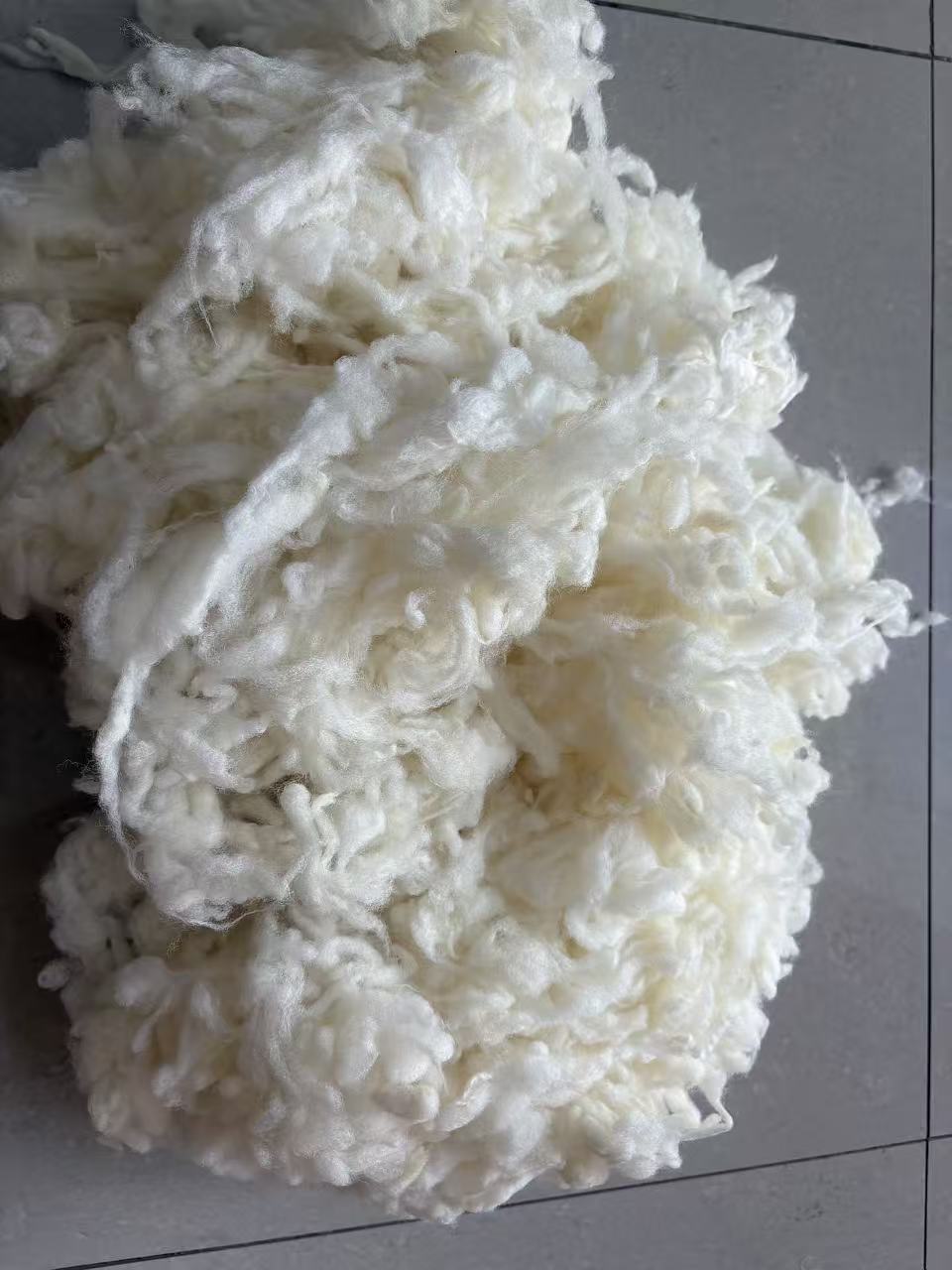
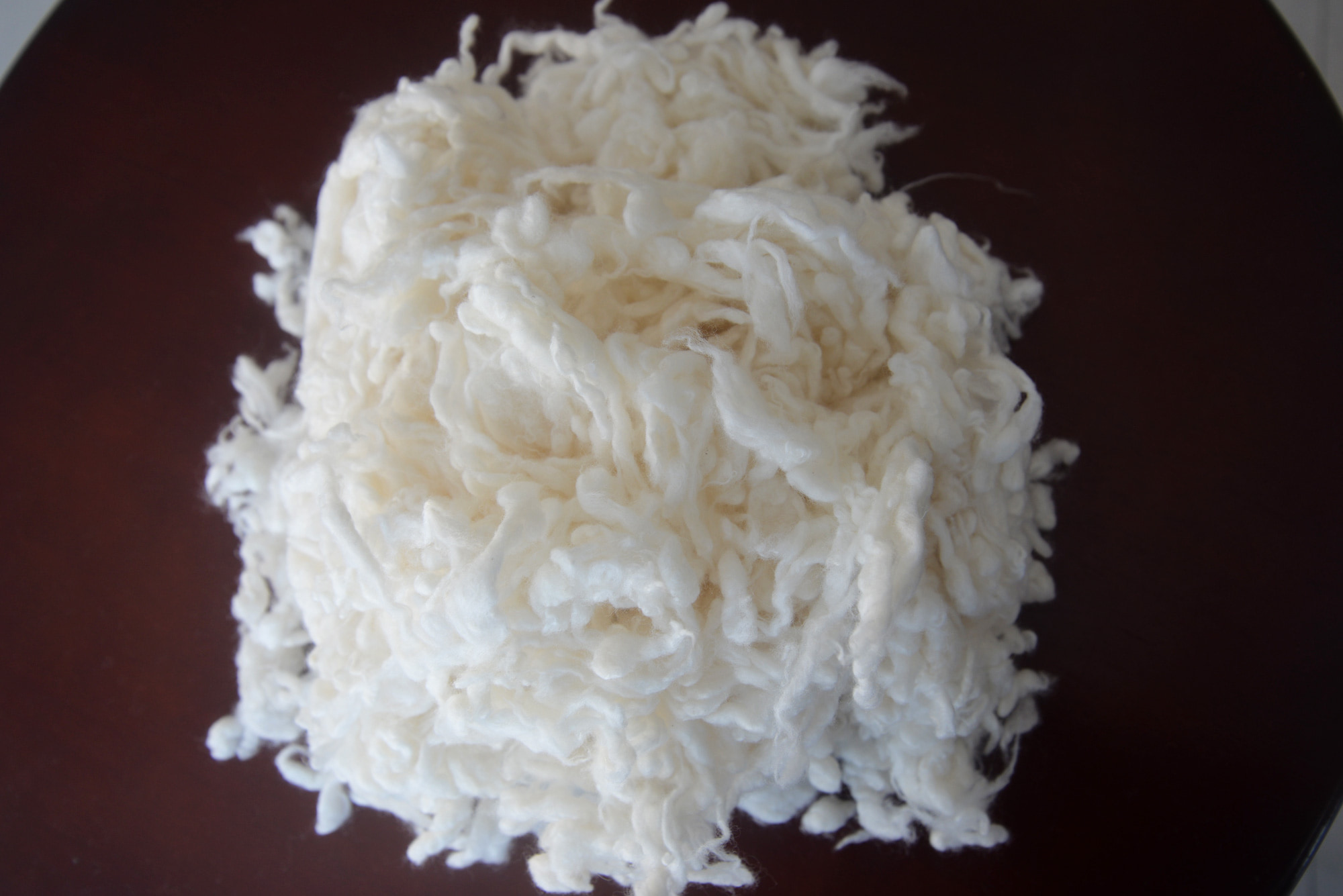
Zwęglona wełna is wool that has undergone a chemical purification process to remove organic impurities like burrs, seeds, and grass. Unlike simple washing, the process transforms plant matter into brittle carbon dust, which is then removed, leaving wool cleaner, softer, and more uniform.
The term “carbonised” sounds harsh, but the process is gentle. Wool fibers (keratin-based) resist the acid used, while plant matter (cellulose-based) breaks down, resulting in wool free from the itchiness, uneven dyeing, and long-term fiber damage caused by raw fleece.
Note: Carbonisation removes vegetable matter but does not prevent shrinkage caused by felting. That’s why it is often paired with superwash treatment for full shrink resistance.
How Carbonised Wool Is Made: A Step-by-Step Look
- Scouring (Washing) – Raw wool is washed to remove lanolin, dirt, and sweat salts.
- Acid Treatment – Wool is soaked in dilute sulfuric acid (5–7%). Plant matter breaks down; wool remains intact.
- Drying and Baking – Wool is dried at 60–70°C, then baked at ~125°C for one minute. Plant matter converts to brittle carbon.
- Crushing and Removal – Heavy rollers crush the carbonized plant material, and vibration/air currents remove >98%.
- Neutralization – Residual acid is removed using sodium carbonate, ensuring pH neutrality (<0.02% residual acid per ASTM D584).
Results: Residual vegetable matter drops from 8–12% to <0.5%, tensile strength is retained at 92–96%, and fibers become more porous for better dye absorption.
When combined with superprania, carbonised wool becomes machine washable, shrink-resistant, soft, and durable—perfect for everyday garments, baby clothes, and activewear.
Adding Superwash: The Key to Shrink Resistance
Carbonisation solves the vegetable matter problem. But as we discussed, it does nothing to stop felting and shrinkage. That is where superwash treatment comes in.
Superwash is a finishing treatment that modifies the wool fiber’s surface to prevent felting and shrinkage, allowing it to be machine-washed without damage. The most common method uses a controlled chlorine treatment to smooth or flatten the scales on the fiber surface, then applies a thin polymer coating. With the scales smoothed and coated, they can no longer lock together when exposed to heat, moisture, and agitation. The fibers slide past each other freely instead of catching and felting.
When carbonised wool undergoes the superwash process, it retains its purity and softness while gaining easy-care properties. The result is wool that is machine washable, resistant to felting and shrinkage, and maintains its softness and strength even after repeated washing. For everyday wear—socks, activewear, baby clothing, and garments that need frequent washing—this combination is ideal.
The difference in shrinkage is dramatic. Regular untreated wool can shrink 15% to 30% after multiple washes. Carbonised superwash wool typically experiences shrinkage below 3%.
A Clear Comparison: Carbonised Wool vs. Regular Wool
To help you see the differences clearly, here is a side-by-side comparison of carbonised wool (including carbonised superwash) versus regular untreated wool.
| Cecha | Regular Untreated Wool | Wełna karbonizowana | Włókno wełniane superwash węglowane |
|---|---|---|---|
| Vegetable matter content | 8–12% by weight | <0,5% | <0,5% |
| “Prickle” factor (itchiness) | Wysoki | Bardzo niski | Bardzo niski |
| Dye uniformity | Poor (blotchy, uneven) | Doskonały | Doskonały |
| Shrink resistance in the wash | None (15–30% typical) | None | High (<3% shrinkage) |
| Można prać w pralce | Nie | Nie | Tak |
| Care instructions | Hand wash cold, lay flat to dry, no agitation | Hand wash cold, lay flat to dry | Machine wash gentle cold, tumble dry low |
| Fiber strength retention | Podstawowy poziom | 92–96% retained | 92–96% retained |
| Best for | Delicate items with careful handling | Premium garments with careful handling | Everyday wear, activewear, baby clothing |
As the table shows, carbonised wool on its own already solves the vegetable matter problem. But carbonised superwash wool solves both problems, making wool suitable for everyday use in a way that traditional wool never could be.
The Real Benefits You’ll Notice
Moving from technical details to practical advantages, here’s what carbonised wool offers to consumers and brands alike.
Benefit 1: No More Shrinking Surprises
With carbonised superwash wool, laundry is no longer stressful. Your garments retain their original dimensions and shape even after multiple washes. That medium sweater stays medium, the fit you liked on day one remains the same on day one hundred.
Benefit 2: Less Prickling, More Comfort
If wool felt itchy or scratchy before, it was likely due to residual vegetable matter—tiny burrs or plant fragments in the fibers. Carbonised wool removes these impurities almost completely. Even those who cannot tolerate regular wool often find carbonised superwash wool soft and comfortable, making it ideal for baby clothing or sensitive skin.
Benefit 3: Better Color and Appearance
Vegetable matter absorbs dye unevenly, producing blotchy or inconsistent colors in regular wool. Carbonised wool takes dye uniformly, resulting in vibrant, consistent, and richer colors across garments.
Benefit 4: Machine Washable Convenience
One of the biggest barriers to buying wool is care requirements. Hand washing is time-consuming, dry cleaning is costly, and mistakes can ruin expensive items. Carbonised superwash wool removes these concerns: machine wash gentle with cold water, tumble dry low, and your garment maintains its original fit and softness.
Benefit 5: Longer Garment Life
Residual plant matter acts like internal abrasives, weakening fibers over time. Removing these fragments means your wool lasts longer. Your garments stay in excellent condition for years, saving money and reducing environmental impact.
Applications of Carbonised Wool
The versatility of carbonised wool is remarkable:
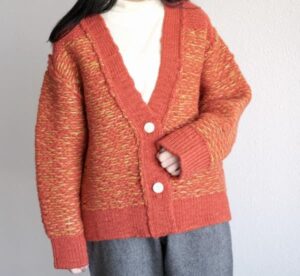
- Everyday Clothing: Sweaters, cardigans, and pullovers can be machine-washed without worry.
- Socks: Retain shape and comfort even after frequent washing.
- Activewear: Naturally moisture-wicking and odor-resistant, now practical for repeated washes.
- Baby Clothing: Hypoallergenic and soft on delicate skin, easy-care properties save parents time.
- Blankets and Bedding: Soft, durable, breathable, and moisture-absorbing for comfortable sleep.
- Luxury Apparel: Smooth fiber consistency ensures high-quality yarns and fabrics for premium garments.
Caring for Carbonised Superwash Wool
Even high-quality wool lasts longer with proper care:
- Machine Wash Gentle: Cold water, wool or delicate cycle, inside-out, mesh laundry bag recommended.
- Use the Right Detergent: pH-neutral, wool-specific, free of bleach or enzymes. Avoid fabric softeners.
- Tumble Dry Low: Safe, but air-drying flat is gentler.
- Wash Less Often: Wool resists odors and light dirt. Airing between wears reduces washing and preserves fibers.
Why Carbonised Wool Matters for Brands and Manufacturers
Carbonised wool benefits producers and brands beyond consumer satisfaction:
- Fewer Returns: Shrinkage is a common return reason; carbonised superwash wool minimizes this problem.
- Better Production Efficiency: Cleaner fibers reduce spinning stoppages by 20–30%, increasing output and lowering costs.
- Consistent Quality: Uniform fibers absorb finishing treatments evenly and dye consistently, ensuring repeatable quality.
- Stronger Sustainability Story: Longer-lasting garments reduce waste and promote environmental responsibility.
- Access to New Markets: Easy-care properties enable product categories that traditional wool cannot serve, including baby clothing, activewear, everyday socks, and travel garments.
FAQ
1. What is the difference between carbonised wool and regular wool?
Carbonised wool has been chemically treated to remove vegetable matter like burrs and seeds that cause itching and uneven dyeing. Regular wool still contains these impurities. Carbonised wool is cleaner, softer, and takes dye more evenly.
2. Does carbonised wool shrink?
Carbonised wool alone does not prevent shrinkage—it only removes plant matter. However, when carbonised wool is also given a superwash treatment, the combination creates wool that is highly resistant to felting and shrinkage, typically shrinking less than 3% after multiple washes.
3. Is carbonised wool safe for people with sensitive skin?
Yes. Carbonised wool removes the vegetable matter that causes most of the itching and irritation associated with wool. Many people who cannot wear regular wool find carbonised wool comfortable.
4. Can I machine wash carbonised superwash wool?
Yes. Carbonised superwash wool is specifically designed to be machine washable. Use a gentle cycle with cold water, and you can tumble dry on low if needed. Always check the care label on your specific garment.
5. Does carbonised wool cost more than regular wool?
Yes, carbonised wool typically costs more because of the additional processing steps. However, the higher upfront cost is offset by longer garment life, fewer replacements, and the convenience of machine washability. For brands, the reduction in returns and production issues also adds value.
The Bottom Line: Why Carbonised Wool is the Smart Choice
Wool is one of nature’s most remarkable fibers. It keeps you warm when it’s cold, cool when it’s warm, breathes naturally, resists odors, and is even flame-resistant. Yet, traditional wool has two major drawbacks: plant impurities that cause itchiness and uneven dyeing, and surface scales that lead to felting and shrinkage.
Carbonised wool addresses these problems at their root. Chemically removing all vegetable matter, it eliminates the itch. When combined with superwash treatment, it also prevents felting, making your garments machine washable, shrink-resistant, and soft even against the most sensitive skin.
Whether you’re a consumer who wants a sweater that stays true to size after every wash, or a brand seeking a reliable, high-performance wool for your next collection, carbonised wool delivers. Say goodbye to laundry stress and unwanted shrinkage—choose carbonised wool, and your knitwear will maintain its shape, comfort, and quality for years to come.