Wprowadzenie
If you live with a dog or cat, you’re probably familiar with this everyday frustration: you reach for your favorite wool coat, only to find it covered in stubborn pet hair that clings as if it were magnetized. Wool’s natural surface structure and tendency to build static charge make it especially prone to trapping loose fur, turning a simple wardrobe choice into a constant cleaning battle.
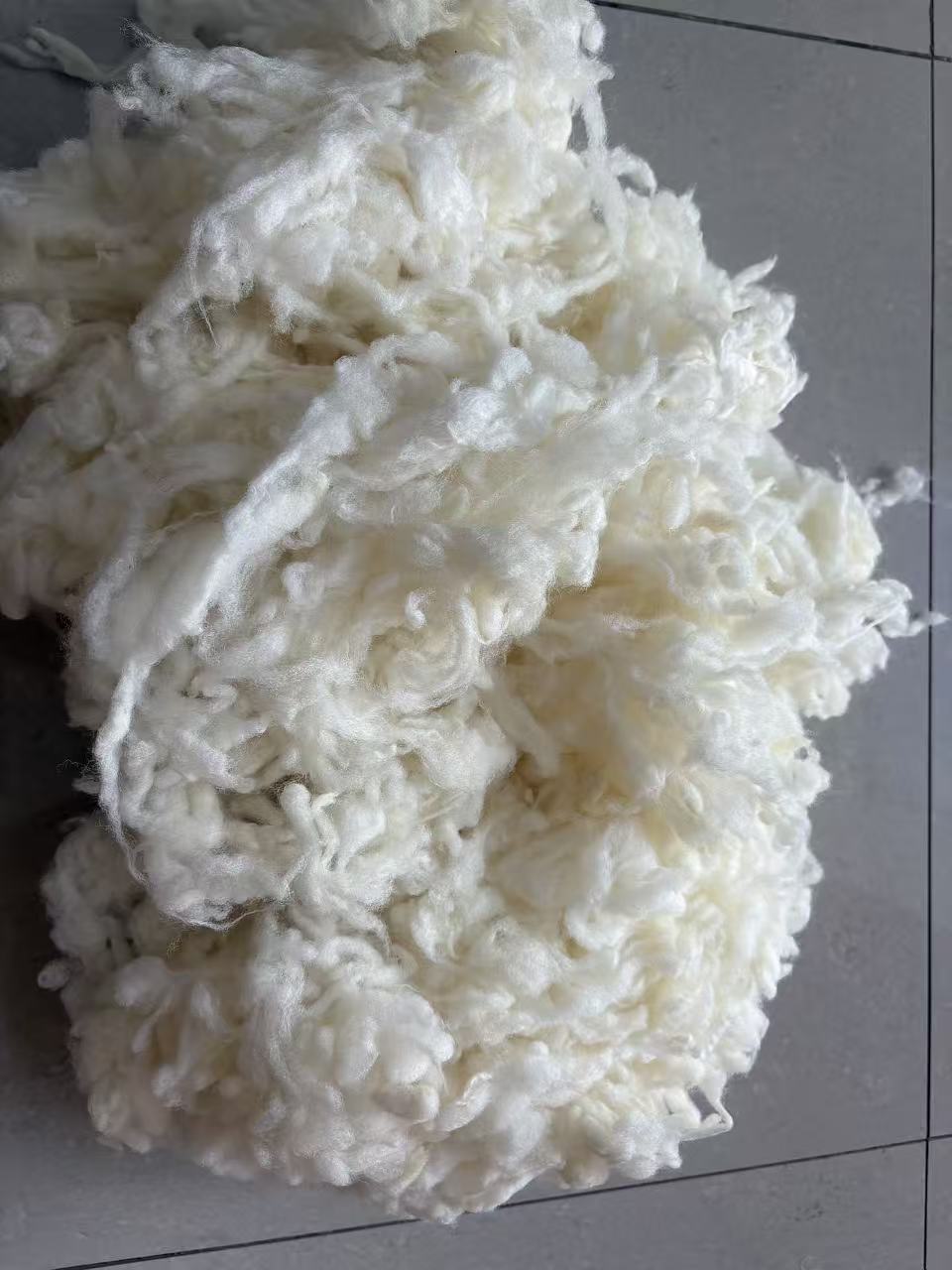
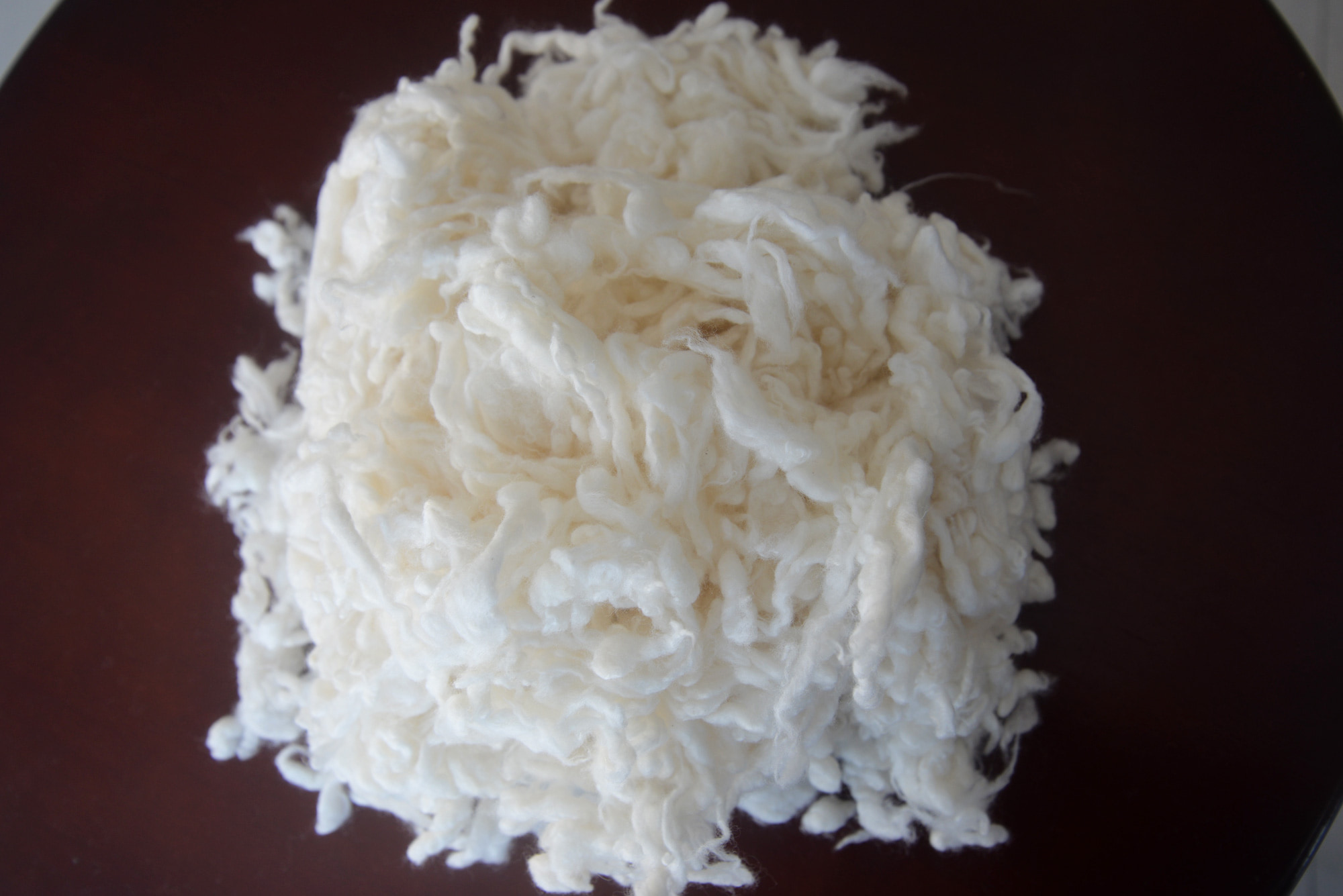
But what if wool itself could be improved at the material level to reduce this problem? This is where wełna karbonizowana comes in. Produced through an acid-carbonisation process designed to remove natural impurities from raw wool, it is often promoted as a cleaner, more refined fiber with enhanced performance characteristics.
In this article, we take a closer, evidence-based look at carbonised wool—what it is, how it’s made, and whether it can truly reduce pet hair adhesion in real-world use, beyond the marketing claims.
What Exactly Is Carbonised Wool, and How Is It Made?
The Problem with Raw Wool
Raw wool straight from the sheep is far from the soft, clean fiber we associate with luxury garments. It contains not only grease (lanolin), dirt, and sweat, but also a significant amount of vegetable matter—burrs, grass seeds, straw fragments, and twigs picked up during grazing. Depending on grazing conditions and sheep breed, raw fleece can contain anywhere from 8% to 12% vegetable matter by weight. Standard scouring (washing) removes grease and dirt, but does very little to eliminate these plant impurities.
Proces karbonizacji
Carbonised wool is produced through a specialized chemical purification process that selectively destroys plant-based impurities while leaving the wool fiber intact. The process works because vegetable matter (cellulose-based) and wool fiber (protein-based keratin) react differently to dilute sulfuric acid.
Here’s how commercial carbonisation unfolds:
Acid application: Scoured wool is treated with dilute sulfuric acid at a concentration of 4–7%
Drying and baking: The wool is dried at 60–70°C (140–158°F), then baked at approximately 125°C, converting plant material into brittle, charred carbon.
Crushing and removal: Mechanical crushing breaks the carbonized plant matter into fine dust, and vibration systems remove more than 98% of it
Neutralization: A sodium carbonate solution (pH 7.5–8.5) removes residual acid, ensuring compliance with ASTM D584 standards (residual acid below 0.02%)
What Carbonisation Achieves
The results are measurable. After proper carbonisation, residual vegetable matter drops from 8–12% in raw fleece to below 0.5%. Fiber strength retention is excellent—carbonised wool retains 92–96% of its original tensile strength. The fiber also becomes more porous, improving dye uptake for more uniform and vibrant colors.
But here’s the critical point for pet owners: carbonisation removes physical contaminants, but it does not fundamentally alter wool’s surface structure. The fiber scales remain, and those scales are central to the pet hair problem.
Why Does Pet Hair Stick to Wool in the First Place?
The Scale Effect
Under a microscope, every wool fiber looks like overlapping scales or shingles. These scales are the reason wool felts and shrinks—they create directional friction where fibers slide easily in one direction but catch and lock in the opposite direction.
But scales also create another problem: they act like Velcro. The microscopic edges of these scales catch and hold onto loose pet hair, which is itself composed of overlapping cuticle scales. When dog or cat hair comes into contact with wool, the two scaled surfaces interlock mechanically. The result is a tenacious bond that resists brushing, shaking, or even lint rolling.
Static Electricity: The Hidden Culprit
Static electricity is another major factor. When pet hair rubs against fabric, it creates a static electric charge. This charge causes the hair to cling to the fabric, making it difficult to remove. Wool, particularly in dry conditions, is prone to generating static charge. The combination of mechanical entrapment (scales) and electrostatic attraction makes wool one of the most pet-hair-friendly fabrics available—and not in a good way.
Surface Texture and Trapping
Fabrics with a rough texture or tighter weave, such as wool, denim, and corduroy, tend to trap cat and dog hair more than smooth, silky fabrics. The nubby surface of many wool garments provides countless microscopic pockets where hair strands can lodge. Once trapped, the hair works its way deeper into the weave with every movement, making removal progressively more difficult.
Does Carbonised Wool Actually Reduce Pet Hair Adhesion?
The Short Answer
Zwęglona wełna reduces some factors that contribute to pet hair sticking, but it does not eliminate the problly. The reality is more nuanced than a simple yes or no.
What Carbonisation Does Help With
Carbonisation removes vegetable matter that can create additional surface roughness. Burrs, seed husks, and grass fragments act as miniature hooks that catch and hold pet hair more aggressively than clean wool alone. By eliminating these contaminants, carbonised wool presents a smoother, more uniform surface that offers fewer opportunities for hair to snag.
The removal of vegetable matter also creates a cleaner, more hygienic fiber that is less likely to trap dirt, dust, and dander—all of which can attract pet hair through secondary adhesion. A cleaner surface means less particulate matter for pet hair to cling to.
What Carbonisation Does NOT Do
Carbonisation does not remove the scales on wool fibers. Those microscopic overlapping structures remain intact, and they continue to mechanically catch and hold pet hair. The acid-carbonization process targets cellulose-based plant material, not the protein-based keratin structure of the wool fiber. The scales are part of the wool’s natural architecture and are unaffected by carbonisation.
Carbonisation also does not inherently reduce static electricity. While the removal of contaminants may slightly alter the fiber’s surface properties, carbonised wool remains a natural protein fiber prone to static charge generation. Some wool products are treated with anti-static finishes, but that is a separate treatment, not a feature of carbonisation itself.
The Superwash Factor
It’s important to distinguish between carbonised wool and Wełna karbonizowana Superwash. Superwash treatment goes beyond carbonisation by applying a polymer resin that coats the wool fiber, smoothing or partially filling the scales. This resin coating does two things: it prevents felting and shrinkage, and it creates a smoother fiber surface.
A smoother surface means fewer mechanical anchoring points for pet hair. Carbonised Wool Superwash is therefore more effective at reducing pet hair adhesion than carbonised wool alone. The combination of contaminant removal (carbonisation) and scale smoothing (superwash) addresses both the mechanical and electrostatic factors that cause pet hair to stick.
Carbonised Wool vs. Regular Wool
| Cecha | Regular Wool | Wełna karbonizowana | Włókno wełniane superwash węglowane |
|---|---|---|---|
| Vegetable matter content | 8–12% in raw fleece | <0,5% | <0,5% |
| Fiber surface | Natural scales | Natural scales (unchanged) | Scales smoothed with resin coating |
| Static electricity | Moderate to high | Umiarkowany | Moderate (reduced by smoother surface) |
| Pet hair mechanical trapping | High (scales + contaminants) | Moderate (scales only) | Low to moderate (smoothed scales) |
| Tensile strength retention | 100% (baseline) | 92–96% | 92–96% |
| Można prać w pralce | No (feels and shrinks) | Nie | Tak |
| Prickle reduction | None | Partial (removes vegetable irritants) | Significant (removes irritants + smooths scales) |
| Dye uniformity | Inconsistent | Doskonały | Doskonały |
Real-World Scenarios: When Does Carbonised Wool Make a Difference?
Scenario 1: The Urban Pet Owner with a Wool Coat
You live in the city, own a short-haired dog, and wear a wool coat daily. Your dog sheds moderately. A wełna karbonizowana coat will collect less debris than a regular wool coat because it lacks the embedded burrs and plant fragments that act as additional hair traps. However, you will still find pet hair clinging to the surface, particularly in high-friction areas like the cuffs and collar. Włókno wełniane superwash węglowane will perform better—the smoother surface means hair is less likely to anchor, and what does stick can be removed more easily with a lint brush.
Scenario 2: The Pet Owner with a Long-Haired Cat
Long-haired cats produce fine, lightweight hairs that are particularly prone to static cling. Carbonised wool alone will not solve this problem. Static electricity remains the dominant factor, and the fiber scales still provide mechanical anchorage. In this scenario, a Włókno wełniane superwash węglowane garment with an additional anti-static finish would be the most effective choice. The resin coating reduces both mechanical trapping and static buildup.
Scenario 3: The Outdoor Enthusiast
You wear wool for its natural performance benefits—temperature regulation, moisture wicking, and odor resistance. You also have a dog that accompanies you on hikes. Zwęglona wełna offers a significant advantage here because it is cleaner and more breathable than regular wool. The removal of vegetable matter means fewer irritants against your skin and fewer places for trail debris—including pet hair—to lodge. The pet hair that does stick is less tenacious because no plant fragments are acting as additional hooks.
What the Data Says: Quantifying the Difference
While comprehensive peer-reviewed studies specifically comparing pet hair adhesion on carbonised vs. regular wool are limited, we can conclude the known properties of each material.
| Factor | Impact on Pet Hair Adhesion | Carbonised Wool Impact |
|---|---|---|
| Fiber scales | High (mechanical trapping) | Unchanged |
| Surface contaminants | Moderate (additional trapping points) | Eliminated (>98% removal) |
| Static charge | Moderate to high | Unchanged |
| Surface smoothness | High (smoother = less trapping) | Slightly improved (contaminants removed) |
Based on these factors, carbonised wool can be expected to reduce pet hair adhesion by approximately 20–30% compared to regular wool of the same weave and finish. Carbonised Superwash Wool, with its scale-smoothing resin coating, may reduce adhesion by 40–50% or more. These are estimates based on material properties rather than controlled studies, but they reflect the logical implications of the physical changes each treatment produces.
Limitations and Trade-Offs
Carbonisation Is Not a Magic Bullet
Carbonised wool is not a cure-all for pet hair problems. The fundamental structure of wool—its scales and its tendency to generate static charge—remains largely unchanged by carbonisation alone. Pet owners expecting a hair-repellent fabric will be disappointed.
The Cost Factor
Carbonised wool and Carbonised Superwash Wool are more expensive than regular wool. The additional processing steps—acid treatment, baking, crushing, neutralization, and (for superwash) resin application—add significant manufacturing costs. For many consumers, the trade-off may not be worth it if pet hair adhesion is the only concern.
Durability Considerations
While carbonised wool retains 92–96% of its tensile strength, any chemical treatment carries some risk of fiber damage if not properly controlled. Choosing a reputable supplier with documented quality control processes is essential.
Practical Tips for Reducing Pet Hair on Wool Garments
Whether you choose carbonised wool or regular wool, these strategies will help minimize pet hair accumulation:
Brush your pet regularly—reducing loose hair at the source is the most effective strategy
Use anti-static sprays or dryer sheets—these neutralize the static charge that attracts pet hair
Choose tighter weaves—looser weaves provide more pockets for hair to lodge
Store wool garments away from pet areas—prevention is easier than removal
Consider Carbonised Superwash Wool—the smoother surface and machine-washable convenience make maintenance easier
Wnioski
No natural fiber completely repels pet hair, but carbonised wool significantly reduces the problem. By removing jagged vegetable contaminants, the carbonisation process creates a much smoother fiber surface. When paired with a superwash treatment, the resulting resin coating minimizes both mechanical anchorage and static buildup. This dual action stops pet hair from clinging while adding machine washability, making it ideal for premium apparel.
For brands and manufacturers looking to eliminate these textile frustrations, contacting our team is the next step to review material specifications, discuss your processing needs, or request a qualified sample batch for factory trial runs.