Introduction
If you’ve ever washed a wool sweater only to find it has shrunk, you already understand the problem Carbonised Superwash Wool is designed to solve. While wool is warm and breathable, it can shrink, itch, and contain tiny plant impurities from the sheep’s environment.
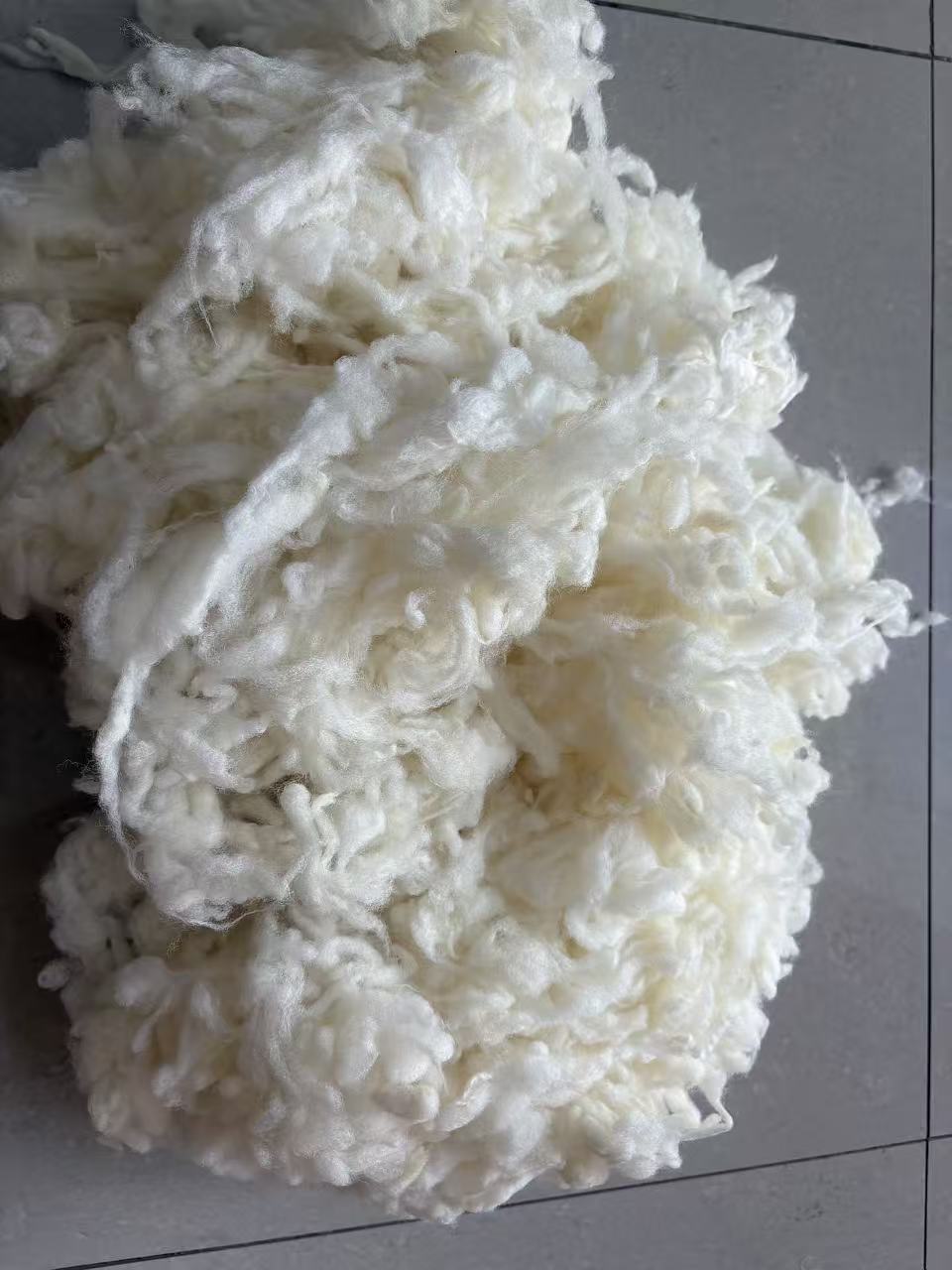
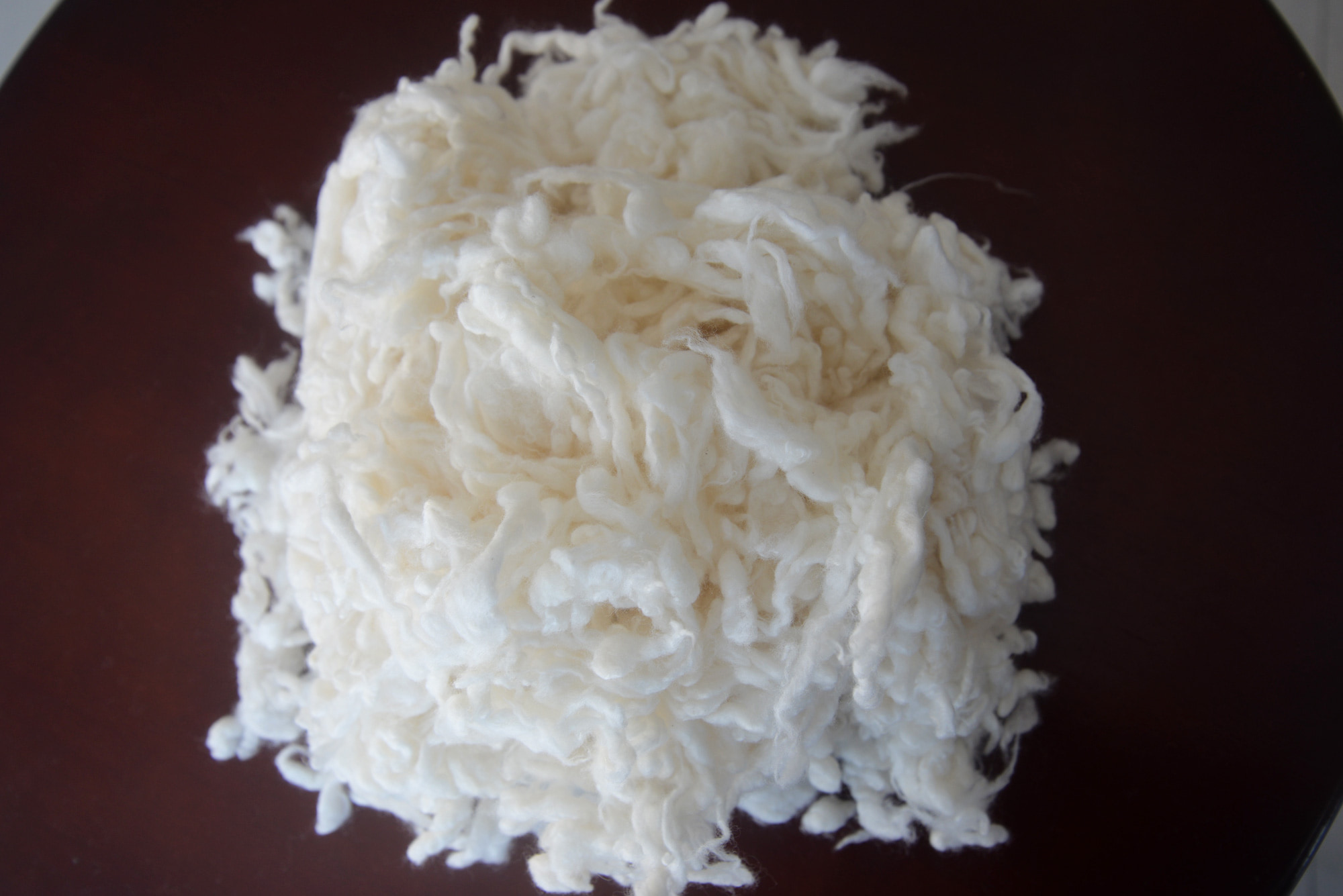
Carbonised Superwash Wool combines two processes: carbonisation removes vegetable matter like seeds and burrs, while superwash treatment prevents felting and shrinkage. Together, they produce a cleaner, softer, machine-washable wool that still keeps wool’s natural comfort and performance.
As demand grows for easy-care natural fibers, Carbonised Superwash Wool has become an increasingly important material in modern textile applications.
The Two Fundamental Problems With Raw Wool
Before comparing processed wool to regular wool, you need to understand what regular wool actually looks like straight off the animal. Two distinct problems compromise its usability.
Problem one: vegetable matter. Sheep graze. As they eat, burrs, grass seeds, straw fragments, and other plant material lodge in the fleece. After shearing and basic scouring (washing to remove grease and dirt), this vegetable matter remains embedded. Depending on grazing conditions and sheep breed, raw fleece can contain anywhere from 8% to 12% vegetable matter by weight. Those plant fragments cause skin irritation—the familiar “prickle” that makes many people say they hate wool. They also absorb dye differently than wool keratin, resulting in blotchy, uneven color. Over time, hard plant particles act as internal abrasives, slowly cutting and weakening wool fibers with every flex, wash, and wear.
Problem two: surface scales. Under a microscope, every wool fiber looks like a series of overlapping scales or shingles—exactly like a pine cone. These scales create directional friction: fibers slide easily in one direction but catch and lock in the opposite direction. When exposed to heat, moisture, and mechanical agitation (the exact conditions inside a washing machine or dryer), the scales on adjacent fibers interlock. The entanglement is irreversible. The result is felting—the progressive densification and shrinking that turns a large sweater into a small, thick mat of fabric.
These are independent problems. Solving one does not solve the other. Vegetable matter removal does nothing to prevent felting. Scale modification does nothing to remove burrs. Carbonised Superwash Wool solves both, but the two treatments must be understood separately.
How Carbonisation Works: Removing the Vegetable Matter
Carbonisation is a chemical purification process that selectively destroys plant-based impurities while leaving the wool fiber intact. It is not new—wool carbonising has been an established industrial process for decades—but its application is often misunderstood even within the textile industry.
The principle is elegantly simple: vegetable matter (cellulose-based) and wool fiber (protein-based, primarily keratin) react differently to dilute sulfuric acid. When properly applied, the acid dehydrates and carbonizes the plant material but does not significantly damage the protein fiber. That is why Carbonised Superwash Wool starts with carbonisation rather than superwash.
Here is how the Carbonised Wool process unfolds step by step at a commercial mill:
Acid application. Scoured wool is treated with dilute sulfuric acid at a concentration of 4–7%. The wool is saturated with the acid solution, achieving approximately 65% wet pickup.
Drying and baking. The treated wool is dried at 60–70°C (140–158°F) to concentrate the acid. It is then baked at approximately 125°C for about one minute. At this temperature, the acid attacks the cellulose structure of the plant material, converting it into brittle, charred carbon.
Mechanical removal. The wool passes through crushing rollers that break the carbonized plant matter into fine dust. Vibration and air-current systems then remove more than 98% of the crushed material.
Neutralization. The wool is rinsed with sodium carbonate solution at pH 7.5–8.5 to remove residual acid. This step is critical. Without proper neutralization, residual acid continues to degrade wool fibers over time, causing strength loss even months after processing. ASTM D584 standards require residual acid content below 0.02%.
What comes out the other end? After proper carbonisation, residual vegetable matter content drops from the raw 8–12% down to below 0.5%. Fiber strength retention is excellent: when processing follows optimal parameters, Carbonised Wool retains 92–96% of its original tensile strength. The fiber becomes more porous than scoured-only wool, which actually improves dye uptake. Carbonised Wool absorbs dyestuffs more readily and shows more uniform color.
Notably, a 2010 study published in the Journal of the Textile Machinery Society of Japan found that this method removes approximately 95% of impurities contained in raw materials while having “scarcely any unfavorable influence on fiber properties, i.e., fiber length, tensile strength, alkali-solubility, dyeability and colour-fastness of wool.”
But again: carbonisation alone does not make wool machine-washable. That is why Carbonised Superwash Wool requires the second stage.
How Superwash Treatment Works: Neutralizing the Scales
Superwash is a finishing treatment that makes wool resistant to felting and shrinkage. The most widely commercialized method is the Chlorine-Hercosett process, developed by the Commonwealth Scientific and Industrial Research Organisation (CSIRO) in Australia, which remains the industry standard for producing machine-washable wool.
The process has two stages:
Stage one: chlorination. Wool passes through a dilute chlorine solution (pH 3.5–4.5) that partially degrades the outer scale layer. The chlorine attacks the cystine disulfide bonds in the cuticle scales, chemically softening and smoothing the fiber surface. The scales do not disappear entirely, but their edges are blunted—they can no longer catch and lock onto adjacent fibers as effectively.
Stage two: polymer coating (Hercosett). After chlorination, the wool is rinsed and treated with Hercosett resin, a cationic polyamide epichlorhydrin compound. This resin deposits a thin, flexible polymer film around each fiber, encapsulating the remaining scale structure. The coating physically prevents scale interlocking while still allowing the fiber to breathe and absorb moisture.
The result is a Superwash Wool fiber that can be machine-washed on a gentle cycle without felting or shrinkage. Importantly, research confirms that the Chlorine-Hercosett anti-shrink treatment actually accelerates biodegradation in both soil and marine environments, meaning the environmental trade-off is less severe than many assume. When applied to previously carbonised wool, the same process yields Carbonised Superwash Wool with exceptional purity.
Alternative technologies exist. Plasma treatments use high-voltage electricity to modify fiber surface energy without chemical discharge. Enzyme-based treatments (protease processes) offer another low-impact route. However, the Chlorine-Hercosett method remains the most reliable and widely adopted system for commercial-scale production.
Superwash treatment alone, however, does not remove vegetable matter. If the wool contains burrs or seeds before superwash processing, those impurities remain in the finished fabric.
Why Combine Carbonisation and Superwash Into One Product
The logic of Carbonised Superwash Wool emerges directly from the independent limitations of each process. Carbonisation addresses one set of problems—contamination from vegetable matter. Superwash addresses an entirely separate set of problems—felting and shrinkage.
When you combine them into Carbonised Superwash Wool, you get a fiber that is:
Pure. Vegetable matter content drops to below 0.5%, virtually eliminating the “prickle factor” that makes many people dislike wool against their skin.
Washable. The fiber will not felt or shrink in the machine—even after repeated wash cycles. Garments made from Carbonised Superwash Wool can typically withstand 50 or more machine wash cycles with minimal degradation, while untreated wool may fail in far fewer cycles.
Uniform. The combination of purification and scale smoothing creates a fiber of exceptional consistency, which improves downstream processing yields, reduces dye defects, and enables higher spinning speeds in worsted and woollen systems.
Soft. Carbonisation removes the abrasive plant particles that cause scratchiness. Superwash smoothing further reduces surface friction. The result is a Carbonised Superwash Wool that feels softer to the touch than standard scoured wool and is comfortable for direct skin contact—including baby clothing, underwear, and next-to-skin knitwear.
The two treatments are applied sequentially in a standard production line. Carbonisation comes first, because you want to remove plant matter before applying the polymer coating that would otherwise trap those impurities inside the finished fiber. Superwash follows, typically at the top or yarn stage.
The Side-by-Side Comparison Table
The differences between untreated wool, standard superwash wool, and fully processed Carbonised Superwash Wool are substantial. Here is how they compare across the metrics that matter most to textile manufacturers, apparel brands, and end consumers:
| Property | Untreated Regular Wool | Standard Superwash Wool | Carbonised Superwash Wool |
|---|---|---|---|
| Vegetable matter removal | None—burrs and seeds remain in the fabric | None—superwash does not remove plant material | >98% removed after proper carbonising |
| Residual VM content | 8–12% in raw fleece | High—no carbonisation applied | Below 0.5% after optimal processing |
| Machine washable | No—hot water + agitation causes felting | Yes—scales are modified or coated | Yes—superwash treatment applied |
| Shrink resistance | None—10–20% shrinkage is common in the first wash | High—fiber will not feel or shrink substantially | Very high—exceeds standard superwash due to cleaner starting fiber |
| Skin comfort/itch factor | Moderate to high—burrs and scales cause irritation | Improved—scales smoothed, but existing plant matter remains | Excellent—both burrs removed and scales smoothed |
| Dye uniformity | Poor—plant matter absorbs dye differently | Improved—scales smoothed, but plant matter still creates blotches | Excellent—clean, uniform fiber takes dye evenly |
| Fiber strength retention | Baseline (100%) | Slight reduction from chlorination (95–98%) | 92–96%—strength loss from carbonising, but acceptable for most applications |
| Recommended applications | Traditional knitwear, outerwear, blankets (limited washing) | Everyday apparel, socks, activewear, hats | Baby clothing, underwear, next-to-skin knitwear, high-end apparel, export textiles |
This table is adapted from comparative data published by Jiangsu Giant Wool Products Co., Ltd., which produces commercial Carbonised Wool Superwash for textile manufacturers worldwide. In their published comparison, untreated wool shows low felting resistance and no machine-washability; standard superwash wool shows high felting resistance and machine-washability; and Carbonised Superwash Wool shows very high felting resistance plus machine-washability, with additional surface smoothness and dye absorption improvements.
The Cost and Quality Trade-Offs That Actually Matter
Every additional processing step adds cost. Carbonising—which requires acid, energy for drying and baking, neutralization chemicals, and specialized crushing and dust-removal equipment—is not free. Superwash treatment adds another layer of chemical and thermal processing.
So, when does the extra cost of Carbonised Superwash Wool make sense? When the application demands it. Here is a practical decision framework.
Use regular untreated wool when: The final product is outerwear that will rarely be washed (coats, heavy jackets, traditional blankets). The wool is blended with synthetic fibers that provide some structure. Budget constraints outweigh performance requirements. The consumer expects to hand-wash or dry-clean.
Use standard superwash wool when: The final product is everyday apparel that will be machine-washed frequently (socks, hats, everyday sweaters, activewear). The wool comes from sources with relatively low vegetable matter content (some New Zealand and Australian fleeces are notably cleaner). The budget is tight, but machine-washability is non-negotiable.
Use Carbonised Superwash Wool when: The final product is next-to-skin clothing—baby garments, underwear, base layers, lightweight knitwear—where even small burrs or plant residues will irritate. The fabric requires uniform, high-quality dyeing without blotches. The final product is destined for export markets that demand easy-care, high-consistency premium textiles. In short, Carbonised Superwash Wool is the right choice whenever purity and washability are equally important.
One nuance worth noting: carbonisation does cause measurable strength loss. High-quality Carbonised Wool Superwash retains 92–96% of its original tensile strength, which is acceptable for most apparel applications. But for heavy-duty industrial textiles or products subjected to extreme abrasion, that 4–8% reduction might be meaningful.
Also, residual acid is a serious quality risk if processing is not carefully controlled. Undetected acidic residues degrade wool fibers over time, causing brittleness and premature failure. Reputable suppliers test for residual acid content per ASTM D584 standards.
The same caution applies to chlorination residues in superwash processing. Over-chlorination damages fiber strength. Inconsistent polymer coating leaves some fibers unprotected, leading to spot shrinkage.
Quality Indicators Every Buyer Should Look For
When evaluating Carbonised Superwash Wool from any supplier, ask for these specific data points:
Residual vegetable matter content. A properly carbonised product should show below 0.5% VM by weight. Above 1% suggests incomplete processing or skipped neutralization steps.
Residual acid content. ASTM D584 compliance requires levels below 0.02%. Higher levels indicate poor neutralization and predict future fiber degradation. For Carbonised Superwash Wool, this is especially critical because the superwash polymer layer can trap acid residues if neutralization is incomplete.
Fiber strength retention. Request tensile strength test data comparing raw wool to the finished product. Retention above 90% is good; below 85% suggests process damage.
Shrinkage test results. Ask for machine-wash cycle data—how many cycles before measurable dimensional change exceeds 5%? Reputable suppliers can provide 50+ cycle data for Carbonised Wool Superwash products.
Dye uniformity samples. Request fabric swatches showing heavy-dye applications on Carbonised Superwash Wool versus comparable untreated wool. The difference is visually unmistakable.
The Bottom Line
Regular wool is a strong natural fiber, but it has two well-known drawbacks: plant-based impurities from grazing and shrinkage caused by fiber scales during washing.
Carbonisation removes vegetable matter, while superwash treatment prevents felting. Carbonised Superwash Wool combines both processes, resulting in a cleaner, softer, machine-washable wool that still retains the natural benefits of the fiber.
For babywear, next-to-skin garments, performance apparel, and export textiles, it offers a practical balance of comfort, durability, and easy care that standard wool cannot match. If you are evaluating materials for your next project, you can request samples and technical data from Giant Carbonised Wool for testing.