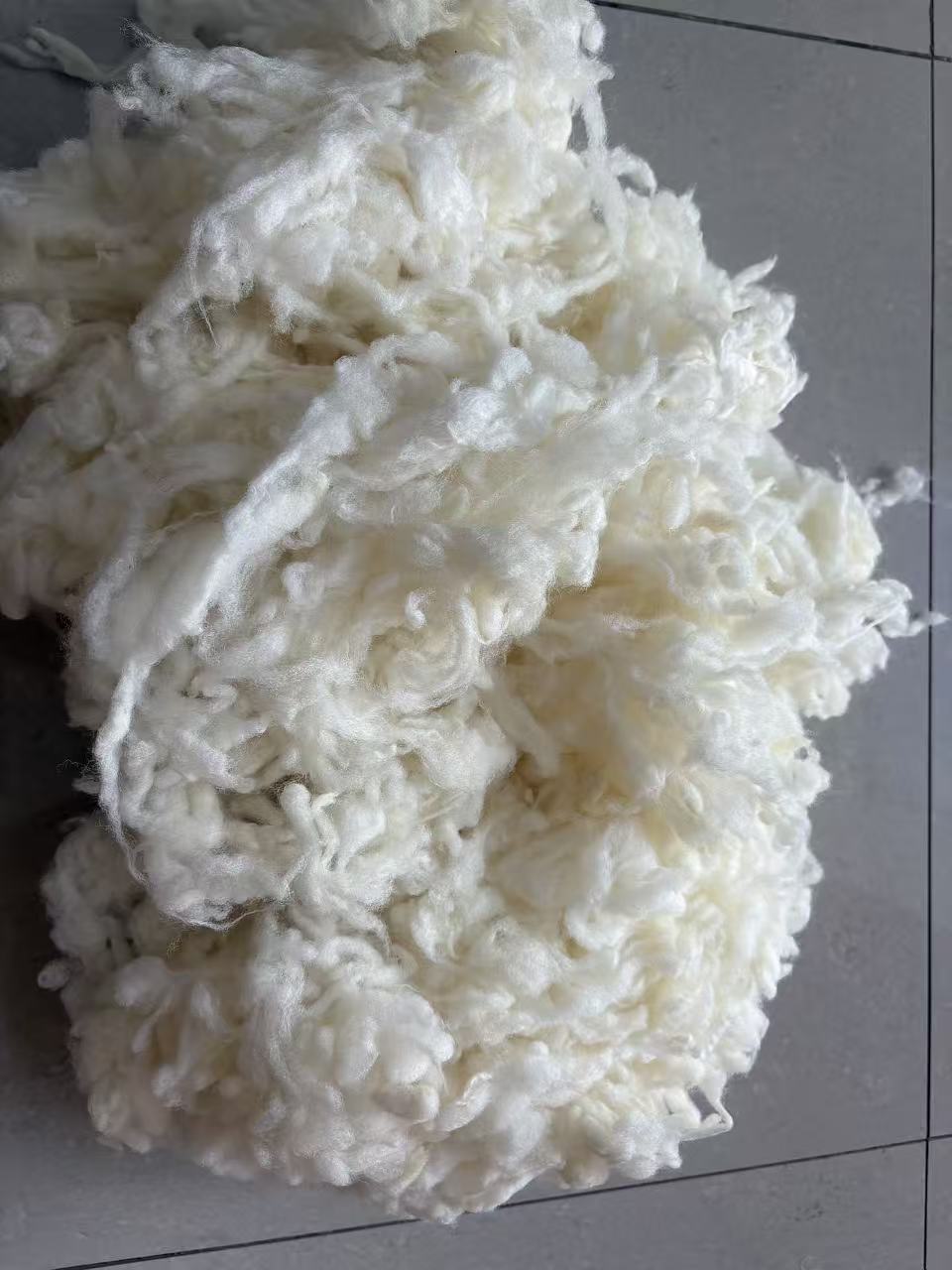
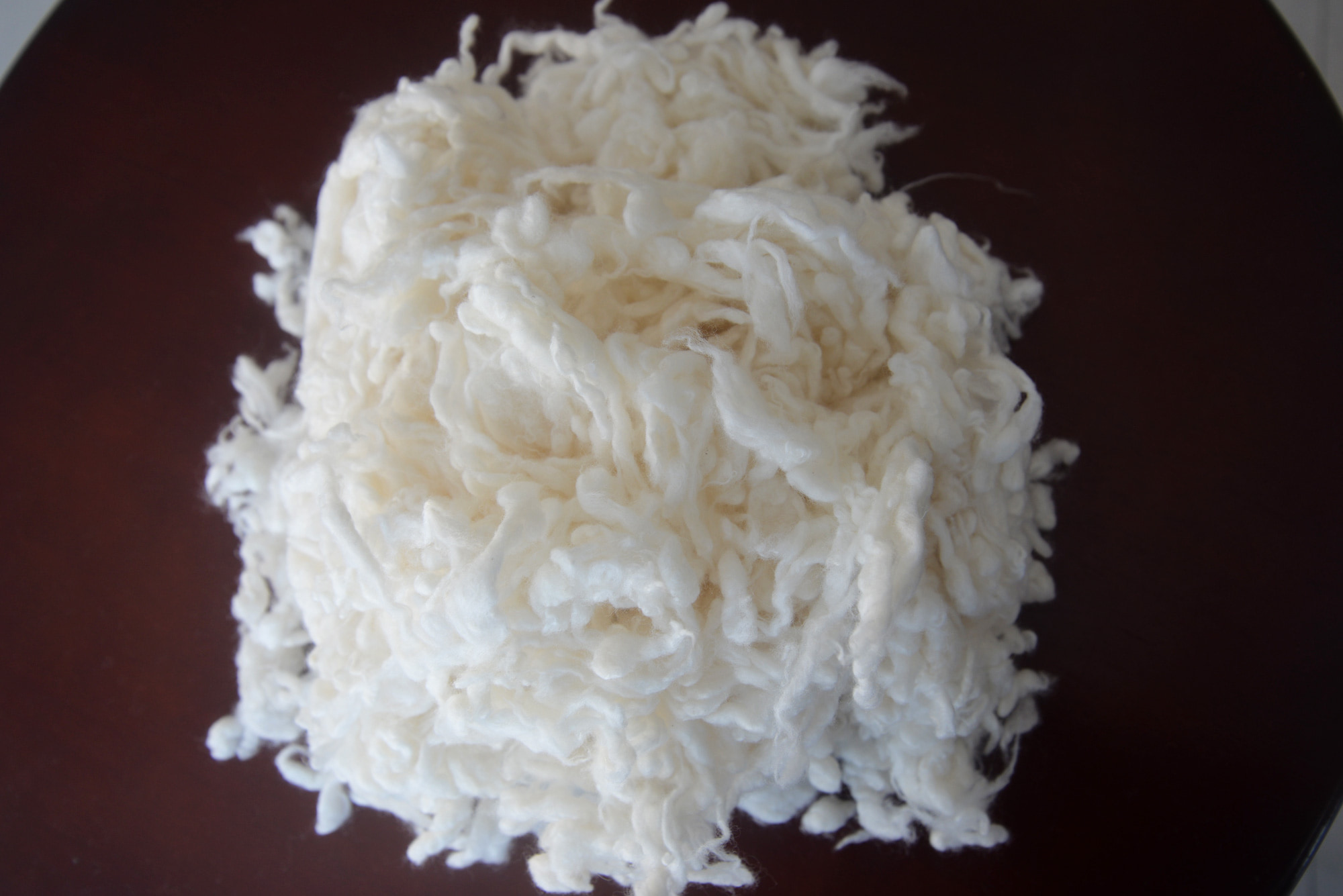
For spinning mills and yarn manufacturers, yarn breakage directly affects production efficiency, labour costs, and yarn quality. While صوف مكربن is widely used to improve spinning performance by removing residual vegetable matter (VM), not all grades deliver consistent results.
The difference depends largely on VM content and carbonisation quality. Poor particle removal, incomplete neutralisation, or improper processing conditions can weaken fibre performance and increase breakage risks.
This article explores how carbonised wool quality impacts spinning efficiency, explaining key factors such as VM control, carbonisation parameters, and supplier specifications. It also provides practical guidance for buyers choosing reliable carbonised wool suppliers to achieve more stable production and better yarn performance.
1. The Link Between Vegetable Matter and Yarn Breakage
1.1 How Residual VM Affects the Spinning Process
Vegetable matter (VM), including seed fragments, burrs, grass stems, and leaf particles, naturally enters raw wool during harvesting and handling. In carbonised wool production, sulphuric acid treatment is used to convert these cellulose-based contaminants into brittle particles that can be removed during garnetting or carding.
However, when the carbonisation process is not properly controlled, some VM residues remain partially intact. These hard particles can interfere with fibre movement during spinning, creating uneven tension, fibre clumping, and irregular yarn formation.
In practical spinning operations, residual VM can increase yarn breakage risk during drafting and drawing. For ring-spinning systems, this may appear as higher end-break rates, while rotor spinning can experience increased interruptions and rotor contamination. The result is lower production efficiency, more machine stoppages, and inconsistent yarn quality.
Poorly carbonised VM can also affect fibre alignment during drawing and roving. Remaining particles may disturb the parallel arrangement of fibres, leading to uneven twist distribution and higher chances of yarn defects.
1.2 Understanding What VM Content Really Means
VM percentage by weight is the most common quality indicator for صوف مكربن, but it should not be evaluated alone. A wool lot with 0.8% VM may still create spinning problems if the remaining particles are too large, unevenly distributed, or not fully converted during carbonisation.
For buyers evaluating carbonised wool suppliers, three factors provide a more complete view of VM-related performance:
- VM content (%) — the overall level of vegetable matter contamination, typically tested according to IWTO-19
- Particle size distribution — the size and proportion of remaining particles that may affect fibre processing stability
- Residual ash content — an indicator of carbonisation effectiveness and the completeness of VM conversion
VM Content Levels vs. Observed Yarn Breakage Rate
| VM Residual (%) | Typical Breaks/1,000 Spindle-Hours | Applicable Count Range | Process Risk Level |
|---|---|---|---|
| < 0.5% | 3 – 6 | 60s–80s worsted | منخفضة |
| 0.5% – 1.0% | 8 – 15 | 40s–60s worsted | معتدل |
| 1.0% – 1.8% | 18 – 30 | 20s–40s woollen | Elevated |
| > 1.8% | 35+ | Coarse woollen only | High — blending risk |
Note: Values are indicative industry benchmarks. Actual breakage rates vary with fibre diameter, machine condition, and twist multiplier.
2. The Carbonisation Process: How Processing Quality Affects Fibre Performance
2.1 Key Process Factors That Influence Fibre Integrity
The quality of صوف مكربن depends heavily on how well the carbonisation process balances VM removal with fibre protection. Poor process control may remove contaminants effectively but also reduce fibre strength, affecting downstream spinning performance.
Three key factors determine the final fibre quality:
Sulphuric acid concentration must be carefully adjusted according to wool grade and vegetable matter characteristics. While stronger acid conditions can accelerate VM conversion, excessive concentration may damage wool fibres and reduce tensile strength. For fine wool used in worsted spinning, controlled acid treatment with appropriate processing time is essential to maintain fibre performance.
Baking temperature controls the conversion of cellulose-based VM into brittle carbon particles that can be removed during mechanical processing. Insufficient temperature may result in incomplete VM conversion, while excessive heat can affect fibre colour, strength, and elongation. Consistent temperature control helps maintain stable carbonised wool quality across production lots.
Neutralisation pH control is another important quality factor. Incomplete neutralisation may leave residual acidity that gradually affects fibre strength during storage and transportation. Reliable carbonised wool suppliers should monitor and document neutralisation results to ensure fibre stability before shipment.
2.2 Post-Carbonisation Treatment and Fibre Strength Protection
After carbonisation, post-treatment processes play an important role in maintaining fibre quality during spinning.
Drying conditions influence fibre recovery and processing behaviour. Excessive drying tension can reduce fibre flexibility and increase the risk of breakage during drafting. Controlled drying methods help preserve fibre strength and improve spinning consistency.
Oiling-back treatment restores lubrication lost during acid and thermal processing. Insufficient oiling may increase static electricity, fibre fly, and nep formation during carding and drawing, while excessive oil can affect machine performance. Consistent oiling levels are therefore important for stable spinning operations.
Fibre length retention after garnetting should also be monitored. Aggressive mechanical treatment may improve VM removal but can increase short fibre content, which negatively affects yarn evenness and may contribute to higher breakage rates in fine-count applications.
3. Quality Standards and Sourcing Criteria for Procurement Teams
3.1 Recognised Testing Standards and Compliance Benchmarks
The International Wool Textile Organisation (IWTO) provides the primary testing framework for carbonised wool quality assessment:
- IWTO-19: Determination of vegetable matter content by weight — the baseline VM% test
- IWTO-59: Measurement of fibre diameter by airflow (Micronaire) — relevant for confirming that carbonisation has not altered apparent micron through fibre damage
- IWTO-30: Fibre length and short fibre content — critical for worsted-grade carbonised wool
Acceptable VM thresholds by end-use grade:
| End Use | Maximum VM% | Minimum Neutralisation pH |
|---|---|---|
| Fine worsted (60s+) | 0.5% | 6.8 |
| Medium worsted (40s–60s) | 0.8% | 6.5 |
| Woollen / semi-worsted | 1.5% | 6.2 |
| Industrial / technical | 2.0% | 6.0 |
Third-party certification from accredited IWTO test houses (SGS, Bureau Veritas, Intertek) provides objective lot-level verification and should be a minimum requirement for new supplier qualification.
3.2 Supplier Evaluation: Key Specifications to Request
Carbonised Wool Supplier Specification Checklist
| المعلمة | Recommended Range | Test Standard | Negotiation Priority |
|---|---|---|---|
| VM% by weight | < 0.8% (worsted) | IWTO-19 | Critical |
| Fibre diameter (µm) | As specified ±0.5 µm | IWTO-12 | Critical |
| Neutralisation pH | 6.5 – 7.2 | Supplier QC / pH indicator | عالية |
| Tensile strength retention | ≥ 90% vs. scoured baseline | IWTO-32 | عالية |
| Short fibre content (SFC%) | < 12% (worsted) | IWTO-17 | متوسط |
| Oiling-back % | 0.4 – 0.8% on fibre weight | Supplier declaration | متوسط |
| Lot-level test certificate | IWTO-accredited lab | IWTO test house | Critical |
Require lot-level (not batch-average) certificates for all critical parameters. Suppliers unable to provide per-lot IWTO test reports represent a process control risk regardless of stated specifications.
3.3 How to Choose a Reliable Carbonised Wool Supplier
Choosing the right carbonised wool supplier requires more than comparing material prices. A reliable supplier should demonstrate consistent production control, transparent quality documentation, and the ability to provide grades suitable for different spinning applications.
Key factors to evaluate include:
1. Production consistency
A qualified supplier should maintain stable VM removal performance across different production lots. Consistency is especially important for mills running continuous spinning operations, where fibre variation can quickly affect yarn quality.
2. Quality control capability
Suppliers should provide detailed inspection records covering VM content, fibre properties, neutralisation results, and lot traceability. Clear documentation helps buyers verify whether the material meets their production requirements.
3. Application-specific grades
Different spinning systems require different fibre characteristics. A professional supplier should be able to recommend suitable carbonised wool grades for worsted, woollen, and blended yarn production rather than offering one standard product for all applications.
4. Application Scenarios: Selecting the Right Carbonised Wool Grade for Different Applications
4.1 Worsted vs. Woollen Spinning: Matching Grade to Production Requirements
Different spinning methods have different requirements for residual vegetable matter (VM), fibre length, and overall fibre consistency. Worsted spinning involves several preparation stages, including combing, drawing, roving, and ring spinning, where remaining VM particles or excessive short fibres can affect yarn evenness and spinning stability.
For fine-count worsted yarn production, mills usually require صوف مكربن with lower VM levels and better fibre length retention to maintain consistent yarn quality. Woollen and semi-worsted systems, however, can generally accommodate a wider range of fibre characteristics because their carding process provides greater fibre mixing and randomisation.
Therefore, choosing the correct carbonised wool grade is essential for balancing cost and performance. A grade designed for fine worsted spinning may be unnecessary for coarse woollen applications, while unsuitable lower-grade material can increase production risks in demanding spinning conditions.
4.2 How Carbonised Wool Quality Affects Production Costs
The true value of صوف مكربن is not determined only by its purchase price. Fibre quality directly influences spinning efficiency, machine operation, yarn consistency, and production waste.
When mills source carbonised wool with stable VM control, consistent fibre properties, and proper quality documentation, they can achieve more reliable production performance and reduce avoidable interruptions. Higher-grade materials may require additional investment, but improved yarn quality and reduced processing issues can create long-term value.
For procurement teams, supplier evaluation should go beyond cost per kilogram. A professional carbonised wool supplier should provide clear specifications, quality test reports, and grades suitable for different spinning applications.
5. How to Evaluate Carbonised Wool Quality Before Bulk Purchasing
Before placing a large order, buyers should evaluate whether a carbonised wool supplier can consistently deliver material that meets their spinning requirements. A small trial evaluation can help identify potential quality issues before they affect full-scale production.
5.1 Check Fibre Test Reports and Lot Consistency
A reliable supplier should provide detailed quality records for each production lot, including VM content, fibre diameter, fibre length, and other relevant specifications.
Checking multiple lots rather than a single test report helps buyers understand whether the supplier can maintain stable carbonised wool quality over time.
5.2 Conduct Spinning Trials Before Full Production
Laboratory testing provides useful information, but actual spinning trials remain important for evaluating fibre behaviour under production conditions.
Trial runs can reveal:
- yarn breakage performance
- drafting stability
- fibre handling characteristics
- yarn evenness
This approach reduces the risk of quality problems after bulk delivery.
5.3 Consider Supply Capability and Long-Term Consistency
Beyond product specifications, buyers should evaluate whether the supplier has stable production capacity, quality control procedures, and experience serving different spinning applications.
A supplier that can provide consistent carbonised wool grades is often more valuable than one offering the lowest initial price.
أسئلة شائعة
Q1: What VM% level in carbonised wool is considered acceptable for fine-count worsted spinning?
For counts above 60s in worsted systems, a VM% of 0.5% or below is the industry benchmark. At this level, combined with particle size predominantly under 0.5 mm and neutralisation pH above 6.8, breakage contribution from VM is minimal. Lots above 0.8% VM should not be used in fine worsted without trial evaluation and adjusted blending ratios.
Q2: How can we verify a supplier’s carbonisation quality without visiting their facility?
Request lot-level test certificates from IWTO-accredited third-party laboratories (SGS, Bureau Veritas, Intertek) covering VM%, fibre diameter, pH, and SFC%. Ask for test reports from the last 6 production lots — consistency across lots is as important as any single result. For new suppliers, a small trial shipment with independent re-testing before full order commitment is standard practice among quality-focused mills.
Q3: Does higher acid concentration during carbonisation always mean better VM removal?
No. Above approximately 6% H₂SO₄, incremental VM conversion gains are offset by accelerating fibre damage — particularly peptide bond hydrolysis, which reduces tensile strength and elongation at break. The optimal approach is moderate acid concentration with controlled dwell time and precise baking temperature, rather than high concentration as a shortcut. Suppliers using elevated acid concentrations to compensate for process control deficiencies will typically show lower tensile strength retention in fibre testing.
الخاتمة
The performance of صوف مكربن depends on more than VM removal alone. Consistent spinning results require proper carbonisation control, stable fibre properties, and reliable quality verification at the lot level.
For mills looking to reduce yarn breakage and improve production efficiency, selecting carbonised wool based on key specifications such as VM content, fibre strength, and quality documentation is more effective than focusing only on price. Working with an experienced carbonised wool supplier can help ensure consistent material performance, lower production risks, and better yarn quality.
Contact us to learn more about our carbonised wool grades and quality control standards for your spinning applications.