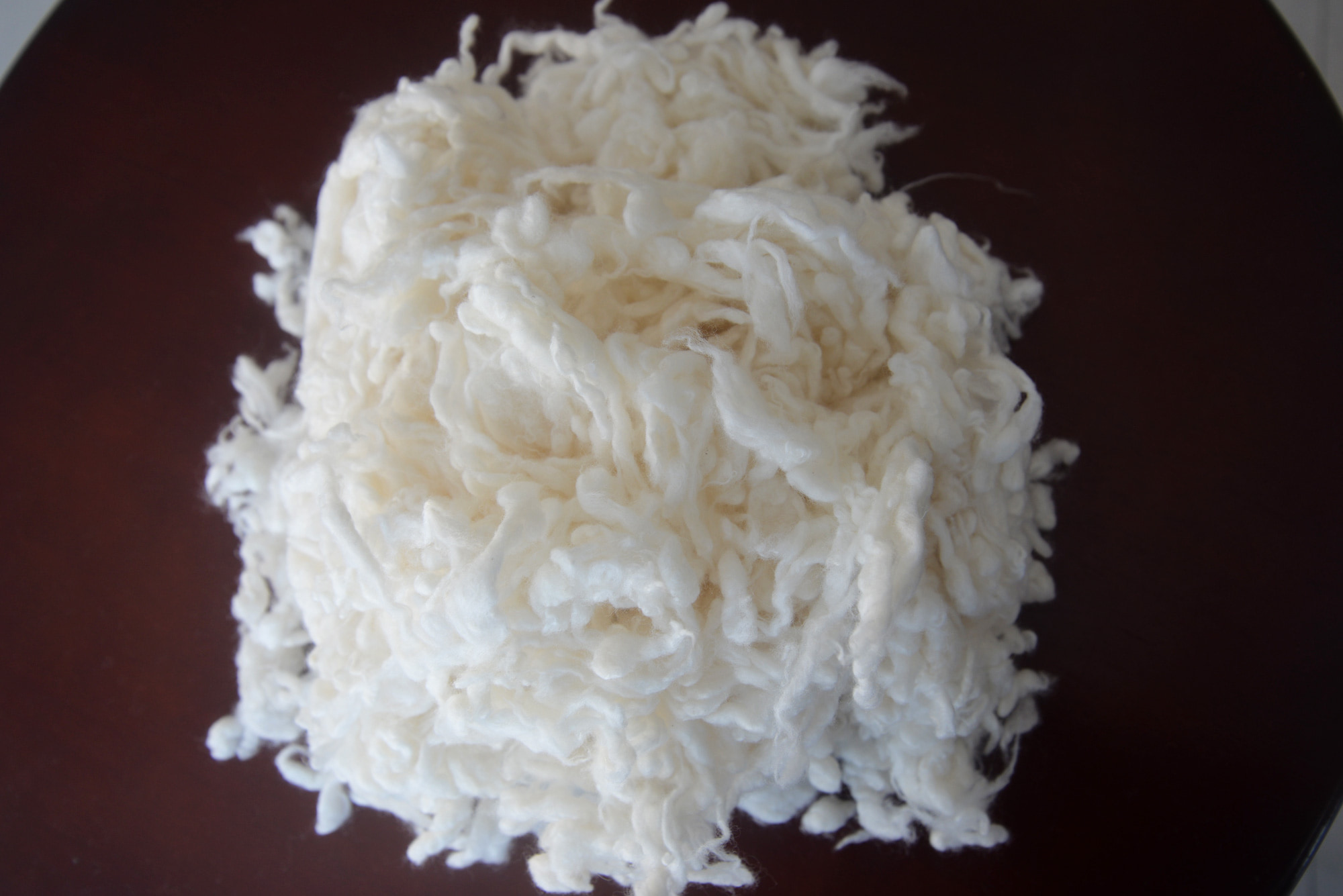
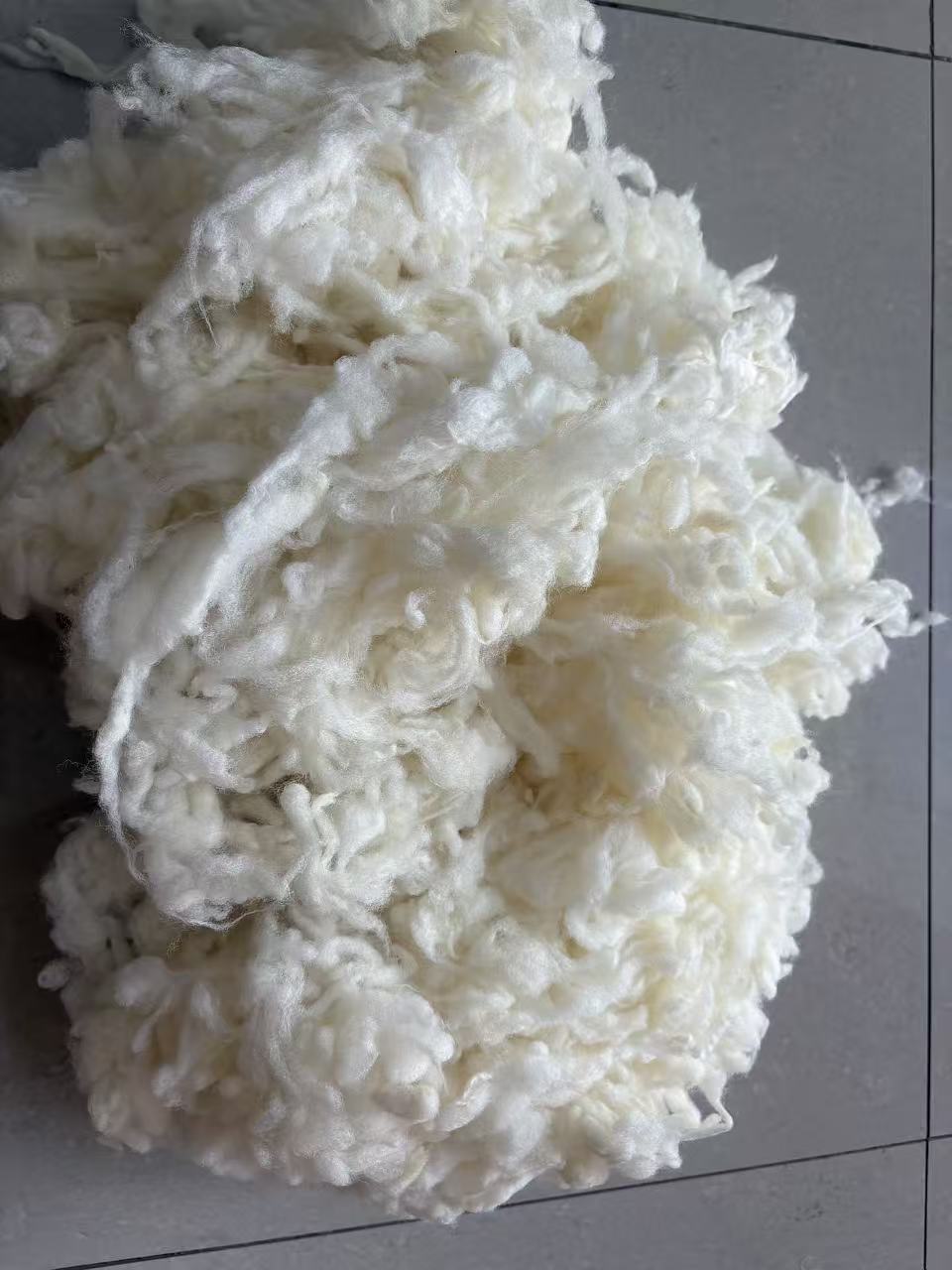
Carbonisierte Wolle Superwash is a superior choice for machine-wash yarn production. By combining carbonisation, which reduces vegetable matter content to below 0.5%, with superwash shrink-resistance treatment that keeps shrinkage below 3% after repeated washing, this dual-treated wool provides the machine-washability that traditional wool cannot achieve while maintaining fiber strength, softness, and long-term durability.
Why Does Carbonised Wool Superwash Improve Machine-Washable Yarn Performance?
When textile manufacturers evaluate machine-washable wool yarn, shrink resistance is usually the first performance factor they consider. However, preventing shrinkage alone is not enough to ensure long-term durability, consistent dyeing, and reliable yarn performance.
Raw wool faces two major challenges that limit its suitability for machine-wash applications. The first is vegetable matter contamination, including burrs, grass seeds, straw fragments, and other plant particles trapped in sheep fleece during grazing. Even after conventional scouring, wool may still contain residual vegetable matter that affects both appearance and processing performance.
These plant impurities create several problems during yarn production. Because vegetable matter absorbs dyes differently from wool keratin, it can lead to uneven coloration and inconsistent fabric appearance. More importantly, these hard particles can act as internal abrasives during spinning and washing. Repeated mechanical action may cause fiber damage, increasing yarn breakage, production losses, and fabric durability issues.
The second challenge comes from the natural structure of wool fibers. Under magnification, wool fibers are covered with overlapping scales that create directional friction. These scales allow fibers to move smoothly in one direction but cause them to catch and lock together in the opposite direction.
During machine washing, the combination of heat, moisture, and mechanical agitation activates this natural felting mechanism. The fiber scales interlock, causing irreversible shrinkage and fabric densification. Untreated wool garments can shrink significantly after repeated washing, making them unsuitable for consumers who expect easy-care textile products.
These two challenges require different solutions. Carbonisation removes vegetable matter and improves fiber cleanliness, while superwash treatment reduces felting and shrinkage. Combining both processes creates carbonised wool superwash—a shrink-resistant wool solution designed for demanding machine-wash yarn applications.

What Does Carbonisation Do to Wool Fiber?
Carbonisation is a wool purification process that removes plant-based impurities while maintaining the natural properties of wool fibers. The process works because vegetable matter (cellulose-based materials) reacts differently from wool fibers, which are primarily composed of keratin protein.
During industrial wool processing, carbonisation typically uses controlled sulfuric acid treatment to break down vegetable contaminants into carbonized particles. These particles are then removed through mechanical crushing, vibration, and air separation processes.
Typical carbonisation parameters include:
- Sulfuric acid concentration: 4–7%
- Treatment temperature: 60–70°C (140–158°F)
- Processing time: approximately 15–30 minutes depending on contamination levels
After treatment, neutralization is carried out to remove residual acidity and restore fiber stability.
For machine-wash yarn production, carbonisation provides several advantages:
- Reduces residual vegetable matter from approximately 8–12% to below 0.5%
- Maintains high fiber strength retention during processing
- Improves dye absorption and color uniformity
- Reduces internal abrasion that contributes to yarn breakage
However, carbonisation alone does not create machine-washable wool. Although the fiber becomes cleaner and more consistent, the natural scales responsible for felting remain active. This is why superwash treatment is required.
How Does Superwash Treatment Make Wool Machine Washable?
Superwaschbare Wolle refers to wool that has undergone a shrink-resistance treatment to improve washability. It is widely used in machine-washable wool yarn production because it reduces the fiber interlocking that causes felting.
The most common industrial method is the chlorine-Hercosett process. First, chlorine treatment modifies the surface scales of wool fibers, reducing their ability to catch and lock together. Next, a thin polyamide resin coating is applied to create a protective layer around each fiber.
For karbonisierte Wolle superwash, this combination provides both fiber purification and shrink resistance. The treated wool can withstand repeated machine washing while maintaining softness, strength, and dimensional stability.
Shrink Resistance Comparison
| Wash Condition | Untreated Wool | Karbonisierte Wolle Superwash |
|---|---|---|
| Single wash at 40°C | 10–20% shrinkage | <3% shrinkage |
| Multiple wash cycles | Up to 30% shrinkage | Typically below 3% |
| Felting occurrence | Progressive and irreversible | Significantly reduced |
Why Does Dual Treatment Make Carbonised Wool Superwash Superior to Single Treatments?
A yarn manufacturer may ask: if superwash treatment already reduces felting, why is carbonisation necessary? The answer is that superwash and carbonisation solve different performance challenges in machine-washable wool yarn production.
Superwash-treated wool without carbonisation can resist shrinkage, but the fiber may still contain residual vegetable matter. These plant impurities remain trapped within the wool structure and can create abrasive points during spinning, knitting, and repeated washing. Over time, this internal abrasion may weaken fibers, increase yarn breakage, and reduce fabric durability.
In contrast, carbonised wool without superwash treatment provides a cleaner and more uniform fiber, but the natural wool scales remain active. When exposed to heat, moisture, and mechanical movement during washing, these scales can still interlock and cause felting and dimensional shrinkage.
Carbonised wool superwash delivers superior machine-wash performance because it combines two complementary treatments: carbonisation improves fiber purity and processing stability, while superwash treatment provides shrink resistance and felting control. Together, they create a durable washable wool yarn that maintains softness, strength, and dimensional stability through repeated washing cycles.
How Carbonised Wool Superwash Improves Yarn Production Efficiency
For yarn manufacturers, the advantages of karbonisierte Wolle superwash extend beyond washability. Fiber cleanliness and strength retention directly influence production efficiency, yarn quality, and manufacturing consistency.
Untreated wool containing higher levels of vegetable matter is more likely to experience processing problems during spinning and subsequent textile operations. Abrasive plant particles can increase yarn breakage, resulting in machine downtime, material waste, and higher production costs.
Through carbonisation, these impurities are significantly reduced, allowing wool fibers to process more smoothly. Under properly controlled manufacturing conditions, carbonised wool can maintain high tensile strength retention, supporting stable spinning performance and consistent yarn quality.
When combined with a carefully controlled superwash treatment, the fiber gains additional shrink resistance without significantly compromising softness or strength. This makes carbonised wool superwash yarn suitable for demanding applications such as premium knitwear, baby clothing, base layers, and other machine-washable wool products.
Carbonised Wool Superwash Applications in Machine-Washable Wool Products
The practical advantages of carbonised wool superwash make it suitable for multiple wool product categories that require softness, durability, color consistency, and machine-wash performance.
Babywear and children’s clothing require soft fibers, skin comfort, and frequent washing durability. Traditional wool may contain residual vegetable matter that affects fiber smoothness and wearing comfort. Carbonised wool superwash yarn removes these impurities while providing shrink resistance, allowing baby garments and children’s knitwear to maintain softness and shape after repeated machine washing.
Base layers and next-to-skin garments require comfort, moisture management, and long-lasting performance. Conventional wool may cause discomfort due to residual impurities, while untreated fibers are vulnerable to felting and shrinkage. Machine-washable wool yarn produced with carbonised wool superwash provides improved fiber cleanliness and dimensional stability, making it suitable for thermal wear, outdoor apparel, and premium knitwear.
Socks and hosiery experience frequent friction, stretching, and washing cycles. For these applications, yarn strength and shrink resistance are critical. Carbonised wool superwash yarn helps improve processing consistency and durability, supporting socks and hosiery products that maintain their fit and comfort over extended use.
Seamless knitwear benefits from improved fiber uniformity and dye absorption. Compared with conventionally scoured wool, carbonised wool has fewer impurities that interfere with dyeing performance, helping manufacturers achieve more consistent colors and higher-quality finishes for premium washable wool products.
Performance Comparison: Carbonised Wool Superwash vs. Alternatives
| Eigentum | Untreated Wool | Superwash-Only Wool | Karbonisierte Wolle Superwash |
|---|---|---|---|
| Vegetable matter content | 8–12% | 8–12% | <0,5% |
| Shrinkage after multiple washes | Up to 30% | <31 % | <31 % |
| Fiber strength retention | Varies (abrasion damage) | Varies | 92–96% |
| Dye uniformity | Poor (VM interferes) | Poor (VM interferes) | Ausgezeichnet |
| Skin comfort | Prickly (VM irritates) | Prickly (VM remains) | Smooth, non-irritating |
| Yarn breakage during processing | Hoch | Hoch | Niedrig |
| Machine-wash durability | Poor | Good (but fibers weaken over time) | Ausgezeichnet |
How Is Carbonised Wool Superwash Produced for Machine-Washable Yarn?
Understanding the production process helps explain why carbonised wool superwash yarn delivers higher performance and value compared with untreated or single-treated wool.
Step 1: Scouring.
Raw wool is cleaned with non-ionic detergents to remove grease, dirt, and natural impurities such as suint. This preparation step improves fiber cleanliness before further wool processing treatments.
Step 2: Carbonisation.
After scouring, wool is treated with a dilute sulfuric acid solution (4–7% concentration) at 60–70°C for 15–30 minutes. The acid selectively breaks down cellulose-based vegetable matter while preserving the keratin structure of wool fibers. Mechanical crushing and air separation systems remove the carbonized particles, while sodium carbonate neutralization restores fiber stability by reducing residual acidity.
Step 3: Superwash Treatment.
The carbonised wool undergoes a shrink-resist treatment, commonly using the chlorine-Hercosett process or alternative methods. Chlorine treatment modifies the fiber surface scales, while Hercosett resin forms a protective layer that reduces fiber interlocking during machine washing.
Step 4: Drying and Carding.
The treated wool is dried, aligned, and prepared for spinning into machine-washable wool yarn with consistent quality and processing performance.
Each stage requires precise control to maintain fiber performance. Excessive acid concentration may weaken wool fibers, insufficient treatment may leave residual vegetable matter, and improper superwash application may affect softness or strength. When properly processed, carbonised wool superwash production can maintain 92–96% of original tensile strength while improving shrink resistance, fiber cleanliness, and yarn durability.
Quality Testing and Performance Standards for Carbonised Wool Superwash
Quality evaluation of carbonised wool superwash yarn typically follows established textile testing procedures to verify fiber stability, shrink resistance, and processing performance.
Residual acid content after carbonisation is controlled through standardized testing methods, with manufacturers monitoring acidity levels to ensure fiber safety and consistency. Shrink resistance is evaluated through repeated washing tests under controlled temperatures, commonly around 40°C for machine-washable wool products.
The chlorine-Hercosett process used in many superwash applications has also received attention regarding environmental considerations, particularly related to adsorbable organic halogens (AOX) generated during processing. For responsible wool yarn manufacturers, balancing performance requirements with cleaner production practices remains an important consideration. Despite these factors, carbonised wool superwash continues to provide reliable shrink-resistant performance for washable wool yarn applications.
Is Carbonised Wool Superwash Suitable for Your Wool Yarn Production?
For yarn manufacturers producing machine-washable wool products, carbonised wool superwash provides a practical solution that combines fiber cleanliness, shrink resistance, and production reliability.
Production efficiency:
Although carbonised wool superwash may involve higher processing costs, the investment can be balanced by reduced yarn breakage, lower material waste, and fewer quality issues caused by shrinkage or dimensional instability. Improved fiber strength retention also supports smoother spinning and more consistent production output.
Market competitiveness:
Consumers increasingly expect natural fibers to provide the convenience of synthetic materials, including easy washing, durability, and low maintenance. Carbonised wool superwash allows manufacturers to offer wool yarn products with natural warmth, breathability, and improved wash-care performance.
Product quality advantage:
Compared with single-treatment wool solutions, carbonised wool superwash addresses both fiber purity and shrink resistance challenges. The result is a cleaner, more stable, and more reliable washable wool yarn for premium knitwear, apparel, and other machine-wash applications.
Schlussfolgerung
Carbonised wool superwash is a better choice for machine-washable wool yarn production because it solves both major limitations of traditional wool: vegetable matter contamination and felting. Carbonisation reduces residual plant content from 8–12% to below 0.5%, improving fiber cleanliness, dye consistency, and processing performance while maintaining 92–96% of fiber strength. Superwash treatment reduces shrinkage and felting risks, keeping shrinkage below 3% after repeated washing cycles.
For yarn manufacturers, this dual-treated wool delivers fewer processing issues, lower waste, and reliable performance for washable wool yarn applications. It combines the natural comfort of wool with the easy-care benefits required for modern machine-wash products.
Ready to evaluate carbonised wool superwash yarn for your next project? Contact our technical team to discuss specifications, samples, and suitable applications.