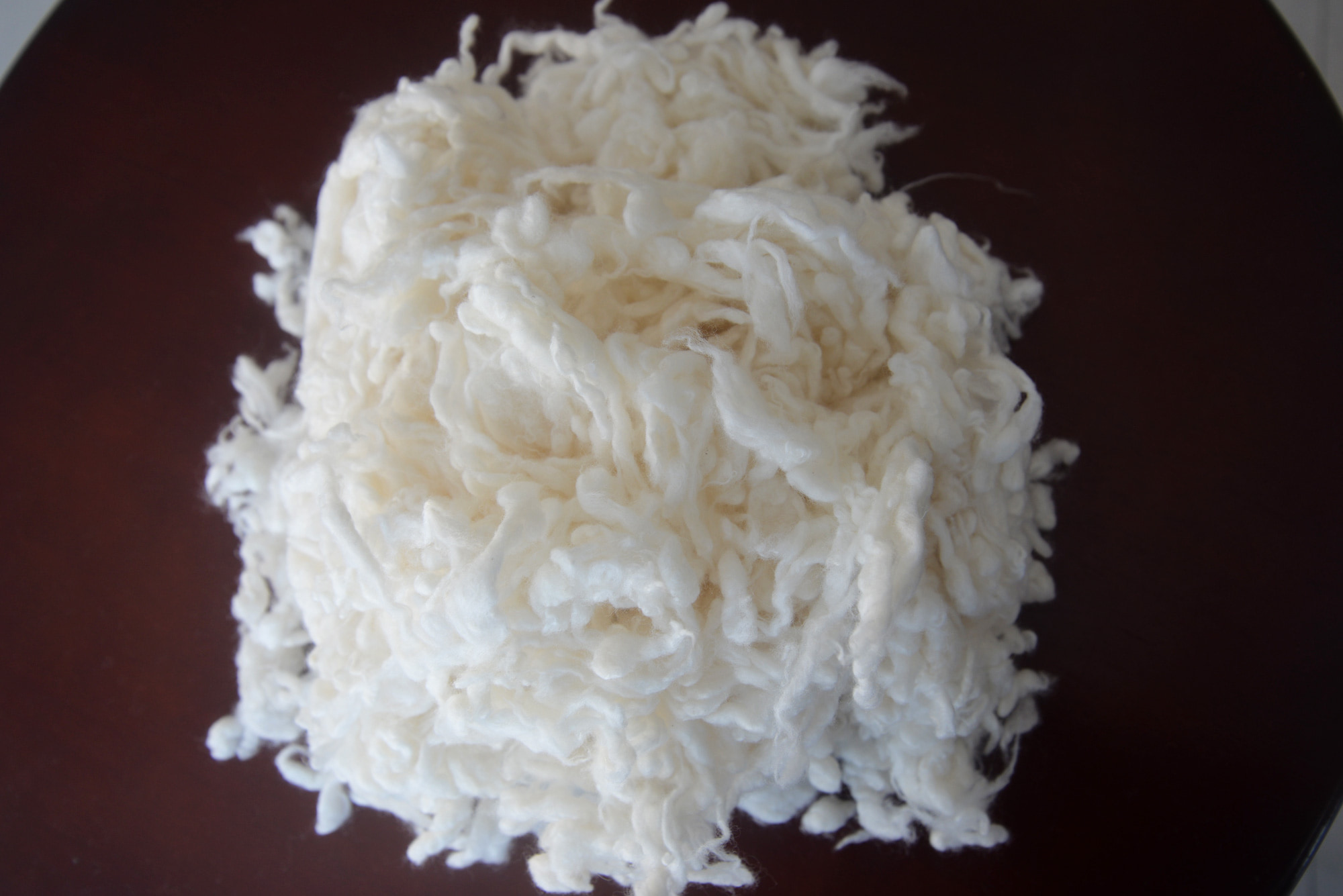
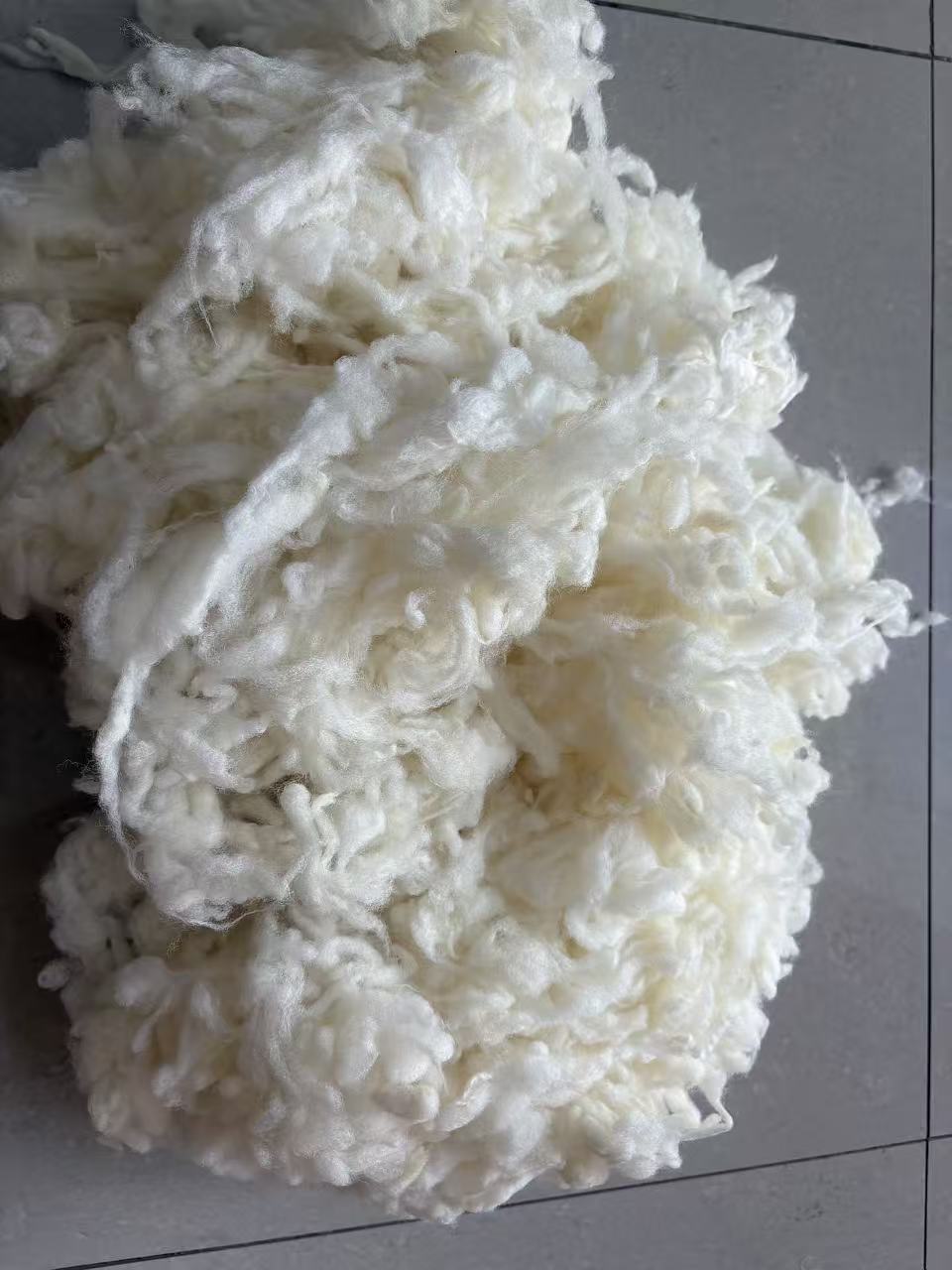
Raw burrs and other vegetable matter in scoured wool can cause yarn breakage, uneven dyeing, and prickle complaints. Lana carbonizada Superwash addresses these issues through two treatments: carbonisation reduces vegetable matter, while superwash treatment improves resistance to felting and shrinkage during machine washing.
For mills processing burr-heavy fleece, this combination can improve fiber cleanliness, processing consistency, and finished-product performance.
Why Scouring Alone Cannot Fix Raw Burr Contamination
Scouring removes lanolin, suint, and other soluble impurities from wool, but it cannot fully remove vegetable matter trapped in the fiber mass. Burrs, grass seeds, and stem fragments may remain attached to the wool and affect later spinning and dyeing processes.
Residual vegetable matter can contribute to yarn breaks, uneven dyeing, and surface contamination in finished fabrics. When standard scouring cannot achieve the required fiber cleanliness, carbonisation provides an additional treatment step for removing plant-based contaminants.
Where Carbonisation Fits in the Process
Carbonisation is performed after scouring to target cellulose-based vegetable matter. Wool is relatively resistant to the acid treatment, while plant material is chemically weakened and can then be removed mechanically.
The process generally includes four stages:
- Acid treatment of the scoured wool
- Controlled drying and heating to carbonise the plant material
- Mechanical removal of the carbonised particles
- Neutralisation, rinsing, and final drying
The resulting fiber can then be used for further processing, including Superwash treatment. In Carbonised Wool Superwash, carbonisation addresses residual vegetable matter while the Superwash treatment helps control felting and shrinkage during machine washing.
What Carbonisation Removes and What It Leaves Behind
Carbonisation selectively targets cellulose-based vegetable matter while preserving the wool fiber when the process is properly controlled. For manufacturers producing Carbonised Wool Superwash, this step provides a cleaner fiber base for subsequent shrink-resistant treatment and yarn production.
Vegetable Matter Removal
Carbonisation can substantially reduce vegetable matter that remains after scouring. Lower residual VM can help reduce contamination during spinning and support more consistent dyeing and finishing.
This is particularly relevant for mills processing burr-heavy fleece or producing fine-count yarns, where fiber cleanliness can have a greater effect on processing and finished-product appearance.
Fiber Condition
Because carbonisation uses chemical treatment, process control is important. Excessive acid exposure, temperature, or treatment time may affect fiber strength and spinning performance.
Mills evaluating Carbonised Wool Superwash should therefore review relevant strength, alkali solubility, and residual VM data according to the applicable test methods and their own quality specifications.
Dyeing and Color Consistency
Residual vegetable matter can interfere with consistent dyeing because plant material does not behave like wool during processing. Reducing this contamination before dyeing can help support more uniform color, particularly in fine-count yarns and dyed wool fabrics.
For yarn manufacturers, the combination of cleaner fiber and Superwash treatment makes Carbonised Wool Superwash suitable for applications where both processing consistency and machine-wash performance are important.
| Parámetro | Lana Regular Lavada | Non-Carbonised Superwash | Lana carbonizada Superwash |
|---|---|---|---|
| Vegetable matter | Residual VM may remain | Residual VM may remain | Reduced through carbonisation |
| Shrink resistance | Depends on finishing | Superwash-treated | Superwash-treated |
| Dyeing consistency | May be affected by VM | May be affected by VM | Reduced VM interference |
| Processing focus | General wool cleaning | Felting and shrinkage control | VM removal plus shrinkage control |
Carbonisation and Superwash serve different purposes. Carbonisation focuses on vegetable matter removal, while Superwash treatment helps control felting and shrinkage. Combining the two gives Carbonised Wool Superwash a broader role in wool yarn production, particularly where fiber cleanliness and machine-wash performance are both important.
How Superwash Treatment Makes Carbonised Wool Machine-Washable
Carbonisation and Superwash address different challenges in wool processing. Carbonisation reduces vegetable matter, while Superwash treatment modifies the fiber surface to reduce felting and shrinkage during washing. Together, these treatments form the basis of Carbonised Wool Superwash for applications requiring both fiber cleanliness and wash resistance.
How Wool Fibers Felt During Washing
Wool fibers have overlapping surface scales that can catch against each other during washing. Heat, moisture, and mechanical agitation increase this interaction, causing fibers to move together, felt, and shrink.
Superwash treatment reduces the tendency of these scales to interlock. This helps wool products maintain their shape during machine washing when the finished product meets the applicable care and performance requirements.
How Chlorine-Hercosett Treatment Works
A widely used Superwash approach combines chlorine treatment with a polymer coating. The chlorine stage modifies the fiber surface, while the subsequent Hercosett treatment forms a smoother surface that reduces scale-to-scale interaction.
The final wash performance depends on the fiber, treatment conditions, and applicable testing method. For manufacturers producing machine-washable wool yarn, washability should therefore be confirmed through product testing rather than assumed from the treatment process alone.
Why Carbonised Wool and Superwash Work Together
Carbonisation provides a cleaner fiber base by reducing residual vegetable matter before the shrink-resist treatment. Superwash then addresses the separate problem of felting and shrinkage.
For yarn manufacturers, Carbonised Wool Superwash can therefore combine two useful processing characteristics in one fiber: lower vegetable matter for cleaner spinning and dyeing, plus improved resistance to felting during machine washing.
The Practical Value for Yarn Manufacturers and Mills
For yarn manufacturers and wool mills, Carbonised Wool Superwash can offer value across spinning, dyeing, and finished-product performance. Its main advantage is the combination of fiber cleanliness with shrink-resistant performance rather than either treatment alone.
Cleaner Spinning
Residual burrs and plant fragments can interfere with spinning and contribute to yarn breaks. Reducing vegetable matter before spinning can help mills maintain more consistent processing, particularly when working with heavily contaminated fleece.
More Consistent Dyeing
Vegetable matter can behave differently from wool during dyeing and may contribute to uneven color or visible contamination. Lower residual VM can support more consistent dyeing, especially for fine-count yarns and fabrics with demanding appearance requirements.
Suitable for Machine-Washable Wool Products
Superwash treatment helps reduce felting and shrinkage during machine washing, while carbonisation addresses vegetable matter. This combination makes Carbonised Wool Superwash relevant to apparel, fine wool yarns, and other products where both fiber cleanliness and wash performance matter.
| Evaluation Criterion | Lana carbonizada Superwash | Conventional Scoured Wool | Non-Carbonised Superwash |
|---|---|---|---|
| Vegetable matter | Reduced through carbonisation | Residual VM may remain | Residual VM may remain |
| Spinning | Cleaner fiber base | Depends on residual VM | Depends on residual VM |
| Dyeing | Lower VM interference | May be affected by VM | May be affected by VM |
| Felting and shrinkage | Superwash-treated | Depends on finishing | Superwash-treated |
| Typical applications | Machine-washable wool yarns and apparel | General wool applications | Machine-washable wool products |
For mills evaluating Carbonised Wool Superwash, the key consideration is how the combined treatment fits the yarn specification and end use. Reviewing fiber properties, test data, and application requirements can help determine whether the material is suitable for production.
When Carbonised Wool Superwash Is the Right Choice
Carbonised Wool Superwash is most useful when both fiber cleanliness and shrink-resistant performance matter. The right choice depends on the raw wool condition, processing requirements, and specifications of the finished product.
Burr-Heavy Fleece Sources
Wool with significant vegetable matter may be difficult to clean through scouring and mechanical removal alone. For burr-heavy fleece, carbonisation can provide a more effective way to reduce plant contamination before spinning and dyeing.
The required treatment level depends on the raw wool and the mill’s quality specifications. Mills should evaluate residual vegetable matter rather than rely on a fixed threshold.
Machine-Washable Yarn Production
When the finished yarn or fabric is intended for machine-washable applications, Superwash treatment can help control felting and shrinkage under specified washing conditions. Adding carbonisation is useful when the same product also requires lower residual vegetable matter.
This combination is particularly relevant for apparel and other wool products where both wash performance and fiber cleanliness are important.
Next-to-Skin and Fine-Count Applications
Fine-count yarns and next-to-skin apparel generally require tighter control of fiber cleanliness and surface quality. Residual vegetable matter can contribute to visible contamination and may affect fabric feel.
Carbonised wool can therefore be a suitable option when low residual VM and consistent fiber quality are important to the end product.
When a Simpler Treatment May Suffice
Carbonisation is not necessary for every wool application. Coarse products such as industrial felts or carpet underlays may have less demanding requirements for surface feel, color consistency, or residual vegetable matter.
In these cases, conventional scouring may be sufficient if the finished-product specification can be met without additional processing.
Getting the Most from Carbonised Wool Superwash
Mills evaluating Carbonised Wool Superwash should consider fiber condition, product form, and the specifications required for their spinning and end-use applications. Reviewing these factors before ordering can help reduce processing issues and make supplier comparisons more meaningful.
Verify Fiber Condition and Test Data
Effective neutralisation is important after carbonisation because chemical residue may affect fiber condition during storage or processing and can influence subsequent dyeing. Mills should request relevant test data for residual acid and review it against their own processing requirements.
Alkali solubility and fiber strength can also provide useful information about the condition of carbonised wool. Results should be assessed according to the applicable test method and supplier specifications rather than a single universal threshold. Comparing test data between suppliers can help mills identify differences in process control and product consistency.
Match the Product Form to the Spinning Process
Carbonised wool is available in forms such as loose wool, tops, and noils for different processing requirements. Carbonised wool tops are commonly used in worsted spinning, while loose wool and carbonised wool noils may suit woollen spinning, felt, stuffing, and other applications depending on fiber length and quality.
The right form depends on the spinning system, yarn count, fiber length, micron, and end use. Before ordering, mills should also confirm residual vegetable matter, strength, moisture, color, packing, and available test reports to ensure the material matches the intended production process.
Evaluate the Supplier’s Testing and Supply Capability
A reliable carbonised wool manufacturer or supplier should provide current product specifications and relevant test data. Samples can help mills evaluate carding, spinning, dyeing, and finished-yarn performance before committing to larger volumes.
For regular sourcing, manufacturers should also confirm available product forms, packing options, minimum order quantities, production capacity, and batch consistency. These factors can affect long-term production planning just as much as the initial fiber specification.
For manufacturers seeking cleaner processing and consistent yarn quality, selecting the right Carbonised Wool Superwash specification and supplier is as important as the treatment itself.
Stop Letting Burr Contamination Drive Your Quality Problems
Scouring alone may not remove enough vegetable matter for demanding wool applications. Carbonisation reduces residual VM, while Superwash treatment helps control felting and shrinkage during machine washing. Together, they provide a cleaner fiber base for consistent spinning, dyeing, and finished-product performance.
If you are evaluating Carbonised Wool Superwash for yarn production, request a sample and review the fiber specifications and test data with Jiangsu Giant Wool Products. This allows you to assess processing performance against your own quality requirements before moving to larger-volume supply.