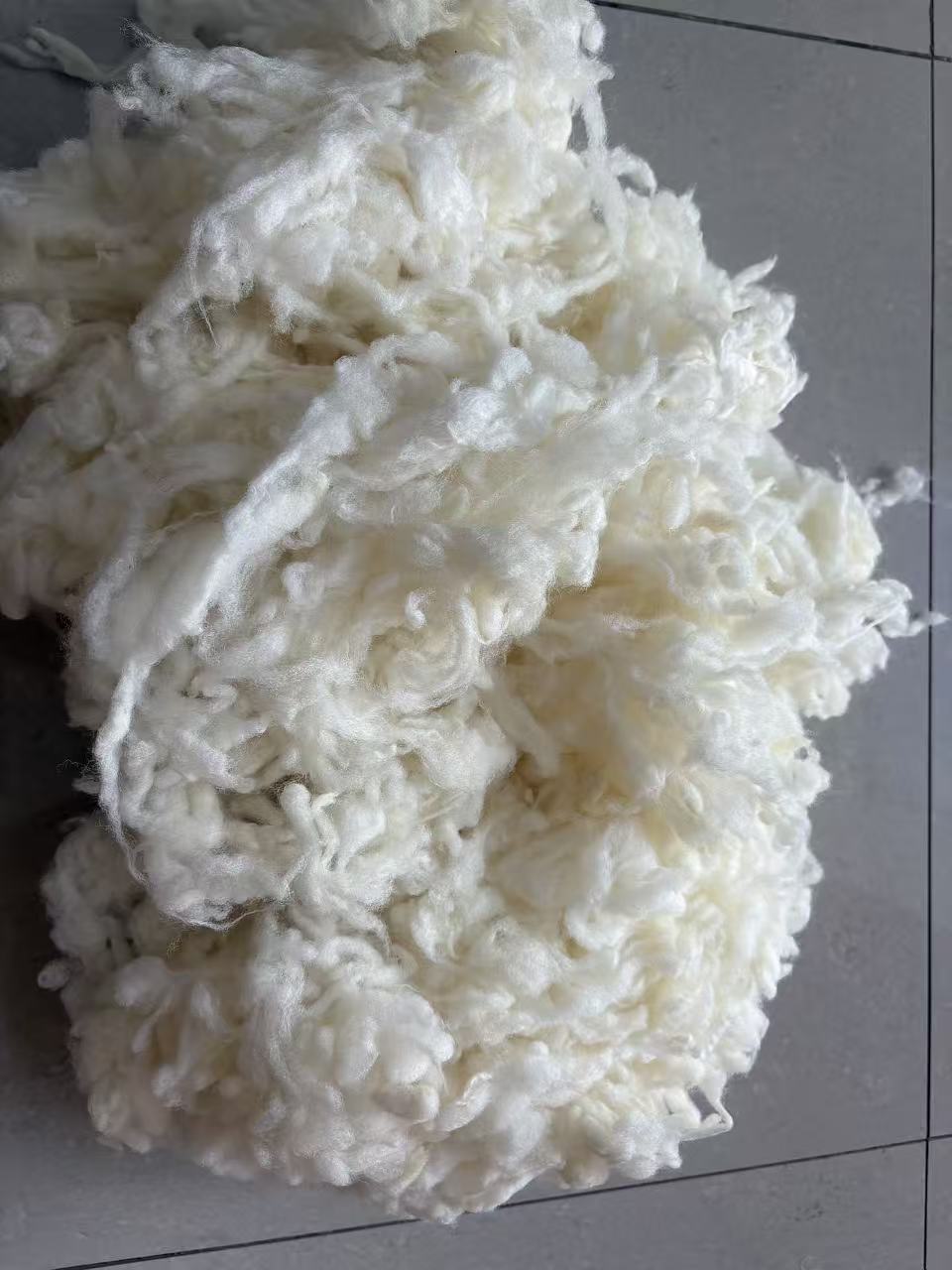
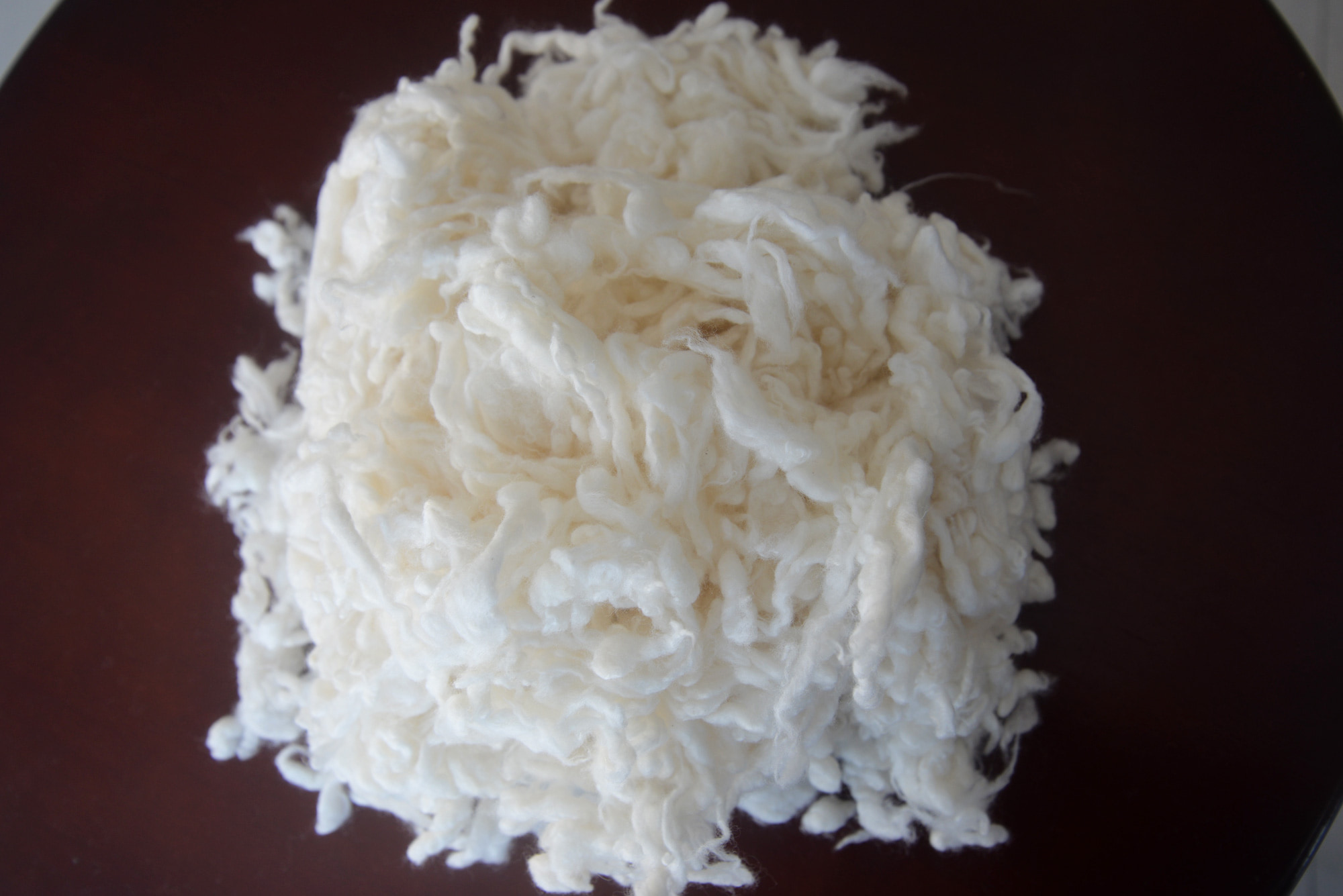
The right choice between 탄화 양모 및 scoured wool depends on the requirements of the final textile product. 탄화 양모 is preferred for applications where extremely low vegetable matter content, consistent appearance, and high processing reliability are essential, such as premium apparel, luxury blankets, and high-quality wool textiles. In contrast, scoured wool remains a practical option for products made from cleaner raw wool or applications where minor residual vegetable matter does not significantly affect fabric performance. Rather than replacing one another, these two wool types serve different manufacturing needs within the wool textile industry.
What Is the Difference Between Carbonised Wool and Scoured Wool?
Before comparing the performance of 탄화 양모 및 scoured wool, it is important to understand how these two wool products are processed and why they are used for different textile applications.
Scoured wool is wool that has undergone a washing process to remove natural grease (lanolin), dirt, suint (sweat salts), and other surface impurities. During scouring, wool is cleaned through a series of hot water and detergent treatments that help separate and remove non-fibrous contaminants. However, this process mainly targets soluble impurities and does not completely remove vegetable matter (VM), such as burrs, grass seeds, and other plant fragments that may remain embedded in the fibre. The level of residual vegetable matter varies depending on the wool source and growing environment.
탄화 양모, in comparison, is produced through an additional carbonisation treatment after scouring. During this process, the wool is treated with a controlled acid solution that breaks down cellulose-based vegetable matter while preserving the wool’s protein structure. After drying, baking, neutralisation, and mechanical removal, most of the remaining plant impurities are eliminated, resulting in a cleaner fibre with significantly lower vegetable matter content.
The key difference is that carbonised wool is not a different type of wool fibre; it is scoured wool that has undergone an additional purification process. This extra treatment makes it particularly suitable for textile applications where fibre cleanliness, consistent dyeing, and high-quality fabric appearance are important.

How Do Carbonised Wool and Scoured Wool Compare on Key Metrics?
The differences between 탄화 양모 and regular scoured wool show up clearly across several performance indicators:
| 속성 | Scoured Wool | 탄화 양모 |
|---|---|---|
| 식물성 물질 함량 | Partially reduced; VM remains trapped | Virtually eliminated (<0.5%) |
| Purity Level | Clean from grease/dirt, but not VM-free | Extremely clean — near-zero contaminants |
| Fiber Strength Retention | 100% of original (no chemical treatment) | 92–96% of original tensile strength |
| Alkali Solubility | 10–12% (indicator of minimal damage) | 15–20% (indicates some chemical modification) |
| Color | Natural creamy/off-white | May be slightly discolored; often bleached |
| Dye Uptake | Good | Excellent — more uniform and vibrant |
| Processing System | Both worsted and woollen systems | Woollen system only |
| Production Cost | Lower (scouring only) | Higher (scouring + acid treatment + neutralization + bleaching) |
| Fiber Loss During Processing | 최소 | Higher (2–5% additional loss typical) |
| Risk of Fiber Damage | 매우 낮음 | Moderate — requires careful process control |
The vegetable matter reduction is the standout difference. After proper carbonisation, residual vegetable matter drops from 8–12% in raw fleece to below 0.5%. That’s a dramatic improvement in purity that scouring alone simply cannot achieve.
What Should Textile Manufacturers Check When Sourcing Carbonised Wool?
Selecting the right 탄화 양모 is not only about choosing a product with low vegetable matter content. For textile manufacturers, fibre quality, processing stability, and supplier consistency are also important factors that can influence final production results.
Vegetable Matter Level and Fibre Cleanliness
Vegetable matter (VM) content is one of the most important indicators when evaluating 탄화 양모. Lower residual VM helps reduce contamination during carding and spinning, improving yarn consistency and fabric appearance. Manufacturers should confirm whether the wool quality meets the requirements of their intended application.
Fibre Characteristics and Processing Performance
Besides cleanliness, buyers should also consider key fibre properties such as fibre length, fineness, and overall processing behaviour. Different textile applications may require different wool characteristics, and the most suitable 탄화 양모 should match the requirements of the final product.
Processing Control and Quality Consistency
The quality of 탄화 양모 depends heavily on process control during carbonisation, including acid treatment, neutralisation, and post-processing handling. A reliable supplier should maintain consistent production standards to ensure stable quality between different batches.
For manufacturers purchasing wool for long-term production, evaluating these factors can help reduce processing risks and achieve more predictable textile performance.
Why Do Textile Manufacturers Choose Carbonised Wool for Premium Applications?
탄화 양모 is valued in premium textile production because it offers higher fibre cleanliness, more consistent processing performance, and improved quality control compared with standard scoured wool. These advantages make it a preferred choice for manufacturers producing high-quality wool fabrics, apparel, blankets, and other products where appearance and processing stability are critical.
Higher Fibre Purity and Cleaner Processing
The main reason textile manufacturers select 탄화 양모 is its significantly reduced vegetable matter (VM) content. Although scouring effectively removes grease, dirt, and other surface impurities, small amounts of plant-based matter may remain in the fibre. During later processing, these residual impurities can affect carding efficiency, yarn consistency, dye uniformity, and the appearance of finished fabrics.
For premium textile applications, including luxury apparel, high-end blankets, and export-quality wool products, cleaner fibre input helps manufacturers achieve more stable production results and consistent fabric quality.
More Consistent Dyeing Results
The carbonisation process helps remove remaining vegetable matter and improves the cleanliness of the wool fibre surface, allowing dyes to distribute more evenly during processing. For manufacturers producing coloured wool fabrics or customised textile products, this can contribute to more consistent shades and improved appearance across production batches.
Supporting Comfort and Fabric Performance
Because 탄화 양모 contains fewer non-fibrous impurities, it provides a cleaner raw material base for applications where softness, comfort, and moisture management are important. This makes it suitable for products such as premium wool garments, bedding materials, and other textiles that require a refined hand feel.
Improved Production Stability
Compared with relying only on mechanical methods to remove vegetable matter, 탄화 양모 provides a more controlled approach to fibre purification. By reducing impurities before spinning and fabric production, it can help minimise processing interruptions caused by contamination and improve consistency during large-scale manufacturing.
Reliable Quality for Long-Term Supply
For manufacturers purchasing wool in large volumes, consistent raw material quality is essential. 탄화 양모 offers better batch-to-batch stability when produced under controlled processing conditions, making it a suitable option for repeat orders involving apparel fabrics, blanket materials, and other premium wool textile products.
When Is Scoured Wool Still a Better Choice?
Although 탄화 양모 offers advantages for applications requiring high fibre cleanliness, scoured wool remains an important option for many textile manufacturers. The choice between these two wool types depends on raw wool quality, production methods, cost considerations, and the performance requirements of the final product.
When Raw Wool Has Low Vegetable Matter Content
Not all raw wool contains significant levels of vegetable matter (VM). For wool with naturally low VM levels, additional carbonisation may not provide enough benefits to justify the extra processing cost. In these cases, scoured wool can provide sufficient cleanliness while maintaining a more cost-effective production process.
For Worsted Wool Processing
The suitability of scoured wool also depends on the spinning system being used. While 탄화 양모 is mainly associated with woollen processing, worsted spinning typically relies on carefully selected and prepared wool fibres that require different processing conditions. For manufacturers producing smoother, finer yarns through the worsted system, scoured wool may remain the preferred raw material choice.
For Cost-Conscious Textile Applications
Compared with 탄화 양모, scoured wool requires fewer processing steps and generally involves lower production costs. For applications where extremely low vegetable matter content is not essential, such as certain standard textile products or cost-sensitive wool applications, choosing scoured wool can help manufacturers balance quality requirements and production expenses.
When Maximum Fibre Strength Is a Priority
Additional chemical treatment during carbonisation requires careful process control to maintain fibre performance. Although properly processed 탄화 양모 can retain most of its original strength, applications that demand maximum fibre durability may require closer evaluation of the processing method and raw material characteristics. In these cases, manufacturers should consider the balance between fibre cleanliness, strength retention, and end-use requirements.
What Are the Limitations of Carbonised Wool?
While 탄화 양모 provides significant advantages in terms of fibre cleanliness and processing consistency, it also involves additional considerations that textile manufacturers should evaluate before sourcing. Understanding these limitations helps buyers make a more informed decision based on product requirements, processing methods, and cost expectations.
Potential Fibre Damage During Processing
The carbonisation process requires careful control because excessive acid exposure, high temperatures, or improper neutralisation may affect wool fibre quality. Compared with untreated scoured wool, carbonised wool undergoes additional chemical treatment, which means process parameters must be carefully managed to maintain fibre strength, softness, and appearance.
When produced under controlled conditions, 탄화 양모 can effectively remove vegetable matter (VM) while maintaining the performance characteristics required for textile manufacturing. However, buyers should consider the supplier’s processing capability and quality control standards when evaluating carbonised wool.
Higher Processing Costs
Compared with scoured wool, carbonised wool requires additional treatment steps, including acid processing, drying, neutralisation, and vegetable matter removal. These extra stages require more equipment, energy, and production management, which can increase the overall material cost.
For manufacturers producing premium textiles where fibre cleanliness and appearance are critical, the additional investment may be justified. However, for cost-sensitive applications where low VM levels are acceptable, scoured wool may remain the more economical choice.
Not Suitable for Every Wool Type or Application
Although 탄화 양모 is effective for reducing vegetable matter, it is not necessary or suitable for every wool type. Factors such as raw wool characteristics, fibre quality, processing method, and final product requirements all influence whether carbonisation is the right choice.
Before selecting carbonised wool, textile manufacturers should evaluate the relationship between cleanliness requirements, production conditions, and expected fabric performance.
Colour and Appearance Considerations
The carbonisation process may influence the natural colour of wool fibres, especially when additional treatments are applied to improve whiteness or colour consistency. For manufacturers producing light-coloured wool textiles, fibre appearance and colour requirements should be considered during material selection.
How Should Textile Manufacturers Choose Between Carbonised Wool and Scoured Wool?
Selecting between 탄화 양모 및 scoured wool depends on several factors, including raw wool quality, processing method, product requirements, and cost expectations. Instead of viewing one option as universally better, textile manufacturers should evaluate which wool type best matches their production goals.
Choose Carbonised Wool When:
- Your final product requires extremely low vegetable matter (VM) levels and high fibre cleanliness
- You are producing premium apparel, luxury bedding, high-quality blankets, or export-oriented wool textiles
- Consistent dyeing results and fabric appearance are important
- Your production relies on woollen processing methods
- Raw wool contains higher levels of vegetable matter that may affect downstream processing
- Batch-to-batch quality consistency is a priority for long-term production
Choose Scoured Wool When:
- Your raw wool already has relatively low vegetable matter content
- Your production uses worsted spinning or applications better suited to untreated scoured fibres
- Cost control is an important consideration
- Small amounts of residual vegetable matter will not significantly affect the final product
- Maintaining maximum fibre integrity is a key requirement
- You are producing standard wool textiles or cost-sensitive products
Consider a Mixed Sourcing Strategy When:
- Different product lines require different levels of fibre purity
- Your production includes both premium and standard wool products
- You want to balance material performance with overall production costs
How to Choose a Reliable Carbonised Wool Supplier?
For manufacturers sourcing 탄화 양모 for apparel, blankets, or other wool textile applications, choosing the right supplier is as important as selecting the right wool type. A reliable supplier should provide consistent fibre quality, stable processing performance, and technical support throughout the sourcing process.
Evaluate Production Capability
A professional carbonised wool supplier should have controlled carbonisation processes and the ability to maintain consistent quality across different production batches. Stable processing conditions are essential for achieving predictable fibre cleanliness and performance.
Check Quality Standards and Testing Support
Before placing large orders, manufacturers should review available quality information, including fibre specifications, cleanliness requirements, and testing results. This helps ensure the selected wool meets the needs of the intended application.
Consider Long-Term Supply Stability
For manufacturers with ongoing production requirements, supplier reliability is critical. Consistent raw material availability, communication efficiency, and quality control systems can help reduce production disruptions and maintain stable product quality.
By evaluating both wool characteristics and supplier capability, manufacturers can make a more informed decision when sourcing 탄화 양모 for premium textile production.
결론
Choosing between carbonised wool and scoured wool depends on your production requirements rather than one option being universally better. Carbonised wool is ideal for premium textile applications where fibre cleanliness, dye consistency, and fabric appearance are critical, while scoured wool remains a practical choice for cost-sensitive products and applications with lower vegetable matter requirements.
For textile manufacturers, the right material selection should consider raw wool quality, processing methods, end-use requirements, and overall production costs. If you are sourcing wool for apparel, blankets, or other textile applications, our team can help you evaluate whether carbonised wool or scoured wool is the better fit for your specific needs.