Introduction
Wool shrinks because its microscopic surface scales lock together under heat, moisture, and agitation—a process known as felting, which is chemically irreversible once it occurs. Carbonised wool by itself does not prevent this shrinkage. However, when combined with superwash shrink-resistance treatment, it produces wool that is machine-washable, dimensionally stable, and maintains its softness and shape even after repeated laundering.
Shrinkage is more than just a nuisance: it affects both consumers and brands alike. According to recent market estimates, the global wool industry is projected to grow from approximately US $28 billion to US $36 billion by 2032, yet untreated wool garments can shrink 10–20% after a single wash, and up to 30% after multiple cycles. For manufacturers, that is a significant challenge—but one that modern processing technologies can now effectively address.
The microscopic reason wool shrinks: it’s all in the scales
To understand wool shrinkage, you need to look at the fiber structure. Each wool fiber—whether Merino, Shetland, or others—is covered in microscopic overlapping scales, similar to roof shingles. These scales are the key to felting and shrinkage.
During washing, heat, moisture, and agitation cause the scales to swell and open. The directional friction effect (DFE) allows fibers to move easily in one direction but interlock in the opposite direction. As agitation continues, fibers entangle more tightly, pulling the structure together and densifying the fabric. This is the felting process.
Once felting occurs, it is permanent. The interlocked structure cannot be reversed by washing, pressing, or stretching, as the fabric has already been physically transformed.
A 2024 study published in ScienceDirect identified DFE as the primary cause of irreversible wool shrinkage under mechanical agitation, with fiber length, diameter, elasticity, yarn twist, and fabric structure all influencing the final result. While some wool types are more resistant than others, untreated wool remains inherently prone to felting.
Vegetable matter: the hidden culprit in raw wool
Many people assume the itch of a wool sweater comes from the fibers themselves, but the real culprit is often vegetable matter. As sheep graze, burrs, seeds, straw fragments, and grass become embedded in the fleece. Raw, greasy wool can contain 35–40% contaminants by weight, including lanolin, dirt, suint, sand, and plant material. Even after standard scouring, 8–12% vegetable matter may remain.
These tiny plant particles do more than irritate the skin. They absorb dyes differently from wool keratin, causing uneven coloration. Over time, they act as internal abrasives, weakening fibers with every wash and wear, while increasing yarn breakage and spinning machine damage—driving up manufacturing costs.
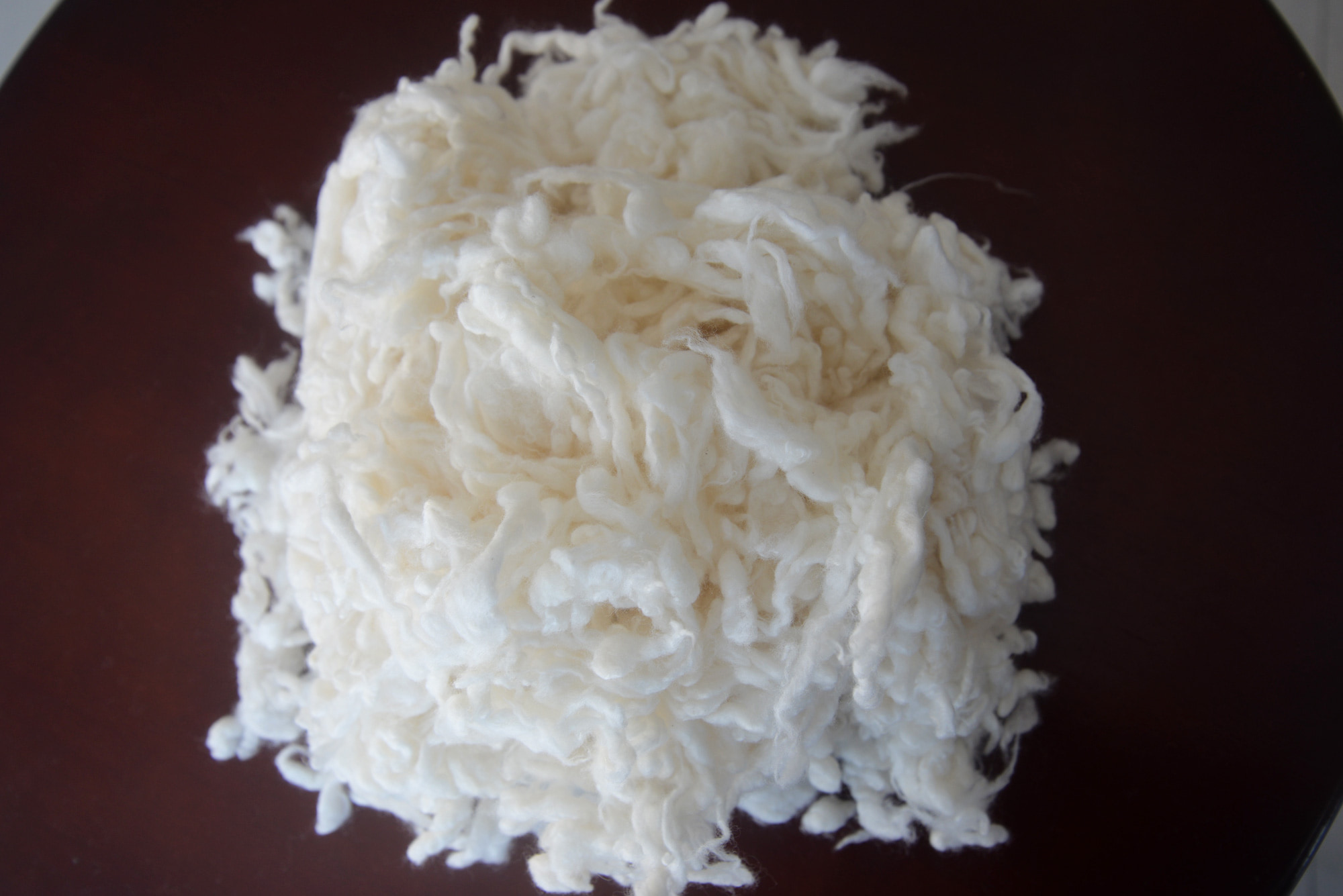
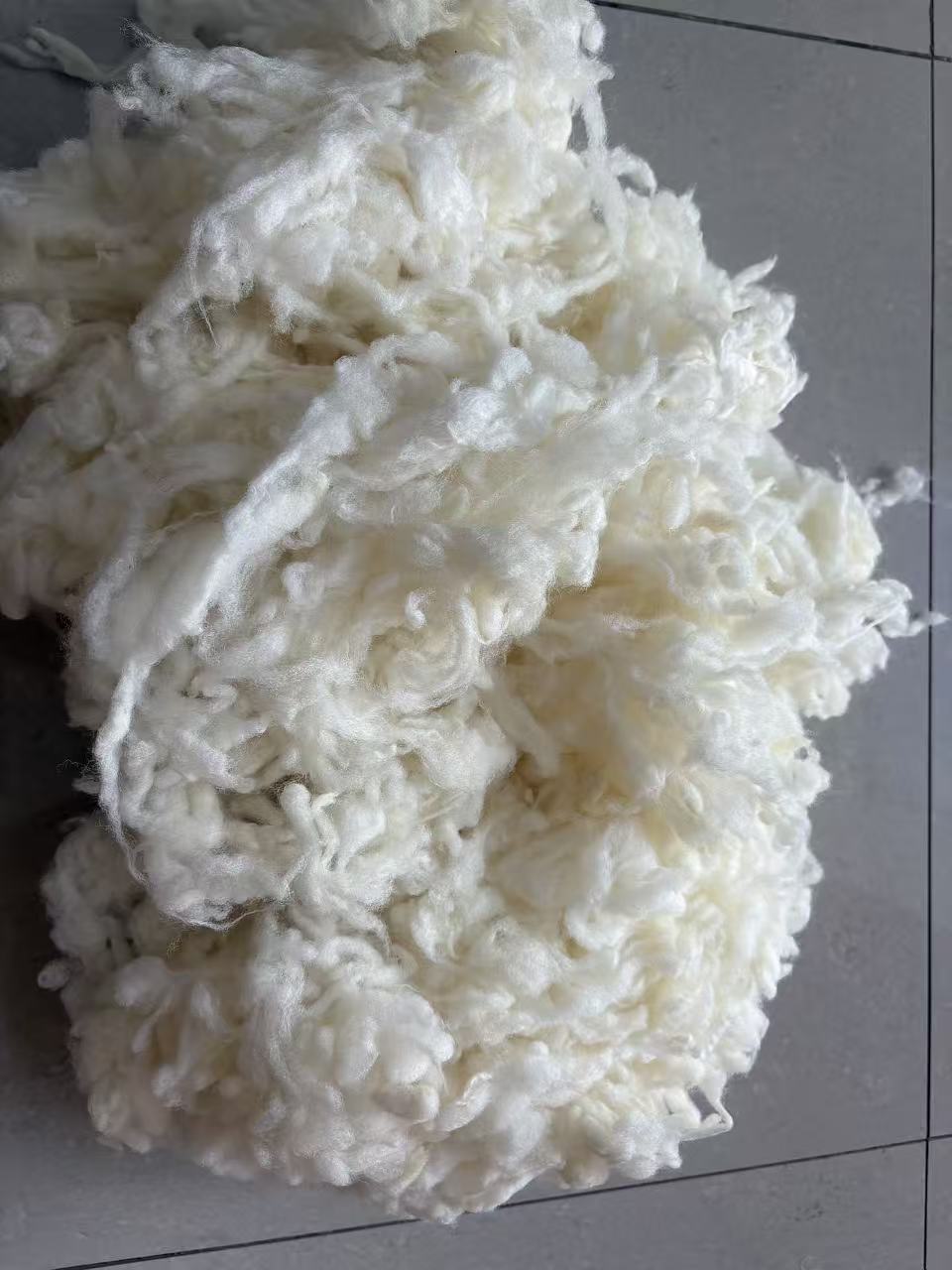
Carbonised wool solves this problem directly. By effectively removing vegetable matter, it not only reduces itchiness but also improves dye uniformity, fiber integrity, and processing efficiency—laying the foundation for premium, machine-washable wool.
The carbonisation process: how acid turns burrs into dust
Carbonised wool is wool that has undergone a chemical purification process specifically designed to eliminate vegetable matter that standard scouring cannot remove. The term “carbonised” sounds aggressive, but the process is actually quite elegant—and surprisingly gentle on the wool fibers.
The International Wool Textile Organisation (IWTO) describes carbonising as “an additional treatment with diluted sulphuric acid and placing in a very hot oven; the acid attaches to the vegetable matter and in the drying oven this becomes dry and brittle” before rollers crush it into dust that is then removed. The key insight is that vegetable matter (cellulose-based) and wool fibers (protein-based keratin) react very differently to dilute sulfuric acid. The cellulose breaks down and dehydrates into brittle carbon; the keratin remains largely intact.
Here is how the commercial carbonised wool manufacturing process works in practice, broken down into distinct stages.
Step 1 – Scouring. Raw, greasy wool is thoroughly washed to remove lanolin, dirt, and sweat salts before carbonisation can begin.
Step 2 – Acid application. The scoured wool is treated with dilute sulfuric acid at a concentration of 5–7%. The wool is saturated, achieving approximately 65% wet pickup. The acid selectively penetrates plant material, while the wool fibers resist because of their different chemical composition.
Step 3 – Drying and baking. The acid-treated wool is first dried at 60–70°C to concentrate the acid, then baked at approximately 125°C. During baking, the acid dehydrates the cellulosic plant matter, converting it into brittle carbonized fragments.
Step 4 – Crushing and removal. Heavy rollers mechanically crush the now-brittle carbonized plant material, and vibration and air currents remove the dust, leaving clean wool behind.
Step 5 – Neutralization. The processed wool is treated with sodium carbonate or bicarbonate solutions to restore pH balance, neutralizing residual acid to prevent long-term fiber degradation.
The results are measurable. Vegetable matter content drops from 8–12% in greasy wool to below 0.5% in properly carbonised material. Fiber strength retention is excellent: when processing follows optimal parameters, carbonised wool retains 92–96% of its original tensile strength. And because removal of plant impurities eliminates the microscopic particles that previously caused skin irritation, carbonised wool is often described as softer, less itchy, and more uniform in both appearance and performance.
Where carbonised wool excels—and where it falls short
Here’s a key point that is often overlooked: carbonised wool effectively removes vegetable matter, but it does not prevent shrinkage. The scales responsible for felting remain fully intact unless a separate shrink-resistance treatment is applied.
A wool sweater that has been carbonised but not treated for shrinkage will be cleaner, softer, and less itchy. Yarn processing is smoother, dye penetration is more uniform, and the garment feels better against the skin. However, wash it in warm water with normal agitation, and it will still feel and shrink. Removing vegetable matter does nothing to stop the directional friction effect of the scales, just as modifying the scales does not eliminate burrs and seeds. Both issues must be addressed independently for a complete solution.
This is where carbonised wool proves its true value—not as a standalone material, but as the essential foundation for superwash shrink-resistance treatment.
Carbonised superwash wool: the full solution to shrinkage
Carbonised superwash wool refers to premium wool fiber that has undergone two specialized chemical processes: carbonisation to remove vegetable matter, followed by shrink-resistance treatment to prevent felting. The combination produces wool that is exceptionally pure, clean, and resistant to felting and shrinkage during washing.
The superwash component works by modifying the surface scales of the wool fiber—either by selectively dissolving or smoothing the scales (using an oxidative or enzymatic process) or by coating the fiber with a thin polymer film that prevents the scales from interlocking. The result is a wool that behaves like a completely different material. Instead of locking together under agitation, the fibers slide past each other freely, and the fabric stays dimensionally stable.
When carbonisation and superwash are combined, the benefits multiply:
Machine-washable performance. Garments made from carbonised superwash wool can be safely washed in standard domestic machines on gentle cycles without the risk of shrinkage.
Superior dye uniformity. With both vegetable matter removed and surface scales smoothed, dyes penetrate evenly, and colorfastness improves significantly. Carbonised wool achieves color consistency within ±0.5 ΔE units, compared to ±2.0 units for inadequately cleaned material.
Enhanced softness. The combination of plant impurity removal and scale modification produces a fabric that is noticeably softer and less irritating against the skin, making it suitable for direct-skin contact garments that traditional wools cannot comfortably provide.
Durability without compromise. Yarn breakage rates decrease by 15–25% when spinning carbonised wool versus raw wool, while warp yarns made from carbonised wool exhibit 18–22% higher tensile strength.
Comparison: carbonised vs. standard wool—what really changes
| Attribute | Standard (Raw/Scoured) Wool | Carbonised Wool | Carbonised Superwash Wool |
|---|---|---|---|
| Vegetable matter content | 8–12% in raw; 2–5% after scouring | < 0.5% | < 0.5% |
| Skin irritation / “prickle.” | Moderate to severe (burrs cause itch) | Minimal (plant impurities removed) | Minimal |
| Shrink resistance | None (felt under agitation) | None (scales unchanged) | High (machine-washable) |
| Dye uniformity | Uneven (VM absorbs dye differently) | Excellent (±0.5 ΔE units) | Excellent |
| Spinning efficiency | 15–25% higher yarn breakage | Reduced breakage; smoother processing | Reduced breakage |
| Tensile strength retention | 100% baseline | 92–96% of the original | Comparable to carbonised |
| Care instructions | Hand wash cold, dry flat only | Hand wash cold (scales unchanged) | Machine wash gentle, tumble dry low |
The financial case for carbonised wool is also compelling. Mills processing carbonised wool often report 20–30% higher productivity due to reduced fiber breakage and fewer machine stoppages. And while carbonised superwash wool typically commands a 15–30% premium over standard wool tops, the ability to market machine-washable, shrink-resistant wool garments at premium retail prices more than offsets the additional processing cost.
Application scenarios: where carbonised wool delivers the most value
The versatility of carbonised wool—especially carbonised superwash—makes it suitable for a wide range of end-use applications across apparel and textile manufacturing.
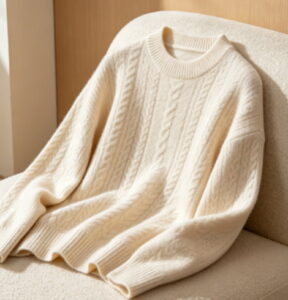
Knitwear and sweaters. This is the most obvious and largest application. Consumers have been burned by shrunken sweaters for generations. A sweater made from carbonised superwash wool carries a powerful value proposition: it stays true to size, can be machine-washed, and feels soft against the skin without the traditional wool itch.
Baby and children’s clothing. Parents avoid wool for children largely because of itchiness and the impracticality of hand-washing. Carbonised wool removes the vegetable matter that causes prickle, while superwash treatment makes the garment machine-washable—opening an entirely new market segment for premium children’s knitwear that otherwise would have defaulted to cotton or synthetics.
Uniforms and institutional textiles. Hotels, airlines, schools, and corporate uniform programs need garments that withstand repeated industrial laundering. Carbonised superwash wool provides the natural performance benefits of wool—temperature regulation, moisture management, odor resistance—with the durability and easy care that institutions demand.
Outdoor and performance apparel. Wool’s natural moisture-wicking, temperature-regulating, and odor-resistant properties make it ideal for outdoor applications. But traditional wool’s care requirements make it impractical for gear that gets dirty. Carbonised superwash wool solves that problem, enabling wool-based layers, mid-layers, and accessories that perform in the field and clean easily at home.
The sustainability angle: why cleaner wool is greener wool
There is an environmental dimension to carbonised wool that is often overlooked. By removing vegetable matter chemically rather than discarding it, carbonisation increases the usable yield from each fleece. Standard scouring and mechanical burr removal often result in fiber loss, reducing the amount of usable wool from each batch of raw material. Carbonised wool recovers more of the fiber, meaning less waste and more efficient use of the animal’s annual fleece.
Furthermore, the durability and long service life of high-quality wool garments reduce the frequency of replacement and the overall environmental footprint of the wardrobe. A sweater made from carbonised superwash wool that lasts ten years instead of two before shrinking out of shape represents a significant reduction in per-wear environmental impact.
FAQ
1. Does carbonised wool shrink in the wash?
Carbonised wool by itself (without superwash treatment) can still shrink. Carbonisation removes only plant impurities, not the scales responsible for felting. For garments that maintain their size after washing, carbonised superwash wool—which combines both treatments—is required.
2. Is carbonised wool scratchy or itchy?
No. Carbonised wool is actually softer than standard wool because burrs, seeds, and other plant fragments that cause the familiar “prickle” are removed. Many people who usually avoid wool find carbonised wool comfortable against the skin.
3. Can carbonised wool go in the dryer?
Carbonised wool without superwash should be handled like standard wool, avoiding high heat and tumbling. Carbonised superwash wool, however, can generally be tumble dried on low heat, though it is always best to follow the manufacturer’s garment care instructions.
4. Is carbonised wool suitable for people with wool allergies?
True wool allergies are uncommon. Most reactions are caused by lanolin or mechanical irritation from vegetable matter. By removing plant fragments and reducing lanolin content, carbonised wool is often suitable for individuals with sensitive skin.
5. How does the cost of carbonised wool compare to standard wool?
Carbonised superwash wool typically carries a 15–30% premium over standard wool tops, with finer micron counts (18–20 μm) reaching 40–50% premiums in specialty markets. This extra cost is balanced by reduced fiber waste during processing and the ability to produce machine-washable wool garments.
Conclusion: Carbonised wool is the foundation—superwash completes the solution
Does carbonised wool solve wool shrinkage? On its own, it does not prevent felting. However, it is essential to the broader solution. Carbonised wool removes vegetable matter, reduces skin irritation, improves dye uniformity, and produces cleaner, more consistent fibers for manufacturing.
When combined with superwash shrink-resistance treatment, wool becomes machine-washable, dimensionally stable, and suitable for everyday use. Garments retain their size, softness, and appearance even after repeated laundering.
For textile mills, garment manufacturers, or brands aiming to produce wool products that are both durable and easy to care for, carbonised superwash wool establishes a new standard of quality.
Contact us to request carbonised wool samples, explore superwash treatment options, or discuss custom specifications for your next knitwear or apparel collection.