
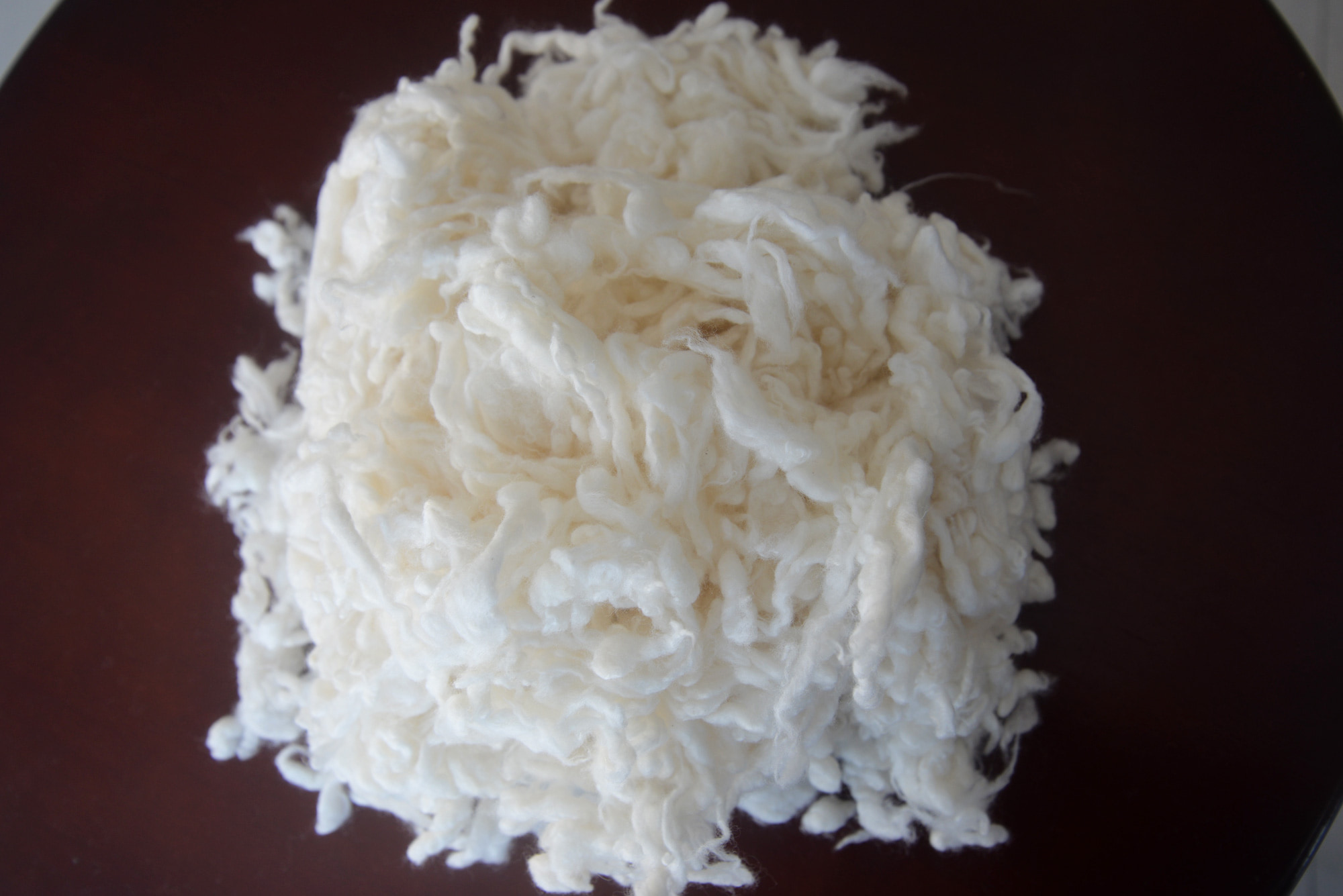
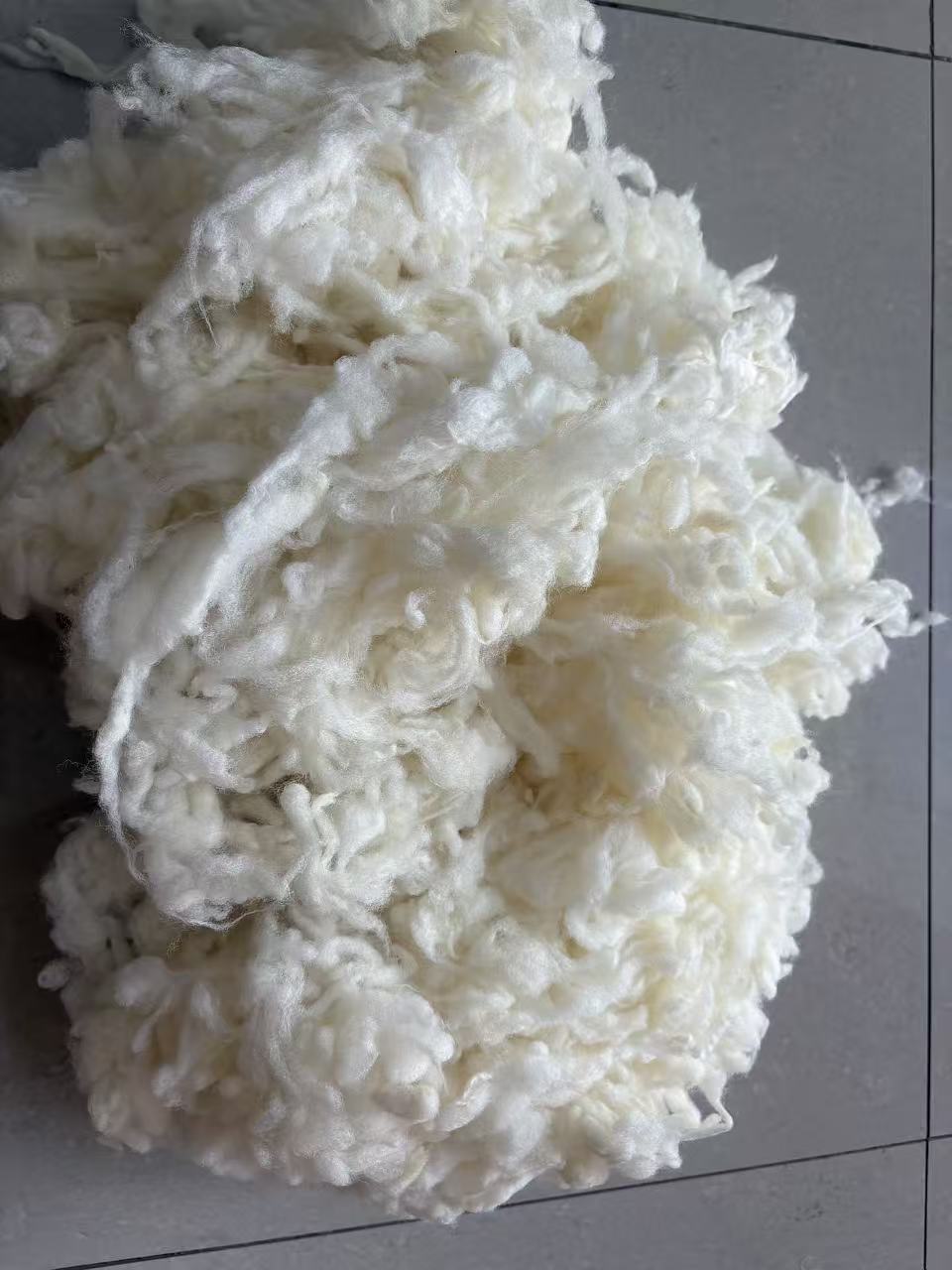
Introduction
Wool is valued for its warmth, breathability, and natural comfort, but traditional wool often suffers from two major drawbacks: skin irritation caused by residual vegetable matter and shrinkage caused by fibre felting during washing.
Carbonised Wool Superwash is engineered to overcome these challenges. By combining carbonisation to remove plant-based impurities with superwash treatment to improve washability, it offers a cleaner, softer, and more practical wool solution for modern textile applications.
But is Carbonised Wool Superwash safe for direct skin contact?
The answer is yes. This article explains how the dual-treatment process improves comfort, reduces irritation, enhances wash performance, and makes Carbonised Wool Superwash suitable for applications ranging from babywear and base layers to premium knitwear.
The Two Problems That Made Wool Unwearable Against Skin
To understand why Carbonised Wool Superwash represents such a significant advancement, you first need to understand what made traditional wool problematic in the first place. The discomfort associated with wool isn’t one problem—it’s two distinct issues that originate from entirely different sources.
Vegetable matter: the hidden irritant
Many people assume the prickly sensation of wool comes from the fibre itself. In reality, the primary culprit is often vegetable matter—the burrs, grass seeds, straw fragments, and other plant material that become embedded in sheep fleece during grazing. Even after standard scouring (the initial wash that removes grease and dirt), raw wool can retain anywhere from 8% to 12% vegetable matter by weight. These tiny, jagged plant particles act like microscopic splinters against the skin, causing the familiar “prickle” that has turned countless consumers away from wool garments.
But the problems don’t stop at discomfort. Vegetable matter absorbs dye differently than wool keratin, resulting in blotchy, uneven colouration. Over time, these hard plant particles act as internal abrasives, slowly cutting and weakening wool fibres with every flex, wash, and wear cycle. For manufacturers, this translates to increased yarn breakage, higher production costs, and compromised fabric durability.
Surface scales: the felting mechanism
The second problem lies in the wool fibre’s physical structure. Under a microscope, every wool fibre resembles a series of overlapping scales—much like a pine cone. These scales create directional friction: fibres slide easily in one direction but catch and lock when moving in the opposite direction.
When exposed to heat, moisture, and mechanical agitation—the exact conditions inside a washing machine—these scales swell and interlock with neighbouring fibres. The entanglement is chemically irreversible. The result is felting: the progressive densification and shrinking that can reduce a wool garment by 10–20% after a single wash and up to 30% after multiple cycles. Once felting occurs, no amount of washing, pressing, or stretching can reverse it.
These are independent problems. Removing vegetable matter does nothing to prevent felting. Modifying scales does nothing to remove burrs. Carbonised Wool Superwash solves both—but the two treatments must be understood separately.
How Carbonisation Works: Eliminating the Source of Prickle
Carbonisation is a chemical purification process that selectively destroys plant-based impurities while leaving the wool fibre intact. The principle is deceptively simple: vegetable matter (cellulose-based) and wool fibre (protein-based, primarily keratin) react differently to dilute sulfuric acid. When properly applied, the acid dehydrates and carbonises the plant material without significantly damaging the protein fibre.
The process unfolds in several stages at a commercial mill:
Acid application: Scoured wool is treated with dilute sulfuric acid at a concentration of 4–7%, achieving approximately 65% wet pickup.
Drying and baking: The treated wool is dried at 60–70°C (140–158°F) to concentrate the acid, then baked at approximately 125°C for about one minute. At this temperature, the acid attacks the cellulose structure of the plant material, converting it into brittle, charred carbon.
Crushing and removal: The carbonised plant matter becomes friable and is mechanically removed through crushing and shaking.
Neutralisation and rinsing: Any residual acid is neutralised, and the wool is thoroughly rinsed.
The result is a fibre that is exceptionally pure and clean—free from the jagged vegetable impurities that cause skin irritation. The International Wool Textile Organisation (IWTO) describes carbonising as “an additional treatment with diluted sulphuric acid and placing in a very hot oven; the acid attaches to the vegetable matter and in the drying oven this becomes dry and brittle”.
It’s worth noting that carbonised wool itself does not prevent shrinkage. That’s where the second treatment comes in.
Superwash Treatment: Taming the Scales for Comfort and Convenience
“Superwash” is the industry term used to describe wool that has undergone shrink-resist treatment of some type to make it machine washable. The superwash process addresses the scale-induced felting problem by modifying the fibre surface.
There are two primary methods for creating superwash wool:
Coating method: The fibre is coated with a polymer or resin that essentially “glues down” the scales, preventing them from lifting and interlocking. This is the more common approach for many commercial applications.
Scale removal method: The scales are partially stripped or dulled, and the irregularities left behind are filled with a polymer to smooth the fibre. While effective, this method can reduce the strength of the wool, as it is chemically more destructive.
For Carbonised Wool Superwash, the coating approach is typically preferred because it preserves fibre strength while delivering reliable shrink resistance. The coating physically prevents scale interlocking while still allowing the fibre to breathe and absorb moisture.
It’s important to distinguish between the two treatments. Carbonisation removes impurities; superwash modifies the fibre surface. Together, they produce a wool that is not only clean and pure but also dimensionally stable through repeated washing. Garments made from Carbonised Superwash Wool can be safely washed in standard domestic machines on gentle cycles without the risk of shrinkage.
So, Is It Safe for Direct Skin Contact? The Evidence
Now to the central question: is Carbonised Wool Superwash safe to wear against bare skin? The evidence points to a clear affirmative, but the safety profile rests on multiple factors.
Removal of mechanical irritants
The most direct safety benefit comes from carbonisation’s removal of vegetable matter. Those tiny, jagged plant particles were the primary source of mechanical irritation—the physical scratching and pricking that made traditional wool uncomfortable. By eliminating these impurities, Carbonised Wool Superwash removes the most common cause of wool-related skin discomfort.
Fibre diameter and the itch threshold
Research has established that cutaneous irritation from wool relates primarily to high fibre diameters. A comprehensive review published in the journal Acta Dermato-Venereologica found that “cutaneous irritation from wool relates to high fibre diameters (≥30–32 µm)”. Fibres exceeding approximately 30 microns in diameter are stiff enough to resist bending upon skin contact, triggering nerve receptors and causing the sensation of itch.
Carbonised Wool Superwash is not inherently finer than other wools—the carbonisation and superwash treatments do not change fibre diameter. However, the purity achieved through carbonisation means that any irritation experienced is more likely attributable to fibre diameter than to impurities. For applications requiring next-to-skin wear, manufacturers typically pair Carbonised Wool Superwash with finer wool types—particularly Merino—which are naturally comfortable for direct skin contact.
Lanolin and allergen considerations
There has been persistent confusion in the consumer market about wool allergies versus wool sensitivities. The same Acta Dermato-Venereologica review concluded that “current evidence does not suggest that wool-fibre is a cutaneous allergen”. Furthermore, “contact allergy from lanolin, chromium and formaldehyde is highly unlikely with modern wool garments”.
What this means in practical terms is that true allergic reactions to wool fibre itself are exceedingly rare. The irritation most people experience is mechanical—caused by coarse fibres or embedded vegetable matter—rather than immunological. By removing vegetable matter and ensuring that any residual processing chemicals are thoroughly rinsed, Carbonised Wool Superwash minimises both mechanical and chemical sources of skin reaction.
Surface smoothness and friction reduction
Superwash treatment contributes to skin comfort by smoothing the fibre surface. The polymer coating reduces friction against the skin, eliminating the rough, scale-induced drag that can cause redness and irritation, particularly in sensitive individuals. For those who have experienced “wool rash” in the past, the combination of impurity removal and surface smoothing often transforms wool from unwearable to comfortable.
Carbonised Wool Superwash vs. Regular Wool
To appreciate the safety and performance advantages of Carbonised Wool Superwash, it helps to see them laid out against regular wool. The differences are substantial—and they matter for anyone considering wool for skin-contact applications.
| Characteristic | Regular Wool | Carbonised Wool Superwash |
|---|---|---|
| Vegetable matter content | 8–12% after scouring | Near-zero; impurities removed through carbonisation |
| Primary cause of itch | Jagged plant particles + coarse fibres | Fibre diameter only (if applicable) |
| Shrink resistance | None—felts irreversibly when washed | Machine-washable; shrink-resistant |
| Surface friction | High—scales catch and drag against skin | Low—smoothing treatment reduces friction |
| Dye uniformity | Uneven—plant matter absorbs dye differently | Consistent, even colouration |
| Fabric durability | Plant matter weakens fibres over time | Fibre integrity preserved; longer garment life |
| Skin-contact suitability | Limited—irritation from impurities and coarse fibres | Excellent—clean, smooth, and comfortable |
Real-World Applications: Where Carbonised Wool Superwash Excels
The safety and performance characteristics of Carbonised Wool Superwash make it suitable for a range of applications where direct skin contact is not just common but inevitable.
Babywear and children’s clothing
Infant skin is notoriously sensitive, and parents are understandably cautious about what touches their child’s skin. Carbonised Wool Superwash has found a natural home in babywear precisely because it eliminates the impurities that cause prickle while delivering the warmth, breathability, and moisture management that wool is known for. The machine-washable nature of the material is an added benefit for parents facing the inevitable laundry demands of childcare.
Medical textiles and compression garments
The medical textile sector demands materials that are not only comfortable against skin but also hygienic, breathable, and durable. Wool’s natural antimicrobial properties inhibit the proliferation of odour-causing bacteria, while its moisture-wicking capabilities help manage skin conditions. Carbonised Wool Superwash brings these benefits without the irritation that would make prolonged wear unbearable.
- Base layers and activewear
For athletes and outdoor enthusiasts, base layers must perform under demanding conditions: sweat, movement, temperature fluctuations, and repeated washing. Carbonised Wool Superwash delivers the thermal regulation, breathability, and odour resistance that wool is prized for, combined with the smoothness and washability that activewear demands. The combination of carbonisation and superwash treatment produces a fibre that can withstand the rigours of an active lifestyle without sacrificing comfort.
Luxury knitwear and fashion garments
Even in the luxury space, consumers increasingly expect garments that are both beautiful and practical. Carbonised Wool Superwash allows designers to create soft, comfortable knitwear that maintains its shape and appearance through regular wear and care. The improved dye uniformity resulting from impurity removal ensures rich, consistent colours that enhance the aesthetic appeal of finished garments.
Beyond Safety: Additional Benefits That Matter
While safety is the primary focus of this article, it’s worth noting that Carbonised Wool Superwash delivers several additional advantages that make it a compelling choice for manufacturers and brands.
Superior washability and dimensional stability
The global wool industry is projected to grow from approximately US $28 billion to US $36 billion by 2032, yet untreated wool garments continue to present significant challenges for both consumers and manufacturers. Carbonised Wool Superwash addresses this head-on by delivering wool that can be machine-washed without the fear of shrinkage or felting. For brands, this means fewer returns, higher customer satisfaction, and a stronger value proposition.
Consistent dyeing and colour quality
Vegetable matter in raw wool absorbs dye differently than wool keratin, resulting in blotchy, uneven colour that compromises the visual quality of finished garments. By removing these impurities, carbonisation ensures that dye is absorbed uniformly across the fibre, producing consistent, rich colours that meet the high standards of modern fashion and textile markets.
Enhanced processing efficiency
For manufacturers, the removal of vegetable matter translates to tangible operational benefits. Fibres free from abrasive plant particles experience less wear during spinning and processing, reducing yarn breakage and machine damage. This translates to lower production costs, higher yields, and more reliable manufacturing outcomes.
Sustainability and natural performance
Despite the chemical treatments involved, Carbonised Wool Superwash retains wool’s fundamental natural advantages: breathability, thermal regulation, moisture absorption, and odour resistance. The fibre remains biodegradable and renewable, aligning with growing consumer demand for sustainable materials. The superwash coating allows the wool to be cared for with less water and energy than traditional hand-washing methods, further reducing its environmental footprint over the product lifecycle.
Addressing Common Concerns
Does the chemical treatment compromise safety?
This is perhaps the most common concern about Carbonised Wool Superwash. The carbonisation process uses dilute sulfuric acid, and the superwash treatment involves polymer coatings—so it’s reasonable to ask whether these chemicals pose risks to the wearer.
The key consideration is that both processes are followed by thorough rinsing and neutralisation. The acid used in carbonisation is neutralised and washed out, leaving no significant residue on the finished fibre. The polymer coating used in superwash treatment is applied in a thin layer that bonds to the fibre surface; it does not migrate or leach onto the skin under normal wearing conditions.
Industry standards and regulatory frameworks govern residual chemical limits in textile products. Reputable manufacturers adhere to these standards, ensuring that finished Carbonised Wool Superwash products meet safety requirements for direct skin contact.
Is it suitable for people with sensitive skin or eczema?
For individuals with sensitive skin or conditions like eczema, the removal of mechanical irritants through carbonisation is a significant advantage. Research has suggested that fine wool fibres, when free from impurities, are well tolerated and may even benefit eczema management.
That said, individuals with known sensitivities to specific chemical treatments or polymer coatings should exercise caution and, where possible, test garments before prolonged wear. The superwash coating itself is generally non-irritating for the vast majority of users.
How does it compare to synthetic alternatives?
Synthetic fibres like polyester and nylon are often marketed for their softness and durability, but they lack wool’s natural breathability, moisture management, and thermal regulation. Carbonised Wool Superwash offers a natural-fibre alternative that rivals synthetics in convenience while delivering superior comfort and environmental credentials.
Conclusion: A Material That Delivers on Its Promise
Carbonised Wool Superwash combines carbonisation and superwash treatment to overcome two of traditional wool’s biggest limitations: residual vegetable matter and shrinkage caused by felting. The result is a cleaner, softer, and machine-washable wool fibre that offers excellent comfort, durability, and suitability for direct skin-contact applications.
By improving both purity and washability while retaining the natural benefits of wool, Carbonised Wool Superwash provides a practical solution for modern textile markets. From babywear and base layers to medical textiles and premium knitwear, it delivers the performance, comfort, and convenience increasingly demanded by brands and consumers alike.
For manufacturers seeking high-quality wool materials, Carbonised Wool Superwash offers an effective balance of natural performance and easy-care functionality. To learn more about specifications, applications, or sample availability, contact the team at Giant Carbonised Wool for further information.